Have you ever lugged a giant bag of rice or a case of canned goods into your kitchen and then stared at the pantry thinking, “Now what?” If so, you’re not alone—bulk buying saves money but can create a puzzling storage challenge. In this guide, you’ll find smart, doable ideas for bulk food storage that transform chaos into an efficient, attractive system you’ll actually enjoy using.
Why investing in bulk food storage matters
Buying in bulk reduces cost and waste, but without a plan you risk spoilage, clutter, and wasted space. Thoughtful bulk storage improves shelf life, speeds up meal prep, and frees up counter space. Whether you have a small under-stair pantry or a walk-in, organizing bulk purchases keeps staples visible and accessible so ingredients don’t get forgotten.
Choose the right containers
Container choice is the foundation of any good bulk pantry system. Use food-safe, airtight options that match the quantity you purchase.
Airtight jars and canisters
- Glass mason jars or BPA-free plastic canisters preserve freshness and make contents visible.
- Use wide-mouth jars for flour and sugar to make scooping easier.
Food-grade buckets and mylar bags
- For long-term bulk storage (20–50 lb bags of grains), food-grade buckets with gamma-seal lids and mylar-lined packaging add moisture and pest protection.
- Label buckets with dates and rotate using a FIFO (first-in, first-out) system.
Vacuum-sealed bags and oxygen absorbers
- Great for reducing volume and extending shelf life for grains, beans, and dehydrated goods.
- Use a handheld vacuum sealer for small batches or invest in a chamber sealer for larger projects.
Smart shelving and layout — Practical ideas for bulk food storage
How you arrange shelves makes a huge difference. Design for visibility, weight distribution, and ease of access.
Adjustable shelving units
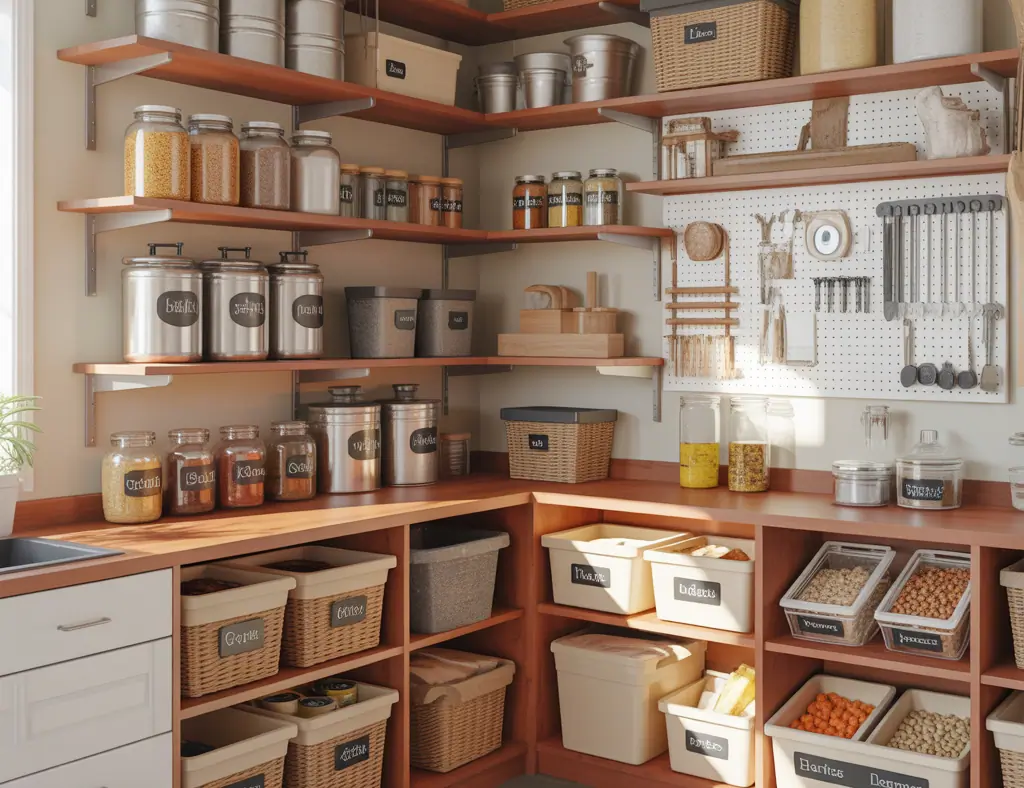
- Floor-to-ceiling adjustable shelves let you customize heights for tall containers and stackable bins.
- Metal or heavy-duty wood shelves are best for the weight of bulk goods.
Pull-out drawers and sliding shelves
- Install pull-out shelves for heavy items like buckets—no bending or struggling to reach the back.
- Drawer systems work well for labeled bins of snacks and baking supplies.
Use vertical space and wall storage
- Mount spice racks, wire baskets, or a pegboard on the pantry door or wall for vertical storage.
- Hanging dispensers for grains or cereal free up shelf space and speed up serving.
DIY projects to build custom bulk storage
If you like hands-on improvements, several DIY projects can maximize space and reduce cost. These are perfect for a weekend and yield big results.
DIY floating shelves for glass jars
- Measure wall space and decide jar spacing.
- Cut and sand pine boards to length; stain or paint to match your kitchen.
- Mount using heavy-duty brackets anchored into studs.
- Arrange labeled jars for an attractive, functional display.
Build a pull-out pantry drawer
- Measure pantry width and depth. Purchase heavy-duty drawer slides rated for the expected load.
- Assemble a plywood box to fit the space and attach slides to both the box and the pantry frame.
- Install and test for smooth operation; add bins or dividers inside the drawer to separate items.
Convert plastic buckets into stackable storage
- Clean and label food-grade buckets, then add caster dolly bases to the bottoms for easy movement.
- Stack with lids for space savings and use a chalkboard label for dates and contents.
For more step-by-step ideas and small build plans see our DIY projects page.
Design inspiration and organization tips
Make your pantry both functional and pleasing. A few design touches improve usability and aesthetics.
- Uniform containers: Use matching jars or canisters for a clean, cohesive look.
- Clear labeling: Use a label maker or printed labels with product name, purchase date, and expiration.
- Zone your pantry: Group baking supplies, dry grains, canned goods, and snacks into dedicated zones.
- Lighting: Install stick-on LED lights for visibility in deep shelves.
Looking to refresh more than the pantry? Browse our kitchen upgrades and home design ideas for coordinated improvements.
Budget-friendly hacks and maintenance
You don’t need to spend a lot to get organized. Try these low-cost methods to maintain an effective system.
- Use recycled glass jars from store-bought goods for smaller staples.
- Create DIY labels with chalkboard paint or printable waterproof stickers.
- Rotate stock monthly to use oldest items first and keep an inventory list on the pantry door.
- Inspect for pests and moisture quarterly; keep silica gel packets or oxygen absorbers on hand.
Frequently Asked Questions
1. What are the best containers for storing bulk food long-term?
Food-grade buckets with airtight gamma lids and mylar bags with oxygen absorbers are top choices for long-term bulk storage. For day-to-day use, airtight glass jars and heavy-duty plastic canisters work well.
2. How do I prevent pests when storing bulk grains and flour?
Store dry goods in airtight containers, use oxygen absorbers or vacuum sealing for longer storage, and periodically freeze new flour for 48 hours to kill any insect eggs. Regularly clean shelves and rotate stock to detect issues early.
3. Can I build a pull-out pantry on my own?
Yes—basic carpentry skills and the right hardware (heavy-duty drawer slides and plywood) are all you need. Follow step-by-step plans, measure carefully, and anchor slides to a solid frame or studs to handle the weight of bulk items.
Conclusion — Start organizing your pantry today
From airtight jars and food-grade buckets to DIY pull-out drawers and smart shelving, these ideas for bulk food storage can turn a cluttered pantry into a streamlined, efficient space. Pick one small project—labeling containers, installing a shelf, or building a drawer—and you’ll immediately see how easier access and better organization improve daily life. Ready to get started? Try one DIY project this weekend and share your before-and-after photos to inspire others.
Want more tips on improving your kitchen and home? Explore our DIY projects and kitchen upgrades pages for step-by-step guides and design ideas.