Does your home have a tiny entry that feels more like an afterthought than a welcome? Maybe you avoid guests stopping by because the front entrance looks cluttered or cramped. If that sounds familiar, you’re in the right place. In this article you’ll discover practical, budget-friendly and stylish exterior small front entrance ideas that make a narrow or compact entry feel inviting, functional, and memorable.
Why small front entrances are an opportunity, not a problem
Small front entrances force creative thinking. Limited space means every choice matters — from lighting and color to storage and plants. The right updates can dramatically increase curb appeal and functionality without a major renovation. Whether you’re looking for tiny front porch ideas, narrow pathway solutions, or a front door makeover, these strategies help you make the most of the footprint you have.
Design principles for exterior small front entrance ideas
- Keep it simple: One focal point (the door or a standout light fixture) prevents visual clutter.
- Scale matters: Choose narrow furniture and accessories sized to the space—think slim benches, fold-down seats, and compact planters.
- Light it up: Good lighting makes small spaces feel larger and safer. Layer ambient and task lighting.
- Contrast and color: A bold door color or contrasting trim draws the eye and defines the entrance.
- Defined path: A clear walkway, even if narrow, improves circulation and curb appeal.
Quick curb-boosting ideas you can do this weekend
1. Paint the front door for instant impact
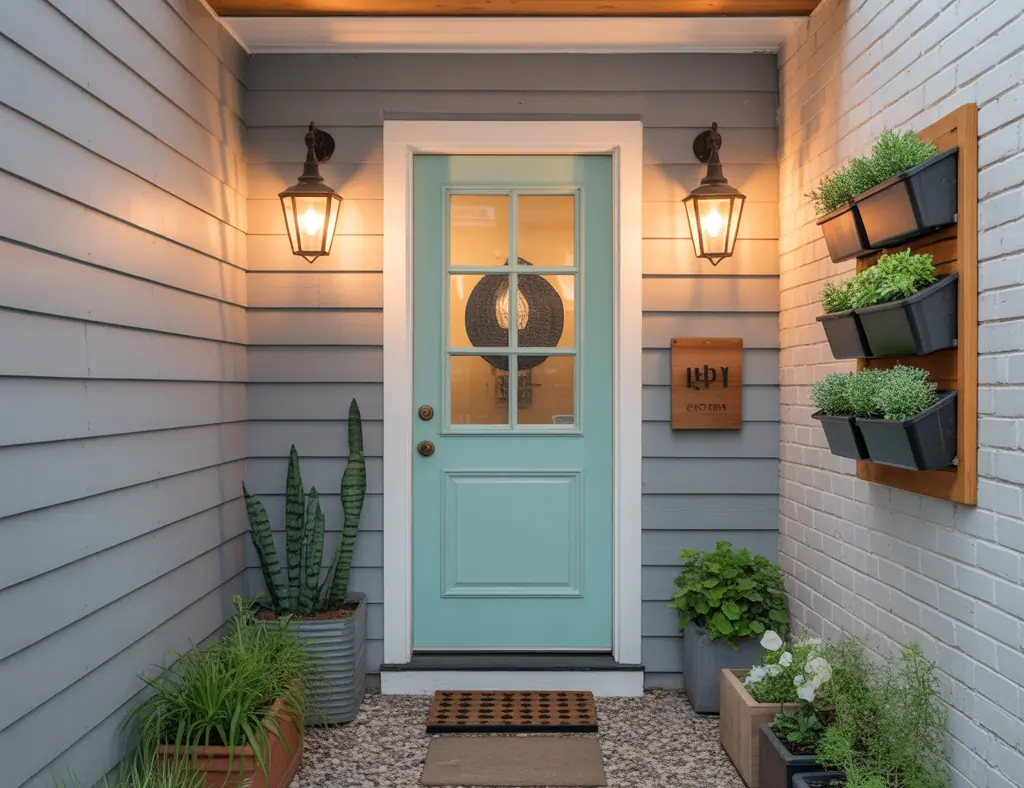
A fresh coat of paint on your door is the fastest way to refresh a compact entry. Choose a saturated color (navy, teal, or classic red) to create a focal point that makes the small area feel intentional. Prep: sand, prime if needed, and use an exterior-grade paint for durability.
2. Add vertical planters or slim window boxes
When ground space is limited, go vertical. Mount narrow planters or window boxes beside the door to add greenery without taking up room. Plant trailing herbs or compact shrubs for year-round interest.
3. Install layered lighting
Combine a statement sconce with recessed step lights or low-voltage path lights. Lighting increases safety and visually expands the entry. Consider solar-powered path lights for an easy, no-wiring weekend install.
Step-by-step small entry renovation: Create a defined mini-landing (DIY, budget-friendly)
- Measure the space: Note width and depth so you pick appropriately sized materials.
- Clear and level: Remove debris and level the area where you’ll add pavers or a small wooden landing.
- Choose your surface: Use compact pavers, slate tiles, or a simple composite wood landing. For pavers, lay a sand base; for wood, build a small frame and attach composite or treated decking boards.
- Edge the path: Install a narrow edging to define the walkway — metal or brick works well in tight spaces.
- Add storage and seating: Place a slim bench with hidden storage or a fold-down seat. If space is extremely tight, opt for a wall-mounted mail slot and hooks inside the covered area.
- Finish with decor: Add a doormat, compact planter, and a welcome sign or house numbers for personality.
Estimated costs: under $200 for a basic refresh (paint, light, planters); $200–$1,000 for a new mini-landing depending on materials; $1,000+ for professional hardscaping.
Smart storage and furniture solutions for tiny entries
- Wall-mounted storage: Install narrow shelving, mail organizers, or weatherproof cubbies to keep clutter off the path.
- Fold-away options: Use drop-leaf benches or fold-down seats that tuck away when not in use.
- Dual-purpose pieces: Choose benches with built-in storage or baskets that slide underneath for shoes, umbrellas, or dog leashes.
Landscaping and hardscape tips for narrow front entryways
Small entry landscapes should be low-maintenance and scale-conscious. Use gravel, stepping stones, or a single strip of pavers flanked by low-growing groundcover. Keep plantings to layers: low groundcover, a narrow vertical element (like a columnar shrub), and a small accent by the door. Avoid large shrubs that block sightlines.
Accessibility and safety considerations
- Maintain a minimum clear path width (ideally 36 inches where possible).
- Install non-slip surfaces on steps and landings.
- Use motion-sensor lighting for safety at night.
- Ensure door hardware is easy to reach and use — lever handles are more accessible than knobs.
Real-world inspiration: compact styles that work
Modern minimal
Clean lines, monochrome palette, and a pop of color on the door. Use a single narrow planter and sleek sconce for a contemporary look.
Cozy cottage
Painted wood trim, a small vintage bench, and a pair of matching pots with seasonal flowers create a welcoming, storybook entrance.
Urban industrial
Concrete pavers, metal planters, and a matte black door—perfect for narrow city properties that need durable materials.
Maintenance tips to keep your small entrance looking great
- Sweep and rinse the entry weekly to prevent grime buildup.
- Touch up paint yearly on high-traffic surfaces.
- Prune planters seasonally and replace annuals to maintain color.
- Check outdoor lighting and replace bulbs or solar panels as needed.
Exterior Small Front Entrance Ideas: Which project should you start with?
If you want the biggest visual return for the least effort, paint the door and add new lighting. For a weekend DIY with more impact, build a small landing or edge the path and install two matching planters. If storage and function are your pain points, focus on wall-mounted or fold-down solutions first.
Frequently Asked Questions
1. How can I maximize curb appeal on a very narrow front entrance?
Choose a bold focal point (door color or light fixture), use vertical elements like slim planters, and keep the path clear. Simple, consistent materials and a tidy layout will make the space feel intentional and larger.
2. What are inexpensive upgrades for a small front entrance?
Paint the door, swap out hardware, add a new doormat, install a stylish sconce or solar light, and plant inexpensive seasonal flowers in containers. These cost-effective changes have a high aesthetic impact.
3. Do I need a permit to alter my front entrance?
Minor cosmetic changes (paint, planters, lighting) usually don’t require permits. Structural changes, major hardscaping, or adding steps often do. Check local building codes or contact your municipality if you plan substantial work.
Conclusion — take the first step toward a welcoming tiny entry
Your exterior small front entrance ideas don’t need to be complicated to be beautiful. Start with one small project — paint the door, add lighting, or install a compact landing — and build from there. Want project instructions and materials lists to get moving? Explore our DIY projects and browse more home design ideas for inspiration. If you’re tackling a full exterior refresh, consider pairing entrance upgrades with indoor improvements like kitchen upgrades to increase overall curb appeal and home value.
Ready to try one of these exterior small front entrance ideas this weekend? Pick a project from above, gather basic tools, and share your before-and-after — small changes add up to big style.