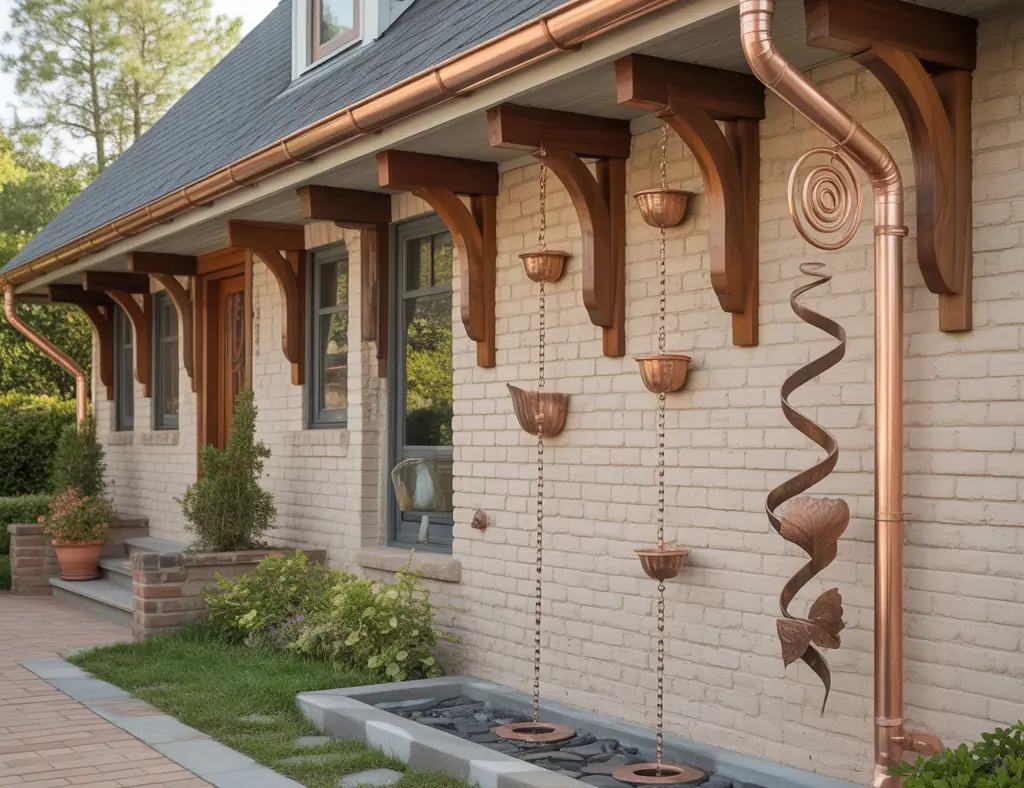
Have you ever stood on your porch watching a steady stream splatter against the foundation and thought, “There has to be a better-looking way to get this water away from my house”? Whether your yard becomes a muddy mess after a storm or your downspouts are plain, rusted pipes ruining curb appeal, decorative downspout drainage options can solve both the function and style problems at once.
Why upgrade your downspout drainage?
Most homeowners focus on gutters for water control, but the downspout is where the action happens — and where problems often start. A smart, attractive solution prevents foundation damage, erosion, and puddles, while boosting the exterior design. From rain chains to dry creek beds and hidden underground drains, there are many ways to divert roof runoff without sacrificing looks.
Top Decorative Downspout Drainage Options to Consider
Below are practical, appeal-forward choices that combine performance with design. I include pros, cons, and quick DIY tips so you can choose a solution that suits your budget and skill level.
1. Rain chains — elegant and simple
Rain chains replace the vertical pipe with a stylish chain or cup system that guides water down visually. They’re ideal for cottage, farmhouse, or modern homes depending on finish (copper, brass, steel).
- Pros: Immediate visual upgrade, easy to install, gentle water flow.
- Cons: Less effective during heavy storms unless paired with a splash block or basin.
- DIY tip: Add a decorative basin or gravel-filled catchment to reduce splash and help infiltration.
2. Decorative downspout boots and shoes
Cast-iron or copper boots (also called downspout shoes) curve the water away with a handcrafted look. They’re perfect when you want a period-appropriate accent on historic homes.
- DIY tip: Ensure the spout directs water at least 3–6 feet from the foundation. Use a matching extension if needed.
3. Splash blocks and paver extensions
Simple, low-cost solution: place a decorative concrete or stone splash block where the downspout ends. For a more integrated look, use permeable pavers to create a pathway for the water to travel.
- Measure the drop and slope to position the block.
- Set on compacted gravel for stability.
- Consider native river rock for a natural dry creek effect.
4. Dry creek beds and landscaping channels
Building a shallow, stone-lined channel gives you dramatic curb appeal and handles high volumes. A dry creek bed can double as a garden feature.
- Step-by-step: mark the path, excavate to a slight grade, add landscape fabric, lay crushed rock and larger accent stones, plant grasses along the banks.
- Real-world advice: size the bed to handle peak flow from your roof area; test with a heavy hose flow before finishing.
5. Underground corrugated drainpipes and pop-up emitters
For invisible solutions, install corrugated or solid PVC pipe to carry water to a safe discharge point or dry well. Pop-up emitters allow water to discharge only when pressure builds.
- Pros: Clean look, effective for heavy runoff.
- Cons: Requires digging and good slope; consider calling a pro for long runs or municipal connections.
6. Rain barrels and harvest systems
Capture roof runoff in a decorative rain barrel or cistern. Many barrels come in attractive finishes and can be integrated into planting beds or on pedestals.
- Tip: Use a diverter that channels overflow to a secondary drain during heavy rain.
- Design idea: disguise barrels with lattice, planters, or a painted finish that complements your siding.
Practical DIY tips for installing decorative downspout drainage
Before you start, keep these practical pointers in mind to ensure performance and longevity.
- Always clean gutters first — debris will sabotage any solution.
- Check slope: ensure water moves at least 1/8″–1/4″ per foot away from the foundation.
- Use corrosion-resistant materials (copper, stainless steel, powder-coated steel) for longevity.
- Winterize: disconnect rain barrels and secure removable elements before freezing weather.
- Permits and codes: verify local stormwater rules — some areas prohibit directing water onto neighboring property or into sanitary sewers.
Design inspiration: match style to your home
Choose finishes and forms that echo architectural features:
- Historic homes: wrought-iron brackets, copper rain chains, cast-iron shoes.
- Modern homes: sleek stainless channels, hidden underground drains, minimalist stone beds.
- Cottages and cottagesque landscapes: painted downspouts paired with flower-filled downspout planters.
Step-by-step project: turning a plain downspout into a decorative feature
- Assess the problem: measure roof area, expected flow, and distance to safe discharge.
- Pick your solution: rain chain + basin, dry creek bed, or underground pipe.
- Gather tools and materials: level, shovel, landscape fabric, gravel, connectors, sealant.
- Install the decorative element (attach rain chain, lay splash block, or dig trench for pipe).
- Test with a hose to simulate a heavy rain and tweak slope or outlet position.
- Finish with plantings or edging to integrate the feature into the yard.
Maintenance and real-world considerations
Keep your system working and looking good with routine checks: clear leaves quarterly, inspect joints and fasteners, and refresh gravel or mulch as needed. If you notice erosion, increase the outlet distance or add a larger splash pad.
Frequently Asked Questions
1. Are rain chains as effective as downspouts?
Rain chains can be effective for moderate rainfall when paired with a basin or splash block. For very heavy storms, consider a hybrid approach: a rain chain for everyday use with a hidden pipe or extension handling peak flow.
2. How far should a downspout extend from the foundation?
Aim to discharge water at least 3–6 feet away from the foundation. If space or grading doesn’t allow that, route water to a dry well or a landscaped drainage channel that safely absorbs or carries it away.
3. Can I install underground drainage myself?
Short runs (under 25 feet) on a simple slope are doable for confident DIYers. Use solid pipe, proper slope (1/8″–1/4″ per foot), and gravel bedding. For long runs, complex grading, or tying into municipal storm lines, hire a licensed contractor to ensure code compliance.
Conclusion — Make your downspouts beautiful and functional
Decorative downspout drainage options let you solve common water problems and elevate your home’s exterior at the same time. Whether you choose a copper rain chain, stone-lined dry creek bed, or a hidden underground system, practical planning and good installation will protect your foundation and add curb appeal. Ready to start a small exterior upgrade? Browse our DIY projects for step-by-step guides or get inspired by more home design ideas to match your style.
Call to action: Pick one option from this guide and try a weekend project — your yard (and your foundation) will thank you. If you want personalized advice for your property, take photos, measure the slope, and start a plan today.