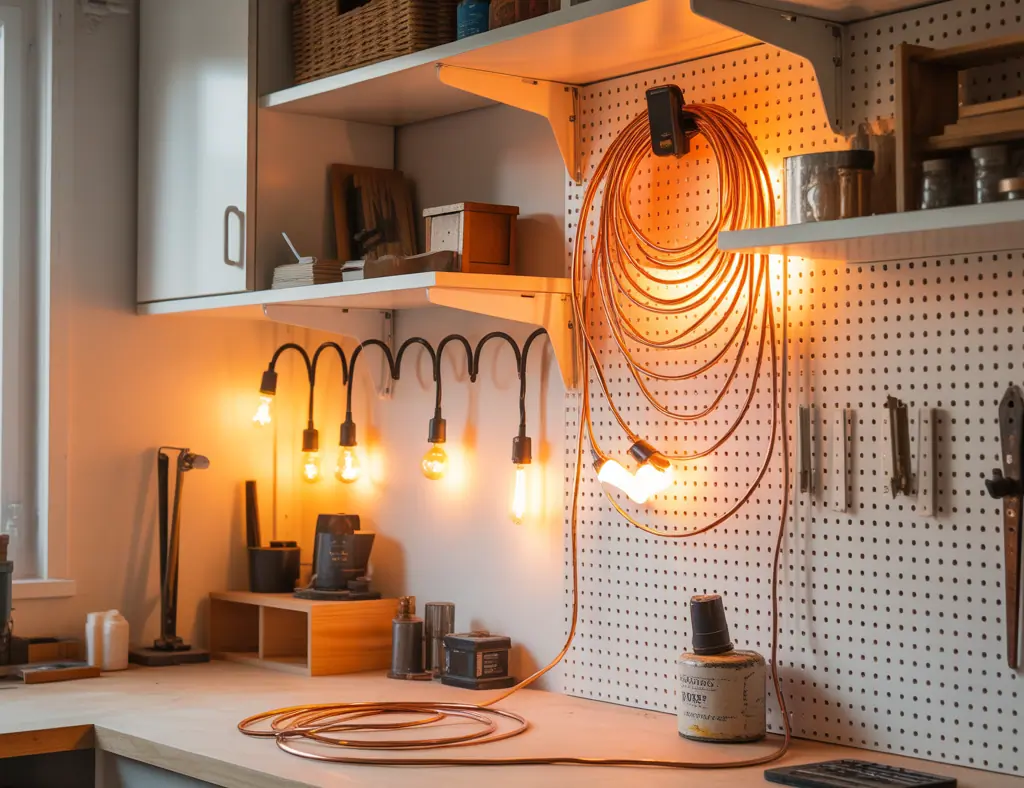
Have you ever stood in your kitchen island or living room and thought, “This space needs better light — but I don’t want bulky fixtures?” That was me last year when I wanted a modern, floating look without tearing up the ceiling. Cable lighting projects saved the day — they’re sleek, flexible, and perfect for DIY home improvements. In this guide I’ll walk you through practical ideas, step-by-step tips, and design inspiration so you can plan and build your own wire-suspended lighting with confidence.
Why choose cable lighting for your next home project?
Cable or wire lighting systems (also called suspension lighting, wire track lighting, or suspended LED cable lighting) offer a clean, contemporary look and are ideal for:
- Kitchen islands and breakfast bars
- Gallery walls and art lighting
- High ceilings and loft spaces
- Stairwells and hallways
- Small apartments where overhead fixtures feel heavy
They’re modular, scalable, and many low-voltage cable lighting kits are designed for straightforward DIY installation, especially if you keep the hard electrical work to a licensed electrician.
Quick planning: what to consider before starting
Good planning will save you time and frustration. Ask yourself these questions first:
- What atmosphere do I want? Task lighting (bright and focused) or ambient/accent lighting (soft and warm)?
- Is this a mains (line voltage) or low-voltage system? Low-voltage kits are easier for DIYers.
- Where will the anchors and power source be located? Can I access a junction box?
- How long are the spans and how many fixtures do I need for even coverage?
Tools and materials checklist
- Cable lighting kit (cables, grippers, fixtures, transformer if low-voltage)
- Stud finder, drill, appropriate anchors or toggle bolts
- Measuring tape, pencil, level or laser level
- Wire stripper, crimping tool, and screwdriver
- Turnbuckles or tensioners for stabilizing long spans
- Safety gear: goggles, gloves
Step-by-step: how to install a basic cable lighting system
Below is a beginner-friendly approach for a low-voltage suspended cable lighting installation over a kitchen island or table.
- Map the layout. Measure the island length and mark anchor points on the ceiling/ends. Use a level to ensure a straight line.
- Locate mounting points. Prefer ceiling joists or solid backing. Use a stud finder and mark positions. If no joists are available, use heavy-duty anchors rated for the load.
- Install anchors and eye bolts. Drill pilot holes and secure the anchors or eye bolts. For long spans, place a middle support to reduce sag.
- Run the cable. Thread the cable through grippers and attach it to the eye bolts. Add turnbuckles to one end if you need to tension the line.
- Attach fixtures. Slide pendant heads or LED heads onto the cable at your planned intervals. Adjust heights and spacing using the grippers.
- Make the electrical connection. For low-voltage, bring the transformer near the junction box and connect per manufacturer instructions. For mains connections, hire a licensed electrician to handle wiring and final connections.
- Tension and test. Use the turnbuckles to get the cable taut, check fixture alignment with a level, then switch on the lights and test each lamp.
Tip: Lay out the fixtures on a table first to finalize spacing — it’s easier than adjusting them once hung.
Cable lighting projects: creative design ideas
Here are some real-world design ideas to inspire your next project:
- Kitchen island linear run: Use a single cable with evenly spaced pendant heads for task lighting over the island. Try warm white LEDs for food prep and a dimmer switch for mood control — search for the best cable lighting for kitchens.
- Gallery-track lighting: Run dual cables close to the wall and hang adjustable LED spot heads to illuminate artwork. This creates an elegant floating gallery effect.
- Multi-level stairway lighting: Install cable lights following the stair line for dramatic, safe illumination on high-ceiling landings.
- Loft and vaulted ceilings: Suspend multiple cable runs at different heights to fill the vertical space and add depth.
Design tips
- Use warm color temperatures (2700K–3000K) for living spaces, cooler temps (3500K–4000K) for kitchens and work areas.
- Mix accent and ambient light: combine cable-mounted heads with recessed lights for layered lighting.
- Choose adjustable fixtures so you can aim light exactly where you want it.
Safety and maintenance — what to keep in mind
- Always turn off circuit power before working with electrical components. If you’re unsure, hire an electrician — especially for mains voltage connections.
- Use anchors rated for the fixture weight and local building code requirements.
- Inspect tension hardware and wire terminations annually. Replace any corroded components and tighten turnbuckles if the cable sags.
- Clean LED heads with a soft cloth; avoid water or solvents on electrical parts.
Budgeting your cable lighting projects
Costs vary widely depending on quality, fixture count, and whether you hire an electrician. Expect to pay anywhere from a modest DIY-friendly $150–$400 for a basic low-voltage kit with a few pendants, up to $1,000+ for high-end fixtures and professional installation. Shop for energy-efficient LED heads to save on long-term operating costs.
Frequently Asked Questions
1. Are cable lighting projects suitable for beginners?
Yes — many low-voltage cable lighting kits are designed for DIYers and include clear instructions. Beginners should plan carefully, use recommended anchors, and leave mains wiring or complex junction work to a licensed electrician.
2. How long will a cable lighting installation take?
For a single-run over a kitchen island, a prepared DIYer can complete the mounting and fixture placement in a few hours; electrical connections may add more time if an electrician is needed. Larger multi-run systems can take a weekend or more.
3. Can I use cable lighting in damp or outdoor areas?
Only use fixtures and components rated for damp or wet locations if installing near moisture or outdoors. Most indoor cable lighting kits are not rated for exterior use — check the product specs.
Conclusion — ready to start your cable lighting project?
Cable lighting projects are a fantastic way to modernize your home with a professional look and flexible design. Start small — try a single cable run over a kitchen island or art wall — and build confidence as you go. If you want more ideas and step-by-step tutorials, check out our DIY projects and browse inspiration for kitchen upgrades or home design ideas. Ready to get tools out and light up your space? Gather your kit, map your layout, and take the first step today.