Ever stood in your kitchen, staring at a plain stainless-steel hood and wondered how to make it feel like yours? Maybe you’re repainting cabinets, redoing tile, or tackling a weekend DIY and want a statement piece that ties the whole room together. Wood range hood concepts give you that warm, custom look — from rustic reclaimed-beam mantels to sleek modern veneered hoods — and many designs are within reach of an enthusiastic DIYer.
Why Choose a Wooden Hood? Practical Benefits and Design Appeal
Wood hoods deliver warmth and texture that metal hoods often lack. They can be stained, painted, or left raw for a live-edge focal point. Beyond aesthetics, a wood hood is usually a decorative cover over a vent insert, making it more affordable and flexible in terms of size and style. Whether you want a farmhouse mantle hood, a contemporary shaker design, or a reclaimed-wood focal point, wood lets you adapt the look to your kitchen’s personality.
Popular Wood Range Hood Concepts (Styles & Materials)
Farmhouse Mantel Hood
Classic and cozy: this design uses wide trim and corbels to mimic a fireplace mantel above the range. Use reclaimed pine for character or poplar for easier painting.
Shaker and Transitional Hoods
Clean, squared-off profiles and inset panels create a subtle, timeless look that complements shaker cabinets and modern-traditional kitchens.
Modern Veneer or Walnut Slab Hood
For a more contemporary kitchen, use thin walnut veneer or a single slab of wood with a clear finish. Keep lines minimal and pair with a concealed stainless-steel liner for functionality.
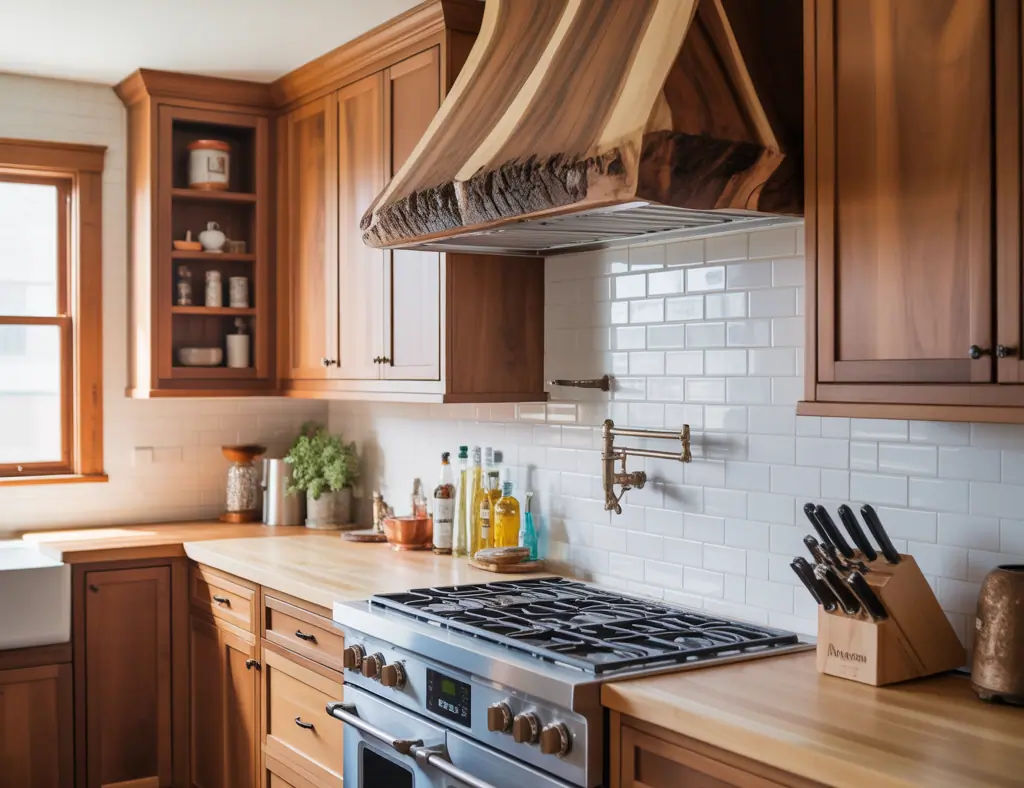
Live-Edge and Reclaimed Wood Hoods
Make a dramatic statement with a live-edge beam or distressed boards. These options are excellent for rustic, industrial, or cottage-style kitchens.
Step-by-Step DIY Wood Range Hood: A Practical Build Plan
Below is a condensed step-by-step guide for a DIY wooden hood that houses a standard vent insert. Adjust dimensions to fit your range and vent model.
- Step 1: Measure Carefully. Measure hood width: typically 6–12″ wider than the cooktop on each side for balance. Note ceiling height and available duct run.
- Step 2: Choose Your Liner/Insert. Buy a range hood insert (stainless steel, 400–900 CFM depending on cooking needs) before building the wood cover. This ensures fit and proper duct connections.
- Step 3: Build the Box Frame. Construct a 3-sided box (back and two sides) from 3/4″ plywood or hardwood panels. Use a top panel or floating shelf design depending on your style.
- Step 4: Attach a Stainless-Steel Liner. Line the inside with a pre-made stainless insert or sheet metal to protect wood from grease. Secure and seal around the vent opening.
- Step 5: Create the Decorative Face. Add face trim, moulding, corbels, or panels. If using solid wood, allow for seasonal movement (avoid screwing tight across wide boards).
- Step 6: Finish and Seal. Sand, stain, or paint. Apply a heat- and grease-resistant finish (conversion varnish, oil-based polyurethane, or high-temp lacquer for areas near heat).
- Step 7: Install and Connect. Fasten to wall studs using heavy-duty screws and brackets. Connect the vent insert to ductwork and test airflow. Have a licensed electrician handle wiring if necessary.
Essential Tools, Materials, and Budget Tips
Tools: circular saw, jigsaw, drill, sander, level, stud finder, clamps. Materials: 3/4″ plywood or hardwood boards, stainless-steel liner/insert, screws, trim, finish. Budget-wise, a DIY wood hood with a mid-range insert often costs less than a prebuilt designer hood — expect $300–$1,500 depending on wood species and the fan’s CFM rating.
Smart Cost-Savings
- Use hardwood veneer over plywood for a high-end look without solid-wood cost.
- Repurpose reclaimed boards or beams for character and lower material expense.
- Buy a basic insert and upgrade filters or ventilation later if budget is tight.
Installation & Safety: Venting, Power, and Building Codes
Vent to the outside whenever possible — ducted systems remove grease and moisture far more effectively than ductless recirculating setups. Match CFM to your cooktop: gas ranges often need 400–1000 CFM depending on burner power and kitchen size. Ensure the insert’s clearance and electrical requirements meet local codes; consult a pro for duct transitions or complex electrical work.
Design Tips for a Flawless Finish
- Pick a wood species that complements cabinetry: walnut for contrast, oak or maple for classic warmth, poplar for paints.
- Proportion matters: a hood too small looks tacked on; oversized can dominate. Aim for visual balance with cabinetry and range width.
- Use inside liners or removable grease filters for easy cleaning.
- Hide seams with moulding or corbels, and consider integrated lighting to illuminate the cooktop.
Real-World Advice from DIYers
One common pitfall is building the decorative hood before purchasing the vent insert — always get the insert first. Another tip: fasten support to studs, not just drywall, and use metal straps if necessary. If you love the look of reclaimed wood but worry about fire codes, install a stainless-steel barrier inside and verify with local inspection.
Wood Range Hood Concepts: Where to Draw Inspiration
Browse kitchen catalogs, salvage yards, and home design magazines for ideas. Mix elements — a modern veneer face with farmhouse corbels or a pared-down slab hood with hidden lighting — to create a look that’s uniquely yours. For project ideas and step-through tutorials, check out our DIY projects and inspiration on home design ideas. If you’re planning a broader remodel, pair your new hood with other kitchen upgrades like refreshed backsplash tile or open shelving for a cohesive transformation.
Frequently Asked Questions
1. Are wood range hoods safe around heat and grease?
Yes, when built correctly. The wood is typically a decorative cover around a stainless-steel liner or commercial insert. Use proper liners, a heat-resistant finish, and ensure adequate clearance from gas burners. Follow local building codes and manufacturer guidelines.
2. Can I use reclaimed wood for a range hood?
Absolutely. Reclaimed wood adds unique character but must be cleaned, treated for pests, and paired with a metal liner to meet safety and cleaning needs. Seal well to resist grease and moisture.
3. Is it better to hire a pro or DIY a wood hood?
It depends on your skill level. Simple decorative covers are well within reach for experienced DIYers. If your project involves complex electrical work, heavy duct runs, or structural changes, hire a pro for safety and code compliance.
Conclusion: Start Building Your Ideal Hood Today
Wood range hood concepts offer endless possibilities to personalize your kitchen — from budget-friendly builds to high-end custom mantels. With careful planning, the right vent insert, and proper finishing, you can create a beautiful, functional hood that elevates your space. Ready to try one? Gather measurements, choose a vent insert, and take the first step toward a custom hood that reflects your style. Visit our DIY projects page to find step-by-step guides and get inspired.
Call to action: Share a photo of your kitchen or tell us which wood range hood concept you’re planning — we’ll help with tips and a simple plan to get started.