Ever stood in your backyard sipping coffee, watching neighbors stroll by and thought, “I need more privacy—but I don’t want to sacrifice style”? Whether you’re tackling your first DIY fence or planning a weekend upgrade, choosing the right white fence can transform your outdoor space into a private, polished oasis. In this guide you’ll find tested white privacy fence options, realistic DIY tips, and design ideas that suit budgets from thrift-store to dream-yard.
Why Choose a White Privacy Fence?
White is timeless. A white privacy fence brightens a yard, pairs with any landscaping palette, and makes small spaces feel larger. But beyond curb appeal, privacy fencing adds security, reduces noise, and defines outdoor rooms for entertaining, play, or quiet retreats. Before you pick materials, think about maintenance, longevity, and local building codes—these factors will steer you toward the best solution for your home.
Top White Privacy Fence Options (Materials & Styles)
Below are popular materials and styles to consider. Each has pros and cons depending on budget, climate, and DIY comfort level.
1. Vinyl Privacy Fence
- Pros: Low-maintenance, rot-resistant, fade-resistant, easy to clean.
- Cons: Higher upfront cost; panels can warp in extreme heat.
- Best for homeowners who want a crisp white look without annual painting.
2. Painted Wood Privacy Fence (Stockade, Board-on-Board)
- Pros: Classic look, customizable, repairable piece-by-piece.
- Cons: Requires staining or repainting every 3–5 years, susceptible to rot and termites if not maintained.
- Great for DIYers who love a traditional aesthetic and hands-on maintenance.
3. Composite Privacy Fence
- Pros: Composite combines recycled wood fiber and plastic for durability and reduced maintenance.
- Cons: More expensive than wood; color choices are limited though new white composite options exist.
- Ideal for eco-conscious homeowners wanting a long-lasting white finish.
4. Aluminum or Metal Panels with Privacy Slats
- Pros: Sleek, modern, and very durable. Slats can be inserted for privacy while keeping airflow.
- Cons: Metal frames are usually not white by default—powder coating adds cost but increases longevity.
- Perfect for modern courtyard fences and contemporary gardens.
5. Lattice, Shadowbox, and Mixed Designs
- Use a solid lower panel for privacy and a decorative lattice or open top for light and style.
- Shadowbox and board-on-board offer a semi-private look while providing structural depth.
How to Choose: Matching Material to Your Needs
Ask yourself these questions to narrow options:
- How much time and money can I spend on maintenance?
- Do I want complete visual privacy or partial screening?
- How will local weather affect the fence material?
- Are there HOA or city regulations about fence height and color?
Practical DIY Tips: Building and Installing a White Privacy Fence
These step-by-step improvement ideas are written for homeowners comfortable with basic tools. If you’re new to fence building, consider a smaller test section first.
Step-by-Step Installation Overview
- Plan and measure: Mark property lines and identify utilities. Measure linear feet and calculate the number of posts and panels.
- Gather materials & tools: Posts, rails, pickets/panels, concrete mix, level, post-hole digger, circular saw, screws, and protective paint/sealer if using wood.
- Set posts: Dig holes 2–3 feet deep (below frost line when applicable). Mix and pour concrete around posts—use a level to ensure vertical alignment. Let cure 24–48 hours.
- Attach rails and panels: Fasten horizontal rails between posts, then attach panels or individual pickets. Maintain consistent spacing using spacers.
- Install gates and hardware: Make sure gates are square and have sturdy hinges and latches.
- Finish: Paint or seal wood if desired. For vinyl or composite, clean panels and check alignment.
DIY safety tip: Always call local utility companies for a line-locate before digging, wear eye and ear protection, and work with a partner for heavy lifting.
Design Inspiration: Make Your White Fence Stand Out
White fences don’t have to be plain. Consider these styling ideas:
- Top accents: Add post caps, finials, or solar post lights for evening ambiance.
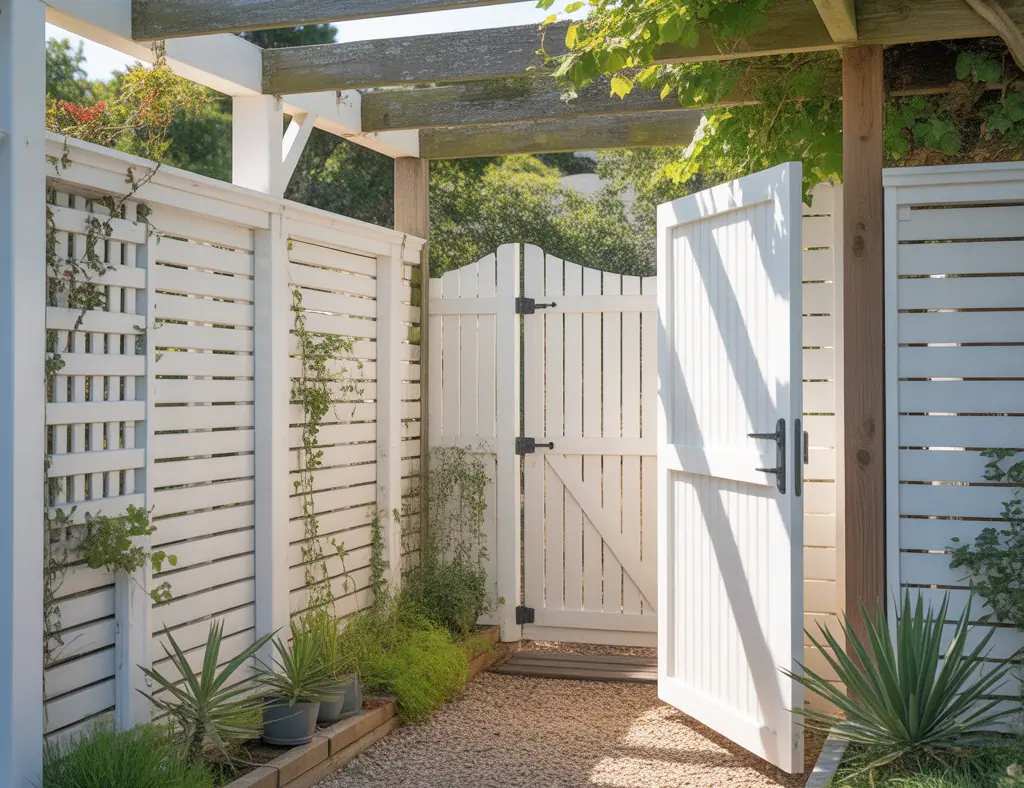
- Green screening: Plant climbing roses, clematis, or jasmine to soften white panels and add fragrance.
- Planter integration: Mount window-box planters to the fence for seasonal color.
- Mixed materials: Combine a white lower privacy wall with a wood or metal gate for contrast.
- Arched gates and scalloped tops: Small curves give a cottage feel while maintaining privacy.
Maintenance: Keep Your White Fence Looking Fresh
White shows dirt, but maintenance varies by material:
- Vinyl/composite: Wash with a gentle soap solution and soft brush annually to remove pollen and mildew.
- Wood: Inspect for rot, repaint every 3–5 years, and use exterior-grade primer + paint. Seal cut ends to prevent moisture intrusion.
- Metal: Check powder-coating for chips; touch up and clean to prevent rust.
Quick cleaning tip: A 1:3 mix of white vinegar and water removes mildew spots without harsh chemicals. For stubborn stains on vinyl, a soft-bristled brush and mild detergent usually do the trick.
“White Privacy Fence Options” — Which One is Right for You?
To recap, choose vinyl for low-maintenance brightness, wood for classic charm and budget flexibility, composite for eco-durability, and metal for modern strength. Consider mixed designs for visual interest and add landscaping to increase screening naturally. If you’re tackling this as a DIY weekend project, start small, plan posts carefully, and don’t skip the concrete—posts are the backbone of a long-lasting fence.
Frequently Asked Questions
1. How much does a white privacy fence cost per foot?
Costs vary widely by material and region. Rough estimates: wood $15–30/linear foot (installed), vinyl $25–45/linear foot, composite $40–60/linear foot. DIY reduces labor costs but requires time and tools.
2. Can I paint a vinyl fence white if it’s another color?
Vinyl is designed to be color-stable and isn’t meant to be painted—paint may peel. If you need white and the panel isn’t white, replacement with white panels is recommended. For wood and composite, use appropriate exterior paint or finish.
3. Do white fences require special cleaning to prevent stains?
Not special products—regular washing with mild detergent, or a vinegar-water solution, keeps white fences clean. For mildew-prone climates, annual cleaning and ensuring good airflow and sunlight exposure reduce staining.
Conclusion — Ready to Pick Your Fence?
Choosing between white privacy fence options comes down to lifestyle, budget, and the look you want. Whether you install a low-maintenance vinyl fence, craft a painted wood classic, or try composite for longevity, a well-chosen white fence will boost privacy and curb appeal. Want help planning a DIY fence project or visualizing design options for your home? Check out our DIY projects and home design ideas pages for step-by-step tutorials and inspiration. Ready to start? Measure your space, pick your material, and transform your yard this weekend—your private oasis awaits.