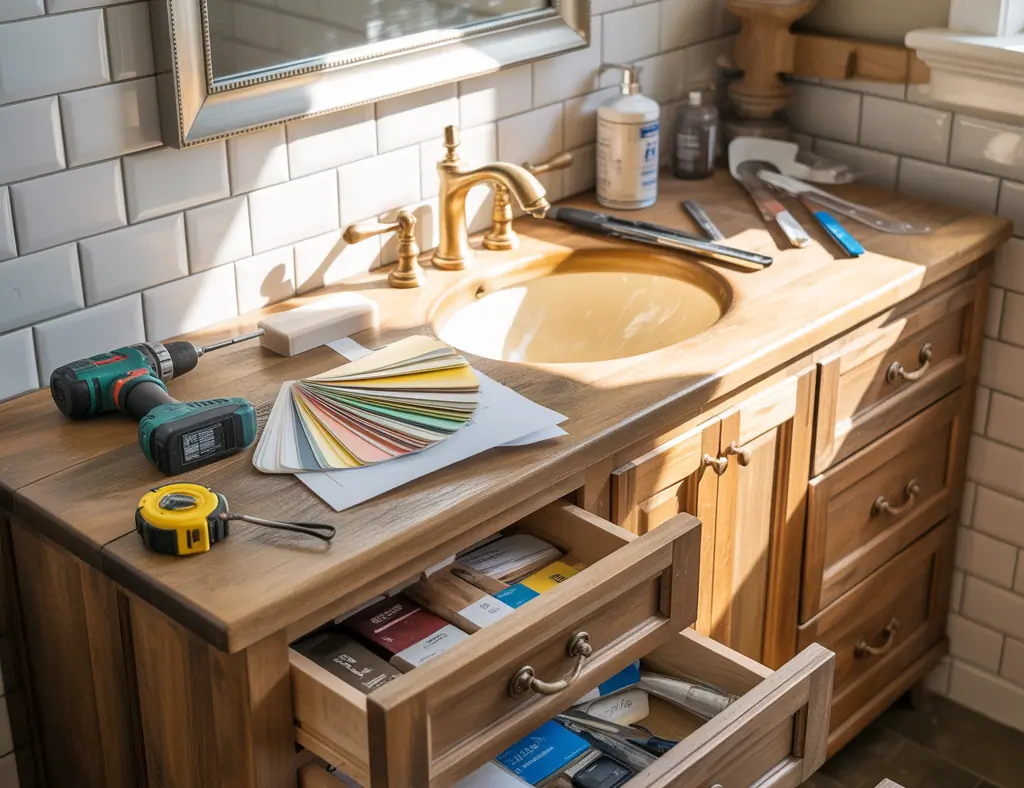
Ever stood in front of a dated sink, frustrated that your bathroom looks tired despite a nice tile job? Maybe the cabinet doors stick, the countertop is stained, or you have zero storage for toiletries. A vanity upgrade is one of the fastest, highest-impact home improvements you can tackle—often without hiring a contractor. In this article I’ll walk you through practical vanity makeovers, small bathroom vanity ideas, and step-by-step DIY projects that bring professional results on a realistic budget.
Why a Vanity Upgrade Changes Everything
The vanity is the focal point in most bathrooms. A well-chosen vanity not only improves storage and functionality but also sets the overall design tone. Whether you’re after a modern floating vanity, a rustic farmhouse look, or a compact vanity for a powder room, smart design choices can make a small space feel luxurious and well-planned.
Vanity Basics: Know Your Options
Types of Vanities
- Freestanding vanity: Classic, easy to replace, great for traditional bathrooms.
- Floating vanity: Modern, creates visual space, ideal for small bathrooms.
- Corner vanity: Space-saving solution for tight layouts.
- Custom built-in vanity: Tailored to your storage needs, higher cost but perfect fit.
Common Vanity Materials
Countertops and cabinet materials affect durability and style. Consider quartz or solid-surface for stain resistance; marble for high-end looks (with maintenance); plywood or solid wood for cabinet durability; and moisture-resistant MDF only if sealed properly.
Step-by-Step DIY Vanity Makeover
This simple plan covers a cabinet refresh, new countertop, and updated hardware. It’s ideal for a weekend project.
Tools & Materials
- Measuring tape, level, stud finder
- Orbital sander, 120–220 grit sandpaper
- Primer and semi-gloss paint or wood stain and sealant
- New countertop (precut laminate, quartz, or butcher block)
- New faucet, sink or sink resurfacing kit
- Cabinet hardware (pulls and hinges)
- Plumber’s tape, silicone caulk
Project Steps
- Measure the existing vanity and the bathroom layout. Note plumbing positions.
- Remove doors and hardware. Label hinges if you plan to reuse them.
- Sand cabinet faces to remove finish. Wipe clean and apply a good primer.
- Paint or stain cabinets. Use semi-gloss or satin for moisture resistance.
- Install new countertop. If replacing sink/faucet, turn off water and disconnect supply lines before removing old fixtures.
- Attach new hardware and rehang doors. Adjust hinges for perfect alignment.
- Seal edges with silicone caulk and reconnect plumbing. Check for leaks.
Design Inspiration: Styling Your Vanity
Small changes deliver big style payoffs. Here are ideas to inspire your next vanity renovation.
Color & Finish Ideas
- Deep navy or charcoal for a moody, modern look.
- Soft pastels for airy coastal and vintage vibes.
- Natural wood tones for warmth—pair with matte black hardware.
Mirror and Lighting Tips
A mirror and the right lighting can make even a modest vanity shine. Try a round or arched mirror to soften edges. Mount sconces at eye level on either side for shadow-free lighting, or use a backlit mirror for a sleek, spa-like feel.
Budget-Friendly Upgrades That Look High-End
- Swap outdated hardware for modern pulls and knobs.
- Add beadboard or shaker-style trim to plain cabinet faces.
- Replace old faucet with a single-handle or matte black model.
- Use peel-and-stick backsplash tiles behind the sink for a quick style boost.
Real-World Advice Before You Start
Plan well to avoid cost overruns and surprises:
- Measure twice: Confirm clearances for doors and drawers, and ensure the vanity won’t obstruct toilet or shower doors.
- Check plumbing and electrical: If your new vanity requires moving pipes or outlets, factor in professional help.
- Weight considerations: Floating vanities need solid studs and heavy-duty mounts. Follow manufacturer weight limits.
- Permits: Some municipalities require permits for plumbing changes. Verify local rules before you start.
Small Bathroom Vanity Ideas
Short on space? Go for a slim-line or wall-mounted vanity, use vertical storage, and choose a light countertop to keep the room feeling open. A pedestal sink can work, but a shallow cabinet with drawers often offers the best balance of storage and footprint.
Frequently Asked Questions
How do I choose the right vanity size?
Measure your bathroom footprint, leaving at least 21 inches in front of the vanity for comfortable use. For double sinks, allow at least 60 inches wide. Consider door swing and toilet placement when choosing width and depth.
Can I install a new vanity myself?
Yes, many homeowners successfully install vanities. Basic carpentry, plumbing disconnect/reconnect, and measuring skills are needed. For moving plumbing lines, complex electrical, or installing heavy stone tops, hiring a pro is recommended.
What are low-maintenance vanity countertop options?
Quartz is highly durable and low-maintenance, resisting stains and scratching. Solid-surface materials are also easy to care for. Avoid untreated natural stone if you want minimal upkeep.
Get Started: Your Next Steps
Ready to transform your bathroom? Start with a clear plan: pick a style, set a budget, and choose whether to do a full replacement or a vanity makeover. For more project ideas and step-by-step guides, check out our DIY projects and browse our home design ideas pages. If your remodel touches plumbing or countertops that are part of a larger renovation, the same design principles apply to kitchen upgrades—think hardware, countertops, and lighting.
Conclusion: Make Your Vanity Work for You
A well-executed vanity update delivers style, storage, and daily satisfaction. Whether you choose a full replacement, a floating vanity installation, or a quick paint-and-hardware refresh, these projects are approachable and rewarding. Try one of the ideas above this weekend and see how a focused vanity makeover can elevate your entire bathroom. Ready to start? Grab your tools, pick a design, and share your progress—your dream vanity is within reach.
For more budget-friendly DIY ideas to transform your bathroom, check out our article on Transform Your Bathroom 10 Tips for a Functional and Stylish Space.