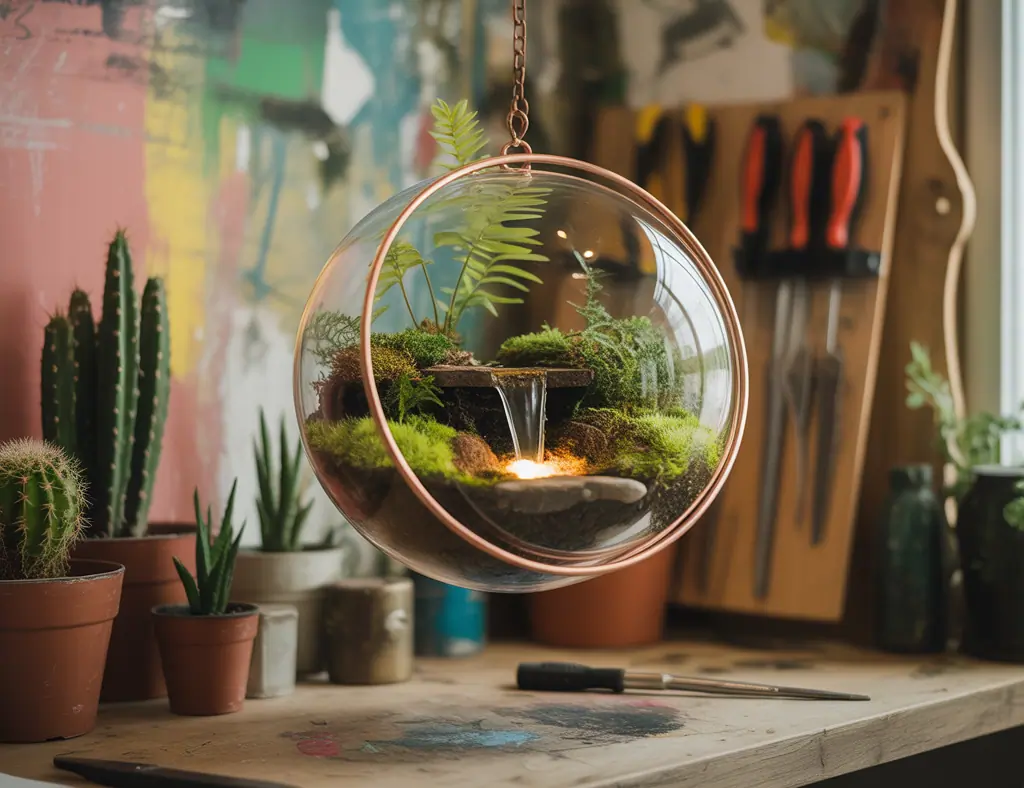
Have you ever stared at an awkward blank corner or a small apartment window and wondered how to add life and personality without sacrificing floor space? If you’ve been scrolling feeds of stylish flats and tiny-home hacks, a unique hanging terrarium might be the answer — a suspended micro-garden that brings greenery, texture, and DIY charm to any room. Whether you’re a beginner plant parent or a weekend maker who loves quick home upgrades, this guide will walk you through ideas, step-by-step builds, and practical care tips.
Why Choose a Hanging Terrarium?
Hanging terrariums are perfect for renters, small-space dwellers, and anyone looking to create a focal point without cluttering surfaces. These suspended glass gardens:
- Save precious counter and floor space
- Add vertical interest and soft lighting when paired with string lights
- Work well with low-maintenance plants like air plants, succulents, and moss
- Offer a creative DIY project with materials you may already have
How to Create a Unique Hanging Terrarium: Step-by-Step
This easy build balances design and plant health. Use it to create a glass globe terrarium, geometric planter, or repurposed jar garden.
Materials You’ll Need
- Glass container with opening (hanging globe, geometric terrarium, wide-mouth jar)
- Hanging hardware: brass chain, macramé cord, or leather strap
- Small pebbles or gravel for drainage
- Activated charcoal (prevents odors and mold)
- Potting mix suitable for chosen plants (cactus mix for succulents)
- Plants: air plants (tillandsia), small succulents, ferns, or preserved moss
- Tweezers, small spoon, and a spray bottle for watering
Build Instructions
- Clean the glass container thoroughly and dry it.
- Add a 1-inch layer of pebbles for drainage. Place a thin layer of activated charcoal on top to keep water fresh.
- For closed terrariums with soil: add a layer of potting mix. For air-plant-only designs: skip soil and use decorative sand or moss to anchor plants.
- Arrange your plants using tweezers or a chopstick. Place taller specimens in the back and mound moss or sand around bases to secure them.
- Attach hanging hardware. For glass globes with built-in loops, use braided macramé cord or a brass chain. For jars, install a screw-top lid with a hook or create a macramé cradle.
- Hang in the chosen spot and mist appropriately. Monitor moisture to avoid mold or root rot.
Design Inspiration: Styles for Every Room
Consider the vibe you want and the light conditions available. Here are creative concepts to try:
Minimalist Glass Globe Cluster
Hang three different-sized glass globes at staggered heights over a reading nook or above a console table. Use air plants or small succulents for an airy, Scandinavian look.
Boho Macramé Hanging Planters
Pair geometric terrariums with handmade macramé hangers. Add draping string lights and trailing plants like baby tears or small ferns for a relaxed, layered effect.
Kitchen Herb Terrarium
Install a shallow hanging planter near a sunny kitchen window and grow small herbs like thyme, oregano, or micro basil. This indoor garden doubles as decor and cooking convenience — a fun kitchen upgrade for apartment chefs.
Bathroom Humidity Haven
Utilize the steam from showers to grow moisture-loving plants. Ferns, moss, and small bromeliads thrive in humid bathrooms. Make sure the terrarium still gets indirect light.
Practical Tips & Real-World Advice
Choosing Plants for Light Conditions
Match plant types to the light in the hanging location:
- Bright indirect light: succulents, echeveria, air plants
- Low to medium light: ferns, pothos cuttings (in water), moss
- High humidity areas: ferns, fittonia, small bromeliads
Watering and Maintenance
- Closed terrariums: water very sparingly — condensation is a sign to reduce moisture.
- Open terrariums and air-plant setups: mist 1–2 times weekly, soak air plants 20–30 minutes every 2 weeks if needed.
- Rotate to avoid plants leaning toward light sources and prune any yellowing leaves promptly.
- Use activated charcoal in the substrate to reduce odors and mold growth.
Hanging and Safety Considerations
Always factor in weight and anchoring:
- Use a ceiling anchor or wall hook rated for the combined weight of the glass, substrate, and plants.
- For rented spaces, use adhesive hooks rated for the weight or hang from curtain rods with secure knots.
- If you have pets or children, hang out of reach or choose unbreakable containers like painted terracotta spheres.
Creative DIY Variations
Want a distinctive look? Try these twists:
- Repurpose old light bulbs as tiny hanging terrariums for a quirky, industrial look.
- Paint the outside rim of a glass globe with metallic spray paint for a modern accent.
- Combine driftwood and hanging planters — mount driftwood on a wall and hang multiple terrariums from it for rustic charm.
- Install LED puck lights inside larger closed terrariums to create a glowing centerpiece at night.
Frequently Asked Questions
What are the best plants for a hanging terrarium?
For open hanging terrariums try air plants (tillandsia), small succulents, and sedums. For closed or humid environments, mosses, ferns, and small tropicals like fittonia work well. Choose plants based on the light and humidity where you’ll hang the terrarium.
How do I hang a glass terrarium safely?
Use a ceiling hook or wall anchor rated for the weight. For glass globe terrariums, a sturdy macramé cradle or metal chain with a secure knot will distribute weight evenly. If you’re renting, opt for heavy-duty adhesive hooks or hang from existing curtain rods or shelves.
How often should I water a hanging terrarium?
Watering depends on the design: closed terrariums need very little — sometimes once every few months. Open terrariums with soil generally need watering when the top inch of soil is dry. Air plants merit a weekly mist or a 20–30 minute soak every 1–2 weeks. Always check plant-specific needs to avoid overwatering and root rot.
Conclusion: Make Your Own Unique Hanging Terrarium
Creating a unique hanging terrarium is a rewarding home improvement and DIY project that adds living art to any room. With a few basic materials, thoughtful plant choices, and proper hanging hardware, you can transform blank corners, windows, or even bathrooms into lush, suspended gardens. Ready to get started? Try a simple air-plant globe as your first build, then scale up to clusters or macramé displays once you’re comfortable.
For more hands-on inspiration and step-by-step projects, check out our DIY projects and browse ideas that pair well with terrariums in our home design ideas section. If you want to bring greenery into your cooking space, explore our kitchen upgrades for small-space gardeners.
Try one today — hang it, care for it, and share a photo of your creation to inspire others!