Ever stood in your kitchen at dusk, trying to finish homework at the table or prep a late-night snack, and felt like the lighting was working against you? You’re not alone. Whether your dining nook is a cramped breakfast corner or a roomy farmhouse table, the right lighting can change how a kitchen feels and functions. In this post I’ll walk you through the top kitchen table lighting ideas—with practical DIY tips, step-by-step installs, design inspiration, and real-world advice so you can upgrade your lighting this weekend.
Why lighting matters: function, mood, and design
Lighting is more than decoration—it’s task lighting for cutting and reading, ambient light for dinner, and a design statement that ties your whole kitchen together. When you plan kitchen table lighting, think about layered illumination: task, ambient, and accent. Combine a dependable central fixture with dimmers and secondary sources for a versatile, inviting space.
Top kitchen table lighting ideas for every style
Below are durable, stylish concepts that suit modern, rustic, farmhouse, industrial, and minimalist kitchens. Each idea includes DIY-friendly variations and installation tips you can apply at home.
Pendant lighting: classic and customizable
- Single oversized pendant: A statement dome over a round or square table centers the space. Rule of thumb: pendant diameter should be roughly 1/3 to 1/2 the width of the table. Hang 30–36 inches above the tabletop for task-focused light.
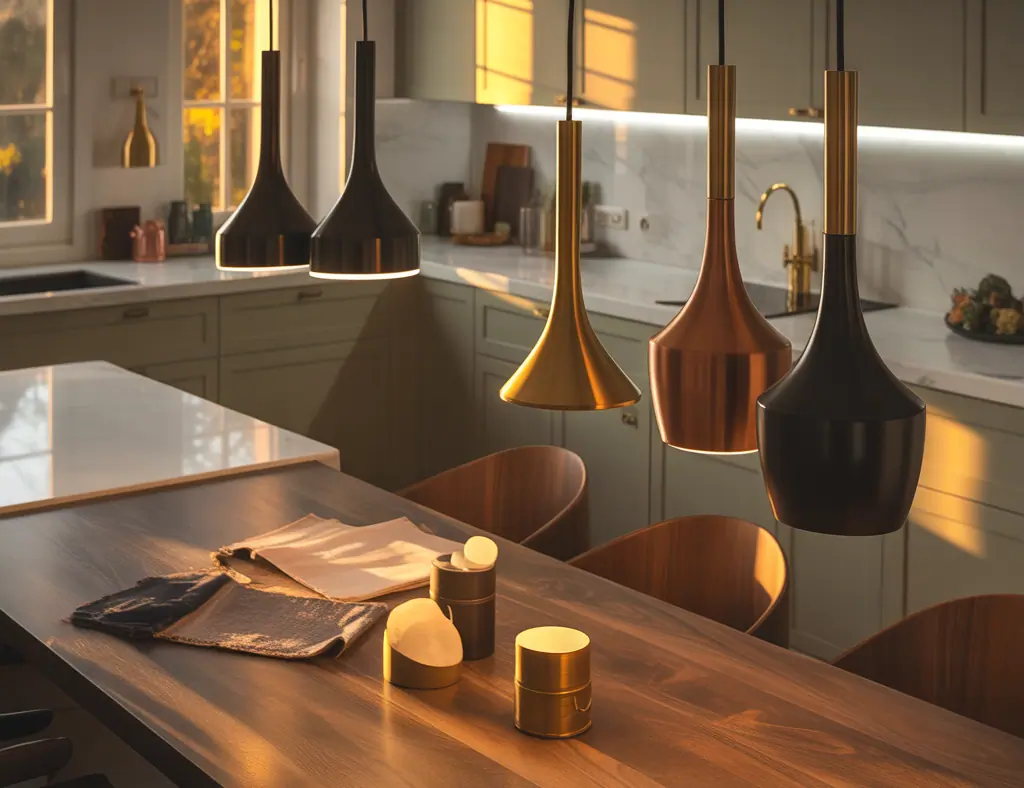
- Multi-pendant cluster: Two or three smaller pendants staggered in height work well over long rectangular tables or kitchen islands. Groupings create a tailored, modern look.
- DIY tip: Recycle glass jars or thrifted shades—clean, paint, and swap hardware to create custom pendant fixtures on a budget.
Linear suspension lights for long tables and islands
Linear or bar fixtures distribute light evenly across rectangular surfaces. These are perfect for open-plan kitchens or island dining. Look for adjustable-height models and wide LED strips for uniform illumination.
Statement chandelier for bold, formal looks
A chandelier isn’t just for dining rooms. An appropriately scaled chandelier can elevate a kitchen table without feeling over the top. Choose one with adjustable chain length and dimmable bulbs to set the mood.
Cluster and gallery fixtures for eclectic and layered designs
Mix several small pendants or sconces at different heights for an artisan, gallery-style installation. This approach adds texture and visual interest—great for achieving a curated, handmade look.
Flush and semi-flush mounts for low ceilings
If your kitchen has low ceilings, choose semi-flush or flush-mount lighting. These fixtures sit closer to the ceiling but can still be stylish and powerful—pair them with under-cabinet LEDs to layer light effectively.
Design principles: how to choose the right fixture
- Scale and proportion: Match fixture size to table size. Small pendant for small tables; linear or multiple pendants for longer tables.
- Height: 30–36 inches above the table is a good starting point for standard 8–9 foot ceilings.
- Color temperature: Use warm white bulbs (2700K–3000K) for cozy dining; higher Kelvin values for task-heavy kitchens.
- Bulb type and CRI: LED bulbs with CRI 90+ show true colors—important for food prep and photography.
- Dimmers: Add a dimmer switch for instant ambiance control. Ensure the dimmer is compatible with LED drivers.
Step-by-step DIY: installing a pendant light over your kitchen table
- Measure and mark: Determine center point above your table. Measure recommended height (30–36 inches) and mark ceiling location.
- Turn off power: Switch off the circuit breaker for the room. Verify with a voltage tester.
- Install a junction box: If there’s no ceiling box, install one rated for the fixture’s weight and local code. For heavy fixtures, use a box anchored to a ceiling joist or a brace.
- Mount bracket and connect wires: Attach the mounting bracket to the box. Connect hot (usually black), neutral (white), and ground wires (green/bare) using wire nuts. Follow manufacturer instructions.
- Secure the fixture and adjust height: Attach the shade or canopy. Fine-tune cable length so the fixture sits at the desired height.
- Turn power on and test: Restore power and test the light. If using a dimmer, confirm smooth dimming and no flicker.
Safety note: If you’re uncomfortable with wiring or if local code requires, hire a licensed electrician.
Budget-friendly DIY lighting projects
- Mason jar pendants: Convert jars to pendants with lamp kits—ideal for farmhouse kitchens.
- Painted thrift chandelier: Sand and spray with heat-resistant paint for a trendy update.
- Industrial pipe light: Use black iron pipes and Edison bulbs for an industrial vibe—measure carefully and use UL-listed components.
Lighting for specific needs: homework, entertaining, and photography
For homework and reading, prioritize focused task lighting and higher brightness. Install a dedicated pendant or adjustable swing-arm sconce near the work area. For entertaining, use dimmers and warm bulbs to create a relaxed atmosphere. If you post food photos, use high-CRI LEDs and position lights to minimize harsh shadows—side lighting often works best.
Real-world advice from installers and DIYers
- Test scales physically: Tape a paper circle on the ceiling that matches the fixture diameter to see how it reads in the space.
- Think about cleaning and maintenance: Open or intricate fixtures collect dust faster—choosing easy-to-clean shades saves time.
- Prepare for glare: Use frosted shades, diffusers, or lower-wattage bulbs to reduce glare on tabletops and screens.
- Plan for future upgrades: Install an extra junction box or conduit for future additional fixtures or smart controls.
Frequently Asked Questions
1. What height should I hang lighting over a kitchen table?
As a general guideline, hang pendants 30–36 inches above the tabletop for standard ceiling heights. For higher ceilings, raise the fixture proportionally. Always consider sightlines and whether the fixture obstructs conversation.
2. Can I install a dimmer with LED kitchen table lighting?
Yes—most LED bulbs work with dimmers, but you must use a dimmer specifically rated for LED loads and compatible with the bulb/driver. Look for dimmer compatibility lists or choose dimmable LEDs and a modern electronic dimmer to avoid flicker.
3. How do I pick the right size light for my kitchen table?
For round tables, use a single fixture whose diameter is roughly 1/3 to 1/2 of the table width. For rectangular tables, choose a linear fixture or multiple pendants spaced evenly; aim for the fixture to be shorter than the table length so it doesn’t overpower the space.
Conclusion: bring these top kitchen table lighting ideas to life
Good lighting makes your kitchen table more functional, comfortable, and beautiful. Whether you prefer a minimalist pendant, a rustic mason-jar project, or a dramatic chandelier, these top kitchen table lighting ideas give you practical design guidance and DIY steps to get started. Ready to upgrade? Try a small weekend project—swap bulbs, add a dimmer, or install a single pendant—and see how much a difference lighting makes.
Want more inspiration and step-by-step projects? Check out our DIY projects, browse creative kitchen upgrades, or explore fresh home design ideas to plan your next improvement. If you have questions about a specific fixture or need help with installation choices, leave a comment or subscribe for more guides.