A flat in Kensington, that both sides agreed was “uninhabitable” at the time of valuation, recently tested a critical question that many leaseholders facing a lease extension face: does a property’s condition really lower the premium you pay? The Upper Tribunal said yes, and agreed with the First-tier Tribunal’s lower valuation. Here’s what happened, why it matters, and how it could end up saving you a pretty penny.
How condition can lower your lease extension premium
The case in question is Mountview Estates PLC v W8 Property Ltd, but since it was decided by the Upper Tribunal (Lands Chamber) in 2026, its relevance to the valuation of properties in the lease extension context is big news. Simply put, the value of a property depends on its location and condition, and if a flat is in a bad state of repair or simply not fit for occupation then its market value is automatically lower which means that the premium you pay for a lease extension is also lower. Both experts who looked at the place agreed it was uninhabitable & that’s why the FTT accepted a 17.5% downward adjustment compared to similar modernised flats in the area, and the UT confirmed that position on appeal.
The logic really isn’t that complicated:
- Value of a property involves both location & condition, and if a flat is in poor repair then its market value is naturally going to be lower than that of an identical flat in good nick.
- The premium for extending a lease under the Leasehold Reform, Housing and Urban Development Act 1993 is worked out from the flat’s market value, which means if that value is lower then the premium you have to pay is also going to be lower – the cost of extending your lease suddenly looks a lot more manageable.
- And if we’re talking about prime areas like Kensington then a 17.5% condition adjustment on a flat that’s worth over £1 million translates to a premium reduction of tens of thousands of pounds – that’s a serious saving.
This article has been written by a UK property solicitor for leaseholders trying to figure out their options for a lease extension in London or elsewhere in England & Wales, especially those who want to know how condition influences valuation, what kind of evidence they’re going to need, and how to avoid overpaying the premium.
The Kensington “uninhabitable flat”; what actually happened in this case?
Before we dive into the ins and outs of valuation theory, it is a good idea to know the real story behind this dispute.
The flat in question, Flat 9, Kensington Court Gardens, London W8, is a bit of a shell of a place. The lease was originally granted way back in 1960. By the time the valuation date came around the unexpired term was relatively short & a section 42 notice had been served in March 2023 proposing a premium; the landlord countered with a much higher figure.
At the time of valuation, the flat was effectively uninhabitable to say the least. Both valuers agreed it was “uninhabitable.” The inspection revealed that the kitchen was no longer functional, the bathrooms were stripped out, the electrical installation was defective, there was damp & the internal finishes were badly damaged – not exactly a place you’d want to move into without doing a lot of repairs.
The FTT found that the right thing to do was to start with sales of similar but habitable flats in the same area; neighbouring modernised flats were selling in the region of £1.1m to £1.2m. It then adjusted down by 17.5% to reflect the condition of the property, which resulted in a lower freehold value & consequently a lower premium.
The landlord appealed, arguing that the FTT had over-discounted for condition & that the tenant’s repairing covenant (“good tenantable repair”) should be assumed to have been complied with in order to bring the flat up a bit closer to modern living standards.
The Upper Tribunal agreed with the FTT’s approach, confirming that “good tenantable repair” just means the place is structurally sound, safe & watertight – it doesn’t mean modernised. Unless an installation was confirmed non-functional or dangerous under the repairing covenant then the tenant isn’t assumed to have upgraded the finishes to current market standards. The 17.5% deduction stood.
How does a property’s condition fit in with lease extension and property valuation?
The premium you have to pay to extend a lease is basically driven by the flat’s underlying house value on the valuation date, combined with factors like years remaining & ground rent. Condition & maintenance play a pretty big role in property valuation because the premium calculation rests on market value – what a real buyer would actually pay.
Under the 1993 Act, the premium is built from these ingredients:
- The diminution in the landlord’s interest (freehold reversion loss) resulting from the grant of a new, extended lease.
- Half the “marriage value”, which kicks in when the lease has fewer than 80 years unexpired. Marriage value is the uplift in combined value created by combining the freehold & leasehold interests.
- Any compensation for other landlord losses (in practice this is often zero).Valuation methods can be broken down into three main categories : Sales comparison, Income and Cost approaches. The sales comparison approach makes use of recently sold similar properties to work out what a property is worth and is the dominant method in leasehold cases. The Income approach calculates value based on what a property is earning in rental income and how much it costs to run the property, while the cost approach works out the value of a property based on how much it would cost to rebuild it, minus depreciation. When it comes to choosing a valuation method, it’s all about the type of property & what’s available on the market, but for apartments, you can bet your life on it: comparing sales is the way to go.
Where a property is located has a huge bearing on its base value when it comes to valuation. But even within a given area, the condition of a property can make a massive difference – we’re talking hundreds of thousands of pounds here. Valuations take into account all sorts of things like the size of the property, how old it is and what’s currently happening in the market place. So a flat that’s been stripped out, whilst sitting in the same building as a recently done-up flat is going to sell for a lot less. What buyers are prepared to pay for a property is also influenced by market conditions. And if a flat needs a whole load of work – say £200,000 worth – chances are it’s only going to attract one sort of buyer: a developer or a cash buyer looking to make a pretty penny.
Any reduction in a flat’s market value is automatically fed through to the premium calculation. Both the “before” and “after” values used in the statutory formula drop, pulling that premium down.
From glossy brochure to bare shell: why a condition report is so important
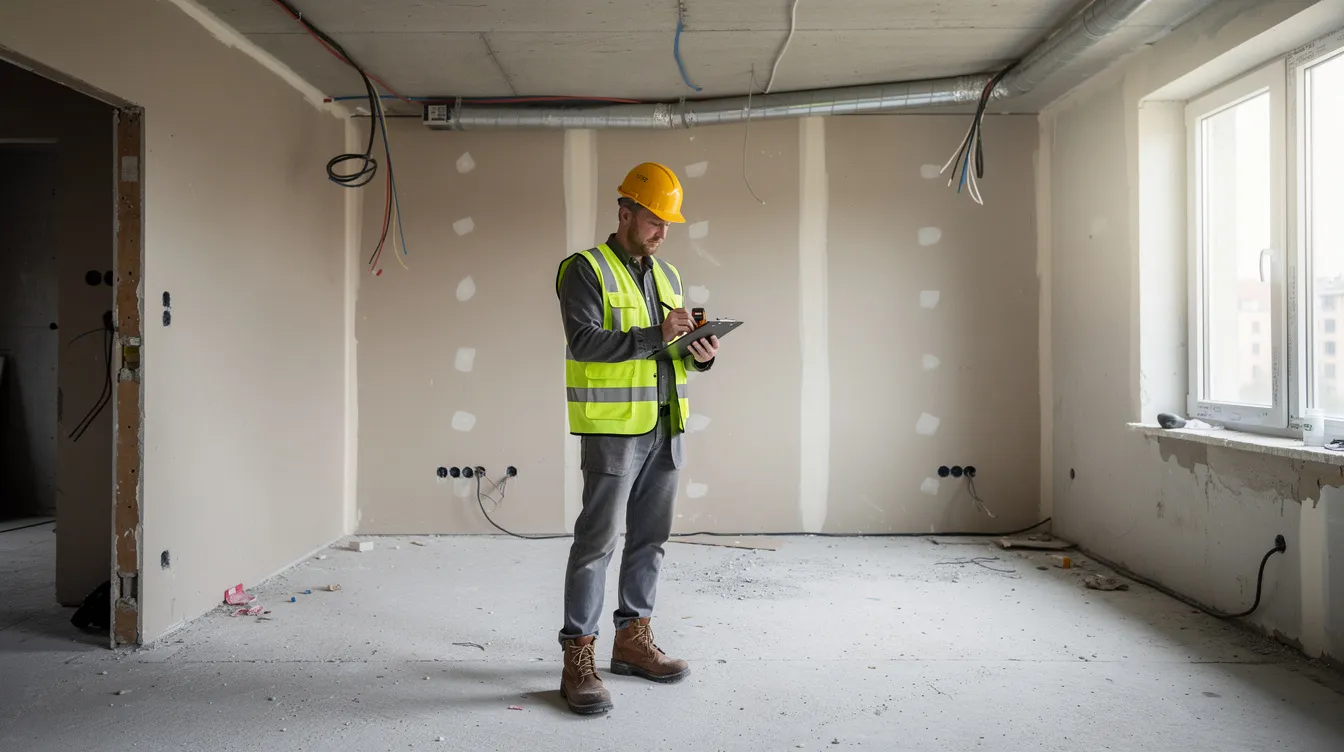
Surveyors do in-depth property valuations & produce detailed reports. But the valuation itself is only as good as the evidence that backs it up – specifically, the condition evidence. In the Kensington case, photos and survey evidence showed that the flat was effectively a shell that needed a complete overhaul – and that evidence was the backbone of the 17.5% deduction they made.
Professional surveyors do property valuations in person & it can take anything from an hour to do one. The condition evidence they rely on comes in several forms – like a RICS condition report (also known as a Level 1 survey) which is a basic overview of what’s what. That’s probably the one to go for if you’ve got a relatively new property under five years old. It’s a basic report which only looks at visible defects & uses a traffic light system to rate them: green for nothing to worry about, amber for things that need sorting out pronto, and red for things that really need doing straight away. It’s a basic report that will cost anything from £200 to £450 & it’s basically just a visual inspection with some advice on defects.
- A Level 2 HomeBuyer report does the same but with a bit more analysis of how the building is generally doing.
- And then there’s the full building survey (Level 3) which is the one to go for if you’ve got an older property or one with obvious defects. It’s really thorough: it assesses everything from the structure to the damp to the services to the drainage. It even produces a costed schedule of works which is what the tribunals like to see.
A proper condition report can highlight all sorts of things that would affect what someone is prepared to pay – like a lack of heating, dodgy electrical installation, water ingress or even structural movement. And it can also help sellers justify higher prices if the property’s in good nick – but, of course, in lease extension disputes, it’s all about the bad stuff: the less nice things about the property that you can document properly.
Tribunals love contemporaneous evidence. So it’s a good idea to get some dated photos, the surveyor’s notes and even some contractor’s estimates from the valuation date. Any old recollections months later just won’t cut it.
How surveyors adjust comparables for poor condition
This is where the detail really matters. So here’s how a surveyor gets from a shiny new sale next door to a valuation of your in-habitable flat.
The starting point is usually finding some sales of similar nearby flats that are in good nick. RICS says to use completed sale prices rather than asking prices, & the data usually comes from HM Land Registry & Land Registry records. Then the surveyor strips out all the differences in things like size, floor, outlook, and lease length. Size & layout of the property can make a big difference to the appraisal value, and so can things like parking and gardens which can add a bit of extra value to certain property types.
Then it’s on to the condition adjustment. In the Kensington case, modernised two-bed flats in the same block were selling for around £1.15m. So the surveyor for the leaseholder costed out the schedule of works needed to bring Flat 9 up to a comparable standard – and then applied a deduction of 17.5% from the modernised comparable price. It’s not just the works costs that get subtracted, you see. The surveyor adds in all sorts of other things like disruption costs, financing costs (because buyers might need cash or bridging finance to fund the work) and a margin to reflect the risks and profit that a buyer taking on a project would require.
Just to give you an idea, suppose the costed works came in at £180,000. A simple subtraction would take you to £970,000. But the surveyor would argue that buyers factor in more than just the bare construction costs. You see, there’s the risk of hidden defects (all the little problems that only emerge once you start doing the work), the time value of money while you’re refurbishing & a developer’s profit expectation. And, in the end, the resulting deduction was closer to £200,000 – landing the freehold value around £950,000. That lower value then fed through every step of the premium calculation.The Upper Tribunal was also of the same view. Where there was clear, consistent and costed evidence of disrepair and required repairs the adjustment was seen as reasonable.
When does a flat become legally ‘uninhabitable’ and what does that mean for value?
There’s no specific definition of “uninhabitable” in the 1993 Act, but tribunals use it as a shorthand to describe a property where no one would reasonably stay – but with significant works needed to make it possible to live there.
Some common characteristics of flats that are considered uninhabitable:
- A flat with no working bathroom or kitchen for example
- Wiring that’s a danger to health (an electrical installation condition report with C2 “potentially hazardous” comments would be a good example)
- No heating or hot water
- Severe damp or mould that’s not easily sorted
- A structure that’s so badly damaged you’d need to fix it right away
- Common areas that are not safe
Just because a flat is uninhabitable doesn’t mean it has no value at all. It’s often valued as a project or shell, which developers or cash buyers can pick up at a discount on a ready-to-move-in property.
The impact of mortgageability on value is also worth considering. Mortgage lenders don’t do a super detailed valuation, but if they won’t lend on the property at all the buyer pool quickly shrinks to just cash buyers. If a building society or bank refuses to give a mortgage that reduces the sale price a surveyor think can be fairly achieved in the valuation. And that lower value then feeds directly into the premium.
In the case of Mountview, the Upper Tribunal confirmed that “good tenantable repair” under the lease covenant doesn’t mean the property is in modern condition at all. Even if the flat is practically uninhabitable it’s the assumed condition that takes priority – unless the repairing covenant is clearly being ignored and the flat is in a really poor state of repair.
When can disrepair actually be used to your advantage as a leaseholder
Well, for once disrepair could work in your favour – but only if you do it right and back it up with solid evidence.
If you’re trying to get a lease extension in London or elsewhere you can:
- Get a detailed building survey done and get contractor quotes before the valuation date
- Share that evidence with your surveyor so they can justify any condition adjustments with some actual numbers
- Avoid doing cosmetic work that makes the place look better but doesn’t actually pay for itself by reducing the premium
But be careful. Letting a property deliberately fall into disrepair is a bad call:
- You risk breaching the lease’s repairing covenant which could lead to the freeholder taking action to have the lease terminated
- Tenants or managing agents may also try to take you to task
- Insurance might not even cover a property in a bad state of repair
And then there’s the simple fact that living in an unsafe property is, well, unsafe.
The right approach is to do the absolute minimum to stop the place from becoming uninhabitable, but hold off on any major high-end refurbishments until the lease extension is sorted out. Get your valuer and lease extension solicitors in London working together from the get go so that the evidence you gather – dated photos, condition reports, contractor quotes etc – all lines up with the statutory valuation date.
Online house valuations vs what actually happens in a tribunal
Online house valuations and automated valuations from property portals all assume the property is in good nick. They take data from the Land Registry, recent sales and so on and produce an online estimate of house value at postcode or street level. An estate agent might do a free valuation, but that’s often a bit biased towards trying to get you to sell.
These tools have serious limitations when it comes to lease extension disputes though:
- They can’t actually see what the state of the property is like – they don’t know the flat has no kitchen for example
- They don’t have any recent property condition report or condition survey to go on
- They assume the property is in pretty good condition and of a conventional type, which may not be the reality at all
- The accuracy depends on how many comparable sales there are in the same postcode and for the same type of property
Tribunals won’t accept online valuations or generic prices as the basis for a contested premium. They need a proper valuation that’s backed up by a proper inspection and analysis of the property, and the lease extension solicitors in London will need to work with a chartered surveyor to get this.
That said, online estimates and local house prices can be useful as a rough check – if your surveyor’s figure is wildly different from every online tool and local agent’s view, it’s probably worth asking why. But the statutory premium will be determined by a proper valuation, not some algorithm.
What evidence you might need to prove the condition of your property
Gathering the right evidence can be the key to getting a good deal. Here are the main types of report you might need to get:
- A rics condition report (the Level 1 one for newer properties that are in pretty good nick) – this is a starting point for a visual inspection and uses a traffic light system (green, amber, red) to spot defects* A Full Property Survey at level 3 is what you need for older or defective flats. This is the report that’ll give you a full breakdown of every single thing in the place & comes with a cost schedule. Its the gold standard for tribunal evidence. And it’ll identify structural problems, damp, roof defects and service failures.
- An Electrical Installation Condition Report (EICR) when the wiring is old or just not safe. An EICR with “unsatisfactory” written in it with code C2 (really bad) and C3 (needs doing) observations is just about as solid as evidence that you need to get the electrics sorted and the flat would fail a spot check in line with the current standards.
- Specialist condition reports: damp surveys, structural engineers reports, or drainage reports when it comes to it. Each one is looking at a specific type of problem and is just another piece of the jigsaw for the valuer
A Red Book valuation is by RICS rules & sticks to the strict standards set out by the Royal Institution of Chartered Surveyors. RICS-approved valuations mean they follow an international standard for accuracy and the whole point of the RICS Valuation Standards is to outline just how to get the pricing spot on. Any valuation used in a tribunal – and you should try to get one that is – needs to be Red Book compliant – that little “Red Book” logo helps show you’re sticking to the rules.
Landlords will often get a report done which says the job is cheaper than you think. Your aim is to show some rock solid evidence that can withstand any arguments they might throw your way. And if the two experts can’t see eye to eye, the tribunal might have you go in together to inspect the place or ask for more info.
Working with Surveyors and Lease Extension Solicitors
Getting the right people on your side early on is vital if the financial stakes are high. So get yourself an experienced valuer (one of the chartered surveyors who regularly deals with leasehold work) and some specialist lease extension solicitors in London or your local area.
The solicitor will take care of the statutory timetable and all the notices. The surveyor on the other hand will focus on what makes up the valuation – finding similar properties, inspecting the place and adjusting for condition – the sort of technical stuff. They need to be talking to each other and working together.
Practical steps:
- Give the surveyor a full run down on the flat’s defects & share any sort of report or condition survey or EICR that you have. Let them have access to the place.
- Keep a photographic record of the general condition at the valuation date – and make sure you date every single photo.
- Don’t even think about doing any major work on the flat in the middle of the process without talking to your solicitor first. If you do get a refurb done, it’s not going to change the statutory valuation – but it can confuse things later on when the landlord’s surveyor comes round & sees a different place.
- A good solicitor will help put the evidence together for the tribunal, help draw up witness statements where needed, challenge any valuation from the landlord that is rubbish, and just generally help you make a decision on whether to try to negotiate or go to a hearing.
The solicitor is there to help with all sorts of things – from risk through to the quality of the evidence and whether you should just accept a negotiated figure or push on and try to get a tribunal to sort it out. And it all starts with the section 42 notice – so get that right.
Key lessons from the ‘uninhabitable flat’ decision for London Leaseholders
The Mountview decision just confirms what most people in the know already knew : if you’re putting in a good case its all about condition, evidence and making sure you’ve got a good team – and getting them all working together.
The key bits are:
- If your place is basically uninhabitable it could knock off 15% or more off the market value – which could be tens or hundreds of thousands of pounds in a decent area of London.
- You need strong survey evidence and clear photos to make a case – a vague “it needs work” just won’t be enough – you need a costed survey with a full photo log.
- Don’t put too much store in online valuations – they’re just a rough guide – you need a proper valuation by someone who has actually seen the place.
- Get your surveyor & solicitor working together from the start to try and get you a fair deal – its a lot more likely to come off.
- The repairing covenant doesn’t mean you need to modernise the place – just that you need to keep it in good nick.
For leaseholders in high end areas, understanding just how condition affects the valuation of the property is probably the single most valuable thing you’ll learn before you even make a move. Whether it’s a tiny studio or a big family home – if the place is below par for your block or area, you owe it to yourself to get some proper advice early on.
If you think your flat is in pretty poor nick & thinks you’re going to get a lower sale price because of it, get in touch with a specialist surveyor and lease extension solicitors in London before you do anything else. The evidence you gather now is going to determine how much you pay later.