Have you ever stared at boxes piled in your garage and thought, “There has to be a better spot for this”? If your home has unused space underneath — whether a crawl space, raised foundation, or under-deck area — you’re sitting on a storage goldmine. In this post I’ll walk you through practical, budget-friendly storage below house ideas that turn neglected space into organized, protected storage you’ll actually use.
Introduction: Why the Space Under Your House Deserves Attention
Many homeowners overlook the potential under the floor: it’s cool, often dry (with some work), and out of sight. With the right waterproofing, insulation, and DIY know-how, under house storage transforms seasonal clutter, tools, sporting gear, and even a hidden pantry into an efficient storage system. Whether you want underfloor storage compartments, crawl space shelving, or built-in pull-out drawers, these ideas fit a range of budgets and skill levels.
Why Choose Storage Under Your Home?
- Maximizes unused square footage without an addition.
- Keeps garage and closets clutter-free.
- Can be tailored for climate control, security, and easy access.
- Increases home functionality and resale appeal when done properly.
Top storage below house ideas
1. Crawl Space Shelving and Racks
Ideal for shallow crawl spaces, modular shelving keeps boxes off the ground and out of pest pathways.
- Materials: metal or plastic shelving, treated lumber for supports, silt fabric to cover dirt, concrete blocks for level bases.
- Steps: (1) Inspect for water and pests; (2) Install a vapor barrier on the soil; (3) Assemble shelving with elevated legs; (4) Anchor shelves to foundation studs.
- Tip: Use clear, labeled bins and stack only to recommended heights to avoid sagging.
2. Built-In Under-Stair or Under-Floor Drawers
If you have raised floors or subfloor access, cut-out drawers can create hidden, organized compartments — great for seasonal decor or emergency supplies.
- Materials: plywood, drawer slides rated for load, exterior-grade screws, weatherstripping.
- Steps: (1) Locate joists and ensure structural safety; (2) Frame the drawer opening between joists; (3) Build drawer boxes and attach heavy-duty slides; (4) Finish with a matching face panel for a seamless look.
- Design idea: Add a lockable latch for tools or valuables.
3. Under-Deck Lockers and Storage Bays
For homes with decks over open space, enclosed lockers beneath the deck are functional and attractive.
- Materials: pressure-treated framing, composite deck panels or corrugated metal for doors, sloped roof panels to shed water.
- Steps: (1) Frame individual locker bays between deck posts; (2) Install doors with weather seals; (3) Add drainage and a gravel base or concrete slab.
- Tip: Paint or stain locker doors to blend with exterior design.
4. Pull-Out Bins and Wheeled Containers
If access is limited, use wheeled bins or DIY pull-out platforms for towing things in and out of the space.
- Materials: heavy-duty casters, plywood platform, rope or retrievable guide rails.
- Steps: (1) Build a platform sized for your space; (2) Install casters and guiderails; (3) Attach a retrieval rope or handle for easy access.
- Use-case: Quick seasonal item swaps like garden pots, holiday crates, or camping gear.
5. Climate-Controlled Hidden Pantry or Wine Nook
With insulation, ventilation, and a small dehumidifier, under-house areas can store food staples or wine away from heat and direct sunlight.
- Requirements: sealed vapor barrier, insulated walls, low-wattage ventilation fan, humidity control.
- Steps: (1) Seal and insulate walls and access hatch; (2) Install shelving and a digital hygrometer; (3) Add a small, thermostatically controlled fan or dehumidifier.
- Note: Avoid storing perishables unless temperature and humidity are reliably controlled.
Practical DIY Tips & Safety Considerations
- Start with inspection: check for moisture, mold, standing water, pests, and structural issues. Address these before storage installs.
- Waterproofing: lay a heavy-duty vapor barrier (6-mil or thicker), slope ground away from foundation, and install drainage where needed.
- Pest-proofing: seal gaps, use metal flashing around vents, and elevate items on shelving or pallets.
- Ventilation & insulation: ensure airflow to prevent condensation; use insulation only where it won’t trap moisture.
- Access: build a safe access hatch with a secure latch, steps, or a removable panel. Consider lighting — battery LEDs or low-voltage wired lights make a big difference.
- Permits & codes: check local code if altering foundation, electrical, or structural components.
Design Inspiration: Making Under-House Storage Look Intentional
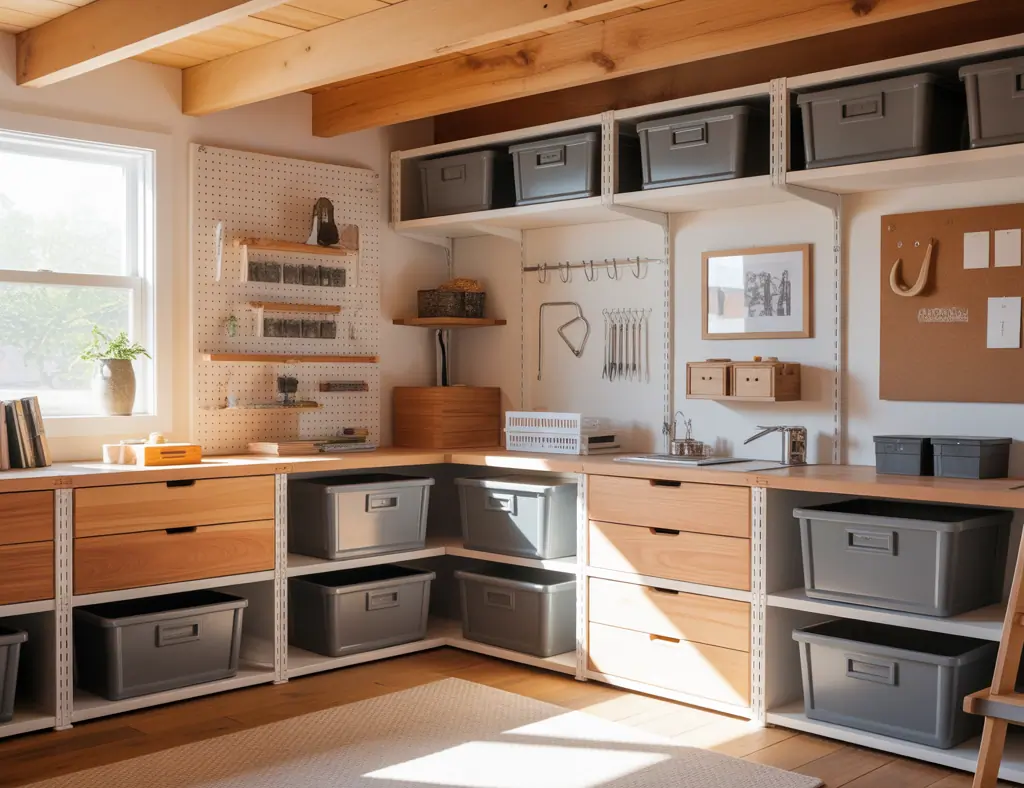
Think beyond function: matched cabinet faces, painted doors, and clean labeling make under-house storage feel like part of your home design. Use uniform containers, woven baskets for breathable storage, and a consistent color scheme to keep the area visually tidy. For outdoor-facing storage, add decorative lattice, trim, or planter boxes to disguise access points while allowing airflow.
Quick Cost Guide
- Simple shelving and vapor barrier: $150–$500
- Under-deck lockers with doors: $500–$2,000 (depending on size and materials)
- Built-in drawers or pull-outs: $300–$1,500
- Climate control (insulation + dehumidifier): $200–$1,000
Step-by-Step Project: Turn a Crawl Space Into Usable Storage (Weekend DIY)
- Inspect and clean: remove debris, treat for pests if necessary.
- Install a vapor barrier over soil and tape seams.
- Build simple elevated shelving along a straight foundation wall.
- Wire a battery LED lighting line and attach a switch at the access point.
- Label bins and create a pathway using stepping boards or a stable walkway.
- Check monthly for condensation or signs of pests and adjust ventilation as needed.
Frequently Asked Questions
1. Is it safe to store things under my house?
Yes, if you address moisture, pests, and structural concerns first. Use vapor barriers, raise items off the ground, and ensure proper ventilation. For heavy items, verify joist and foundation capacities or consult a pro.
2. What can I store under a house without climate control?
Store non-perishables such as tools, lawn equipment, seasonal decor, resin furniture cushions (in sealed bins), and sporting goods. Avoid storing sensitive items like paper documents, electronics, or fabrics that mold easily unless climate-controlled.
3. How do I prevent moisture and mold in under-house storage?
Install a vapor barrier, ensure good drainage around the foundation, add vents or a small fan for air circulation, and avoid direct contact with soil. Regularly inspect and use silica gel or a dehumidifier in problem areas.
Conclusion: Start Small — Transform Valuable Space Today
Storage below house ideas offer practical, cost-effective ways to reclaim clutter, protect seasonal items, and add utility without building an addition. Start with a crawl space cleanup or a small under-deck locker, and expand as you gain confidence. Want more project inspiration? Check out our DIY projects page or browse related tips on home design ideas and kitchen upgrades to see how efficient storage can reshape your whole home.
Ready to free up space and start a weekend project? Pick one of these storage below house ideas, gather your materials, and transform forgotten space into functional storage. Share your progress or questions in the comments — I’d love to help plan your next DIY build.