Have you ever tried to chop vegetables, stir a pot, and reach for a spice jar at the same time in a kitchen that feels more like an obstacle course than a workspace? If your counter space disappears the minute you open the fridge, you’re not alone. Small kitchen layouts can be frustrating — but with clever planning and a few DIY upgrades, that cramped galley or tiny one-wall kitchen can become efficient, stylish, and surprisingly roomy.
Why layout matters in a compact kitchen
Good layout is the backbone of any kitchen, and it’s the single biggest factor in how functional your space will feel. In a small kitchen, the right arrangement improves workflow, reduces clutter, and makes cooking more enjoyable. Think of layout as the foundation for every cabinet choice, appliance placement, and storage solution you add.
Key principles to keep in mind
- Work triangle: Keep the sink, stove, and refrigerator within easy reach without crowding — ideally 4 to 8 feet between each, adjusted for your space.
- Vertical thinking: Use walls and tall cabinets to gain storage without losing floor space.
- Clearance: Aim for at least 30–36 inches of comfortable passage in a single-cook kitchen; more if multiple people cook together.
- Multifunction: Choose furniture and fixtures that serve more than one purpose (e.g., a drop-leaf table or a counter that doubles as prep and dining space).
Small kitchen layouts: best options and when to use each
Choosing the right compact kitchen layout sets the tone for every improvement. Below are the most common and practical small kitchen layouts with pros, cons, and quick design tips.
One-wall (single-wall) kitchen
Perfect for studio apartments and open-plan living. Appliances, sink, and storage line a single wall.
- Pros: Space-efficient, keeps footprint minimal, easy to remodel.
- Cons: Limited counter space and storage without creative solutions.
- Design tip: Add floating shelves, a slim pantry cabinet, and under-cabinet lighting to expand storage and make the workspace feel larger.
Galley kitchen
Two parallel counters with a walkway; one of the most efficient for cooking in tight spaces.
- Pros: Excellent workflow, compact and functional for single cooks.
- Cons: Can feel claustrophobic; requires careful cabinet organization.
- Design tip: Use light colors, mirrored backsplash, or glass cabinet doors to open the visual space. Install pull-out drawers for lower cabinets to increase accessibility.
L-shaped small kitchens
An L layout uses two adjoining walls, freeing up a corner for a small dining nook or island when space allows.
- Pros: Flexible, allows for a small peninsula or table, good for multiple cooks in slightly larger compact kitchens.
- Cons: Corner storage can be tricky — use lazy Susans or corner pull-outs.
- Design tip: Add a shallow rolling island or butcher block on casters for extra prep space that can be moved when not in use.
U-shaped and peninsula options
U-shaped kitchens in small homes can work if one side is shortened to create more open flow. A peninsula provides extra prep and seating without needing a full island.
DIY improvements: step-by-step ideas for compact kitchens
Here are practical projects you can tackle over a weekend or a few evenings that make a measurable difference.
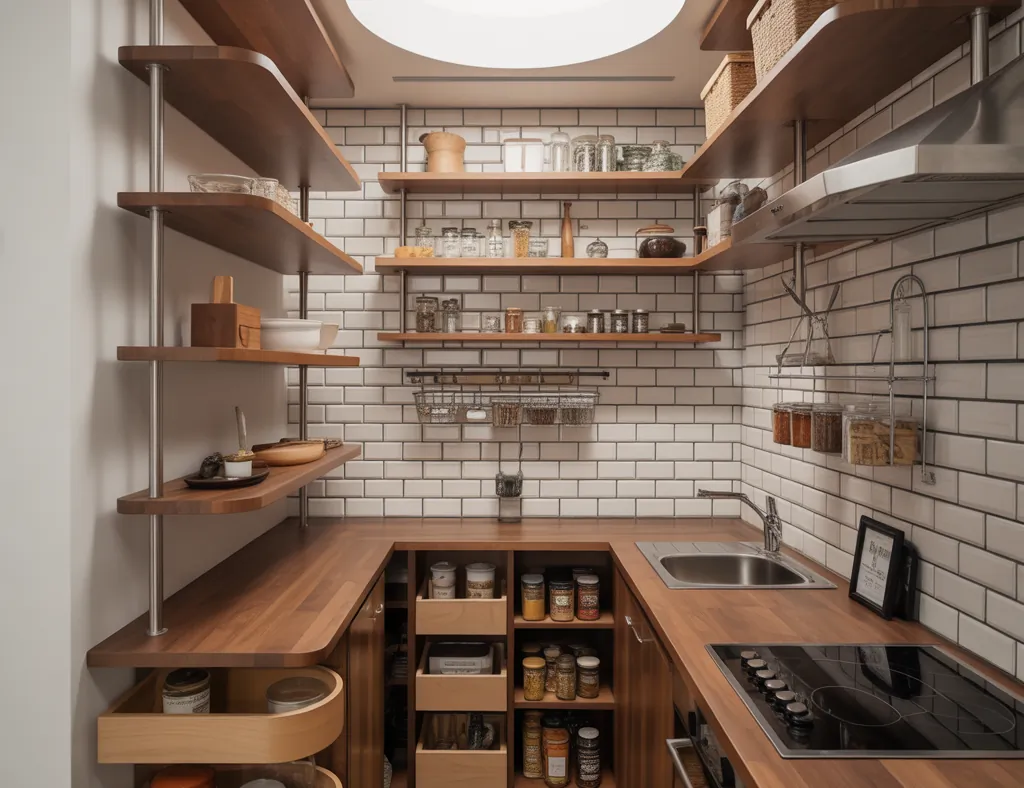
1. Install floating shelves to increase accessible storage
Materials: wall studs, brackets or floating-shelf kit, level, screws, shelf boards.
- Measure and mark stud locations and desired shelf height.
- Mount brackets or floating-shelf hardware into studs for secure support.
- Attach shelves, level them, and style with frequently used items (jars, plates).
Result: Frees up cabinet space and turns storage into decor.
2. Add a pull-out pantry or roll-out shelves
Materials: pre-made pull-out pantry kit or drawer slides, plywood, screws, soft-close kit (optional).
- Measure your cabinet opening and purchase an appropriate kit.
- Build or assemble the roll-out frame and attach sliding hardware to the cabinet floor and back.
- Install and organize items by frequency of use.
Result: Easier access to deep cabinet storage and less wasted space at the back.
3. Reface or paint cabinet fronts for a fresh look
Materials: sandpaper, primer, paint or wood veneer, new hardware.
- Remove cabinet doors and hardware; sand surfaces lightly.
- Prime then paint or apply new veneer. Consider two-tone options (light uppers, darker bases) to add depth.
- Replace hardware with slim, modern pulls to improve ergonomics.
Result: Affordable style upgrade that brightens the room and refreshes the layout visually.
Space-saving design inspiration and real-world advice
Beyond layout and single projects, think about systems and small changes that add up.
- Appliance strategy: Choose slim, apartment-sized refrigerators, combo microwave-oven units, or induction cooktops that free up counter space.
- Lighting: Layered lighting — recessed ceiling lights, under-cabinet strips, and a pendant near a breakfast ledge — makes small kitchens feel larger and more functional.
- Color and materials: Use light, reflective surfaces (glossy backsplash tiles, quartz counters) to visually expand the room.
- Declutter: Regularly cull kitchen tools you rarely use. Store seasonal or seldom-used items elsewhere in your home.
- Measure twice: Before buying cabinets or appliances, double-check dimensions and door swing clearances to avoid costly mistakes.
If you enjoy hands-on improvements, check our DIY projects page for more step-by-step guides. For ideas on cost-effective changes, our kitchen upgrades section covers budget-friendly swaps that make big impacts. For broader planning, explore home design ideas to coordinate your kitchen with the rest of your space.
Frequently Asked Questions
1. What is the best layout for a very small kitchen?
For extremely tight spaces, a one-wall or galley layout usually works best. These maximize linear storage and keep everything within easy reach. Use vertical storage and compact appliances to enhance functionality.
2. How can I make a small kitchen feel bigger without knocking down walls?
Use light colors, reflective backsplashes, open shelving, consistent flooring that flows into adjacent rooms, and good layered lighting. Minimizing clutter and choosing slimline appliances also helps create an airy feeling.
3. Are islands possible in small kitchens?
Yes — but they need to be scaled correctly. Consider a narrow, mobile island or a small peninsula. Ensure there is at least 30–36 inches of clearance around the island for comfortable movement.
Conclusion — take the next step with small kitchen layouts
Small kitchen layouts don’t have to mean small dreams. With the right plan, a few smart DIY upgrades, and attention to storage and workflow, your compact kitchen can become a high-functioning and beautiful heart of your home. Pick one layout tweak or weekend project from this article and try it — you’ll be surprised how much difference a targeted change can make.
Ready to transform your kitchen? Start with a simple measurement, choose one DIY upgrade, and test the improvement. Share your progress or ask for ideas — your next smart, space-saving change is just a project away.
For more kitchen island dining table combo ideas, check out Kitchen Island Dining Table Combo Ideas.
For more kitchen island dining table combo ideas, check out Kitchen Island Dining Table Combo Ideas.