Have you ever avoided walking across your backyard because the slope feels like a small mountain? Or wondered how to move plants, patio furniture, or a grill safely up and down without sliding? If you’re staring at a steep yard and dreaming of usable outdoor space, these slope hillside landscape steps ideas will help you create attractive, safe, and budget-friendly steps that actually get used.
Why add steps to a sloped yard?
Turning a steep slope into a functional landscape improves access, reduces erosion, and transforms awkward space into patios, terraces, and garden beds. Adding outdoor stairs is a practical home improvement that increases curb appeal and property value while giving you more usable square footage outdoors.
Quick planning checklist before you build
- Assess slope steepness — gentle, moderate, or steep — and decide whether terracing is needed.
- Check local codes and whether a permit or professional engineer is needed for retaining structures.
- Plan drainage to prevent water pooling (use gravel, French drains, or perforated pipe).
- Choose materials considering budget, maintenance, and style: timber, stone, concrete, or pavers.
- Sketch a layout showing step run, rise, and handrail locations for safety.
Design inspiration: 7 slope hillside landscape steps ideas to try
1. Terraced steps with retaining walls
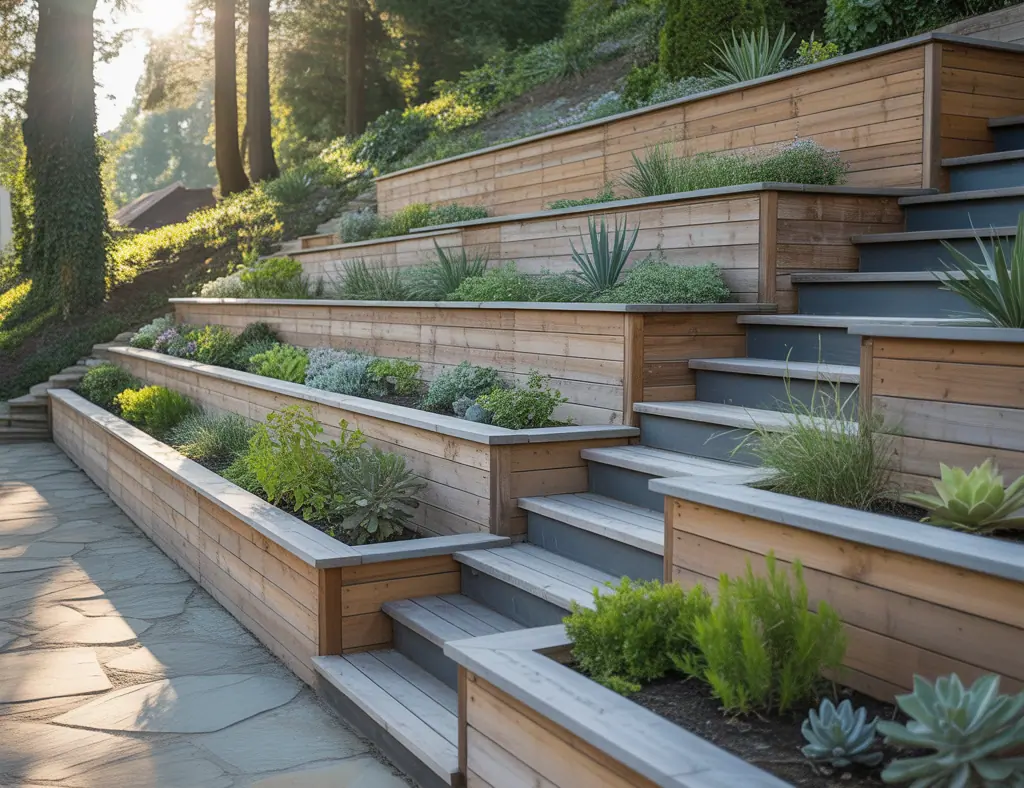
Use low retaining walls to create flat landings with short runs of steps between. This “stair-terrace” approach stabilizes soil and creates planting pockets. Materials like dry-stack stone or concrete blocks are great for DIY retaining walls.
2. Timber sleepers for a rustic look
Railway sleepers or landscape timbers create warm, natural steps that are easy to install. Anchor with rebar or spikes and backfill with gravel for drainage. Treat or choose rot-resistant wood to extend lifespan.
3. Natural stone steps for lasting appeal
Flagstone or irregular stepping stones produce a high-end look. For steep slopes, set stones into compacted gravel with mortar or concrete for stable treads. Add gravel infill between stones to prevent shifting.
4. Concrete or paver stairs for modern yards
Precast concrete steps or interlocking pavers are low maintenance and durable. They allow consistent riser heights and straight runs, ideal where ADA-style comfort is desired.
5. Switchback stairs to conquer very steep slopes
If the hill is very steep, use switchback or zigzag stairs with mid-landing platforms. This reduces continuous elevation gain and makes the climb easier and safer.
6. Gabion steps for industrial texture
Gabion baskets filled with rock can form both retaining walls and step faces. They’re durable, permeable for drainage, and give a unique contemporary look.
7. Floating steps and planted risers
Create the illusion of cantilevered treads using steel brackets or hidden supports. Planting between steps softens the design and helps with erosion control.
DIY step-by-step: Build basic timber steps on a slope
Here’s a practical, beginner-friendly project to get you started.
- Measure the rise: From top to bottom, measure vertical height and divide by desired riser height (7 inches is comfortable) to determine number of steps.
- Mark step locations: Use stakes and a string line to lay out each tread and riser on the slope.
- Excavate shallow notches where each timber will sit; level the base with compacted gravel.
- Place treated timbers, pin with rebar through pre-drilled holes, and backfill with gravel for drainage and stability.
- Compact each tread and add topsoil or gravel where needed; add non-slip texture or pea gravel for traction.
- Install handrails on steep sections for safety and finish with low-maintenance sealant on wood.
Practical tips for long-term success
- Keep riser height consistent — inconsistent steps cause trips. Aim for 6–8 inches per riser and 10–12 inches tread depth.
- Always plan for drainage: slope treads slightly forward or use porous materials to avoid standing water.
- Use native, drought-tolerant plants on terraces to reduce watering and stabilize soil.
- Consider solar step lights or LED strip lighting for safety and ambiance; bury wiring in conduit.
- If unsure about retaining wall height or soil stability, consult a pro engineer to avoid failures.
Cost-saving strategies
You don’t need a big budget to transform a hillside. Reuse materials like reclaimed wood or salvaged stone. Do demo, layout, and planting work yourself, and hire contractors only for concrete pours or engineered retaining walls. Modular block systems and dry-stacked walls reduce labor and tools required.
Slope hillside landscape steps ideas: safety, permits, and maintenance
Safety should guide your design. Add handrails where steps exceed three risers, create uniform treads, and keep a non-slip surface. Check municipal codes — some areas require permits for changes that alter drainage or create significant retaining walls. Annual maintenance should include tightening anchors, re-leveling treads, cleaning drains, and resealing wood as needed.
Real-world examples to spark creativity
Imagine a city home where stone steps lead to layered herb gardens and a compact terrace for morning coffee, or a mountain cottage with timber sleepers and native grasses softening each landing. Even a narrow townhouse slope can become a dramatic entry with concrete pavers and integrated lights. Let site constraints guide your style: use curves to soften, straight lines to modernize, and planting to blend the built steps into the landscape.
Frequently Asked Questions
1. How steep is too steep to DIY install steps on a hillside?
If the slope is greater than about 1:1 (45 degrees) or you need more than a few feet of retaining height, it’s wise to consult a structural engineer. Moderate slopes (under 45 degrees) can often be handled with terracing and proper drainage by an experienced DIYer.
2. What materials are best for low-maintenance outdoor steps?
Concrete pavers, natural stone, and pressure-treated or composite timber are low-maintenance choices. Stone and concrete resist rot and shifting when properly installed; composite timbers resist decay but may be more expensive.
3. Do I need a permit to build steps and retaining walls?
Permit requirements vary. Small decorative steps usually don’t need permits, but retaining walls above a certain height or changes to drainage often do. Check with your local building department before starting.
Conclusion — Ready to transform your slope?
If your yard feels unusable because of incline, these slope hillside landscape steps ideas show how to turn an obstacle into opportunity. With planning, the right materials, and a few DIY skills you can create safe, beautiful steps that improve access and curb appeal. Start by sketching a simple layout, choose one of the suggested designs, and try a section as a weekend project. For more inspiration and step-by-step home projects, explore our DIY projects and home design ideas pages.
Ready to get started? Grab a measuring tape and take your first measurements today — then share photos of your progress or ask for tips in the comments. Your hillside is waiting.