Staring at an open, unfinished basement and wondering how to carve out a comfortable living room, home office, or guest suite without spending a fortune? If you’ve ever wanted to create zones in your lower level—separate a play area from a media nook, or build a private basement office—you’re in the right place. These room divider ideas basement homeowners can actually build will help you transform that open space into functional, attractive rooms without a full remodel.
Plan Before You Build: A quick checklist
Before picking a design, think through these essentials so your basement partitioning goes smoothly:
- Safety & code: Check egress requirements if you plan a bedroom or sleeping area (window size, exit path).
- Moisture & insulation: Address leaks, add a vapor barrier, and insulate if you’ll spend a lot of time in the space.
- Electrical & lighting: Plan outlets and task lighting for new zones—consider rewiring or surface-mounted raceways if needed.
- Acoustics: Decide if you need soundproofing (green glue, resilient channels, solid doors).
- Budget & timeline: Set a budget and realistic DIY timeline (weekend projects vs. multi-week builds).
Top room divider ideas basement owners love
Here are practical, stylish options—from budget-friendly to built-in—that suit a range of basements and DIY skill levels.
1. Freestanding bookshelf partition
Turn storage into a divider. A double-sided bookshelf creates separation while adding display and storage on both sides.
- Difficulty: Easy–Medium
- Time: 1 weekend (assembly + anchoring)
- Estimated cost: $150–$600 depending on materials
- DIY tips: Use heavy-duty, anchored units and secure to floor or ceiling with brackets to prevent tipping. Paint both sides the same color for cohesion.
2. Ceiling-mounted track with curtains
Fast, flexible, and soft—curtains on a ceiling track are perfect for temporary rooms or rental-friendly solutions.
- Difficulty: Easy
- Time: Afternoon
- Estimated cost: $50–$200
- DIY tips: Choose blackout curtains for privacy and noise reduction. Mount tracks to joists or use toggle anchors for secure installation.
3. Sliding barn doors on a track
Rustic or modern, sliding doors are stylish room dividers that save floor space. Great for offices or bedrooms that need a solid closure.
- Difficulty: Medium
- Time: 1–2 days
- Estimated cost: $200–$800
- DIY tips: Ensure track is level and supported. Consider a soft-close kit to reduce slamming.
4. Glass partition with black grid (industrial look)
Let light flow while defining rooms—ideal when you want private zones without darkening the basement.
- Difficulty: Medium–High
- Time: 2–3 days
- Estimated cost: $600–$2,000
- DIY tips: Use tempered glass or acrylic panels in a metal or wood frame. Add blinds for extra privacy.
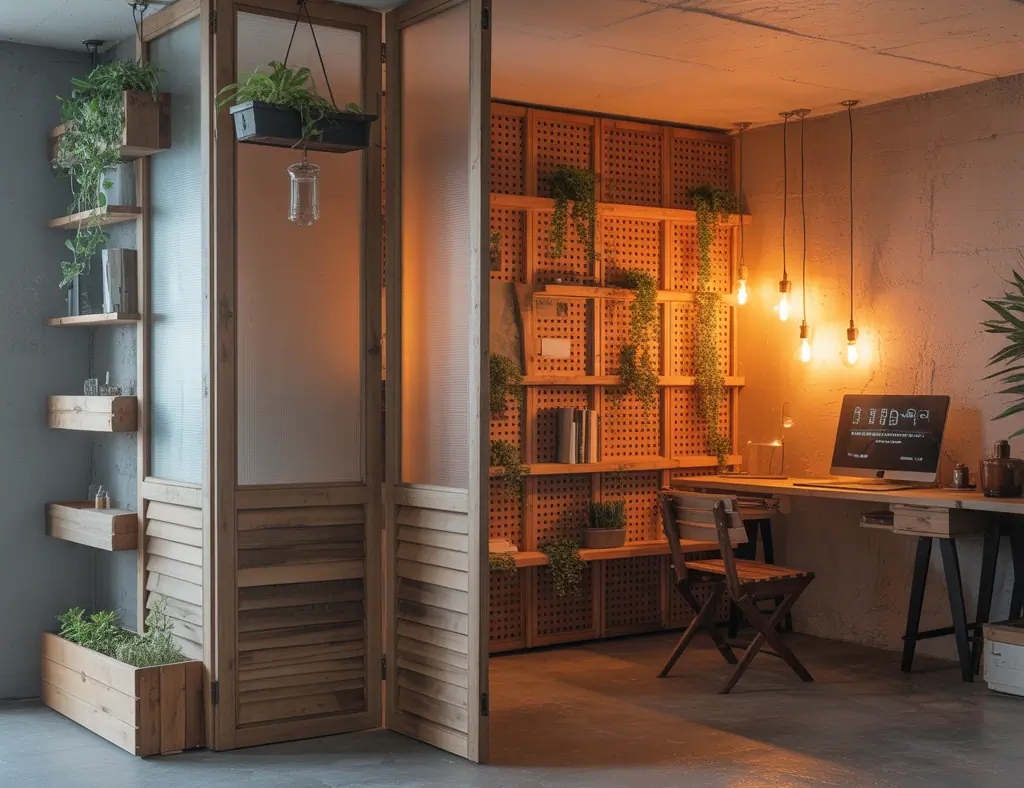
5. Folding screens or accordion dividers
Portable and budget-friendly—folding screens are great for renters or quick reconfigurations.
- Difficulty: Very easy
- Time: Under an hour
- Estimated cost: $50–$250
- DIY tips: Pick sturdy, wider panels and anchor the end to a wall for stability if needed.
6. Half wall with built-in bench or storage
Create a low wall that divides the space while keeping a visual connection—add storage, seating, or a media console to the top.
- Difficulty: Medium
- Time: Weekend
- Estimated cost: $200–$1,000
- DIY tips: Frame with 2x4s, add plywood, and finish with trim. Include recessed shelving for neat storage.
7. Industrial pipe-and-drape
For a modern loft vibe, use black iron pipes and heavy fabric—durable and stylish.
- Difficulty: Easy–Medium
- Time: 1 day
- Estimated cost: $100–$400
- DIY tips: Pre-plan pipe spacing to allow easy movement and hang sound-absorbing fabric for improved acoustics.
Room divider ideas basement: step-by-step for a bookshelf partition
A freestanding bookshelf is one of the most versatile basement room divider ideas. Here’s a simple build-and-install plan you can follow.
Materials & Tools
- Bookshelf unit(s) or plywood + 2x4s to build a custom shelf
- L-brackets, long screws, wall anchors or floor brackets
- Stud finder, level, drill, screwdriver, tape measure
- Paint or stain, wood filler, sandpaper
Step-by-step
- Measure the space and decide the height and length of your divider; consider ceiling height and traffic flow.
- Choose or build a sturdy shelf. For tall units, place two parallel units back-to-back for double-sided shelves.
- Finish the surfaces—paint or stain both sides before final assembly to avoid hard-to-reach areas later.
- Position the unit where you want the division, check for level, and shim if the basement floor is uneven.
- Secure the bookshelf to the floor or ceiling with brackets to prevent tipping—anchor to studs where possible.
- Style with baskets, plants, and low-profile lighting. Leave lower shelves open for storage and upper shelves for décor to keep sightlines open.
Design tips, lighting & sound considerations
Small design decisions make big differences in basements:
- Lighting: Add layered lighting—recessed cans for general light, sconces for ambiance, and task lamps for work areas.
- Color and materials: Light colors and reflective surfaces open up dark basements. Use area rugs to define zones and warm floors.
- Soundproofing: For media rooms or offices, add acoustic panels, thicker doors, or carpeting to reduce noise transfer.
- Multipurpose furniture: Use a divider that doubles as storage, a desk, or a sofa back to maximize space efficiency.
- Moisture protection: Use moisture-resistant drywall or paint and elevate wood furniture slightly off concrete floors.
Frequently Asked Questions
1. Do I need a permit to create a room in my basement?
It depends on your local building code and whether the new room changes egress, plumbing, or electrical systems. Simple dividers usually don’t need permits, but permanent walls, added bedrooms, or major electrical work often do. Check with your municipality before starting major projects.
2. What is the best temporary divider for a basement?
Ceiling-mounted curtains or folding screens are ideal temporary dividers. They’re inexpensive, fast to install, and easy to remove—perfect for renters or flexible spaces.
3. How do I prevent moisture damage around a basement divider?
First, address any water intrusion. Use a dehumidifier, waterproof paint, and moisture-resistant materials (cement board, treated wood). Raise furniture off the slab slightly and avoid carpeting directly on damp floors if water is an issue.
Conclusion: Ready to divide your basement?
Whether you choose a graceful glass partition, a practical bookshelf, or a budget-friendly curtain system, these room divider ideas basement homeowners trust will help you create functional zones that look intentional. Start with a plan: evaluate moisture, egress, lighting, and budget. Pick a project that matches your skill level, and don’t be afraid to combine ideas—half walls plus curtains, or shelves plus sliding doors, can give you the flexibility you want.
If you’re looking for more project inspiration, check out our pages on DIY projects and home design ideas for step-by-step guides and material checklists. Ready to get started? Choose one divider idea, gather your tools, and tackle a weekend upgrade that will change how you use your basement.