Have you ever stood in your living room and thought, “This wall is just… missing something”? Maybe you bought the furniture, hung the art, but the plain paint keeps making the whole space feel flat. Whether you’re tackling a weekend DIY or planning a budget-friendly refresh, paint ideas for wall design can instantly upgrade your home — no full remodel required.
Why painted wall designs are the smartest DIY upgrade
Painting is one of the highest-impact, lowest-cost home improvements. A well-chosen paint design can define a room, emphasize architectural features, hide imperfections, or create focal points. With a few tools and some prep, you can move beyond single-color walls into accent walls, patterns, textures, or faux finishes that look professional.
Top paint ideas for wall design
Below are practical, on-trend wall painting ideas you can try, with quick notes on difficulty and best rooms for each look.
- Accent wall — One wall painted a bold or contrasting color. (Easy; great for living rooms and bedrooms.)
- Two-tone walls — Horizontal split with chair rail or tape for modern depth. (Easy–Medium; hallways, nurseries.)
- Geometric patterns — Triangles, chevrons, or angled color blocks. (Medium; statement bedrooms, offices.)
- Ombre or gradient walls — Colors blend from light to dark for a soft, designer look. (Medium; master bedroom, feature walls.)
- Stripes — Vertical for height, horizontal for width; classic and versatile. (Easy–Medium; dining rooms, kids’ rooms.)
- Textured paint finishes — Use specialty paints or trowels for plaster, suede, or sand effects. (Medium; living rooms, entryways.)
- Stenciled motifs — Repeat geometric or floral stencils for wallpaper-like detail. (Easy; powder rooms, accent walls.)
- Faux brick or wood — Paint techniques that mimic materials for an industrial or rustic feel. (Medium–Hard; kitchens, lofts.)
Accent wall paint ideas for living room
Choose a deep navy, forest green, or warm terracotta for dramatic contrast. Pair with neutral furniture and metallic accents to keep the space balanced.
Best paint ideas for small rooms
Use light neutrals with a single darker accent wall to avoid overwhelming the room. Vertical stripes can make ceilings feel higher.
Prep and tools: what you need before you start
Successful wall painting begins with prep. Gather these basics:
- Quality painter’s tape
- Drop cloths and plastic sheeting
- Angled and straight-edge brushes, foam rollers
- Level and measuring tape
- Sandpaper, spackle, and primer
- Paint samples and small test cans
Tip: Always test paint swatches at different times of day on the actual wall. Lighting changes color perception dramatically.
Step-by-step: Create a geometric accent wall
This step-by-step will walk you through a bold geometric feature wall that reads professional but is DIY-friendly.
- Measure and plan: Sketch your design on paper and use painter’s tape to map shapes on the wall. Use a level and pencil marks for precise angles.
- Prepare the surface: Patch holes, sand rough spots, and apply primer if switching from dark to light colors.
- Base coat: Paint the entire wall in the lightest color first. Let dry fully (follow manufacturer drying times).
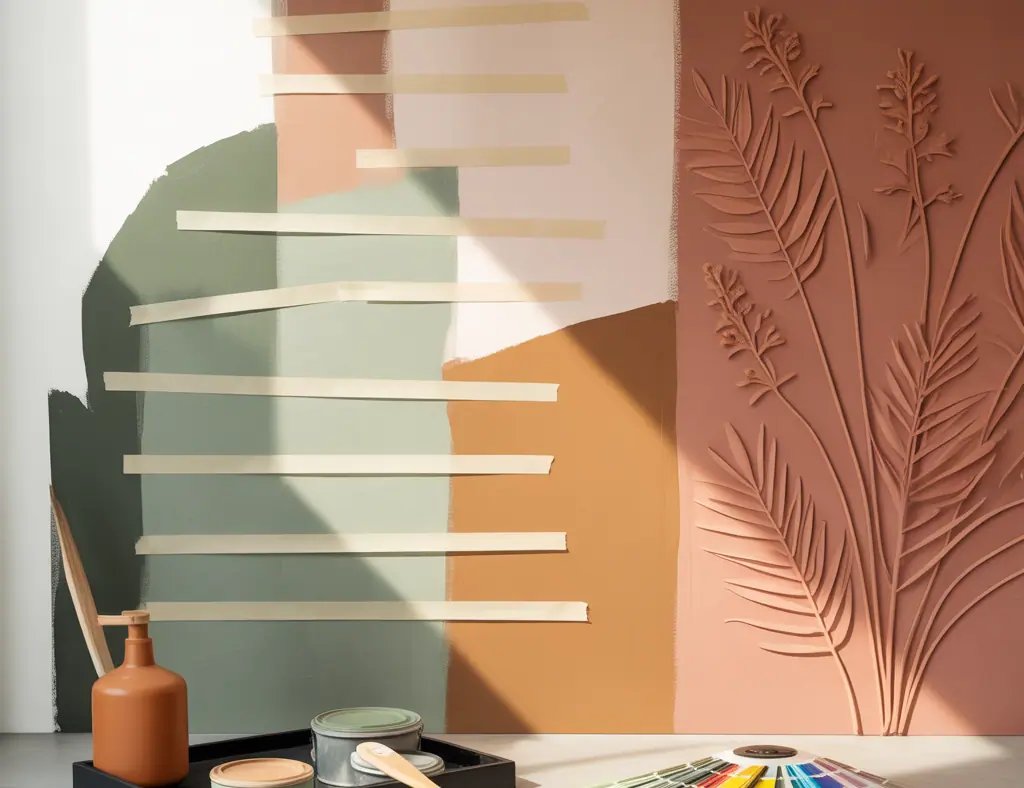
- Tape your shapes: Apply painter’s tape over the base to outline triangles or blocks. Press tape edges firmly to prevent bleed.
- Paint the shapes: Use separate rollers or brushes for each color. Apply thin even coats; two thin coats beat one thick coat.
- Remove tape carefully: Pull tape back at a 45° angle while paint is slightly tacky to avoid peeling.
- Touch up: Use a small brush to neaten edges and remove any tiny bleeds. Finish with a protective topcoat if desired.
Textured and faux finishes for added depth
Not every dramatic wall needs complex patterns. Textured techniques like sponge painting, rag rolling, or Venetian plaster can add subtle luxury. For a faux brick look, use a stencil and two-tone painting to mimic mortar lines and brick variation. These finishes work especially well in kitchens and feature walls where tactile interest helps sell the illusion.
Color selection and pairing tips
When choosing paint colors:
- Start with the room’s purpose — calm blues for bedrooms, energizing yellows for kitchens or offices.
- Consider undertones — greige, warm white, or cool white will change how trim and floors look.
- Use the 60-30-10 rule: 60% dominant color, 30% secondary, 10% accent for balanced palettes.
- Test sample swatches on multiple walls and view them under morning and evening light.
Long-tail tip: For kitchen refreshes, pick paint that harmonizes with cabinetry and countertops — see our kitchen upgrades page for layout and color matching ideas.
Practical DIY tips and mistakes to avoid
- Don’t skip primer: It ensures true color payoff and better adhesion.
- Use high-quality tape: Cheap tape causes jagged lines and peeling.
- Work in small sections: Keep a wet edge to avoid lap marks.
- Avoid overloading your brush: Minimizes drips and better control for crisp edges.
- Allow proper drying between coats: Patience prevents tacky, uneven finishes.
If you want more creative projects for the whole house, check out our DIY projects and home design ideas pages for step-by-step inspiration and room-by-room advice.
Frequently Asked Questions
1. How do I choose the best paint finish for a wall design?
Matte or eggshell finishes hide wall imperfections and work well on large painted areas. Satin and semi-gloss are easier to clean and ideal for trim, kitchens, and high-traffic walls. Use high-gloss sparingly for accents because it highlights flaws.
2. Can I create a patterned wall without being artistic?
Yes — use stencils, painter’s tape guides, and printable templates. Many geometric and striped designs rely on measuring and straight lines, not freehand drawing. Practice on cardboard or a spare panel first.
3. How much paint will I need for an accent wall?
One gallon of interior paint typically covers about 350–400 sq ft per coat. For a single accent wall in a standard room, one gallon is often enough (especially if you buy a sample for color testing). Account for primer and extra if using multiple colors or textured techniques.
Conclusion: Bring your walls to life with paint ideas for wall design
Paint can do more than change color — it can redefine space, express personality, and elevate your home on a budget. From simple accent walls to geometric art and textured finishes, these paint ideas for wall design are within reach for most DIYers. Pick a project, gather your tools, and start small: even a single painted wall can transform a room. Ready to begin your next home refresh? Explore our DIY projects and kitchen upgrades pages for related guides, then pick a weekend to make your wall the room’s best feature.
Call to action: Share a photo of your finished wall or ask for a personalized plan — I’ll help you choose colors and a technique that fits your space and skill level.