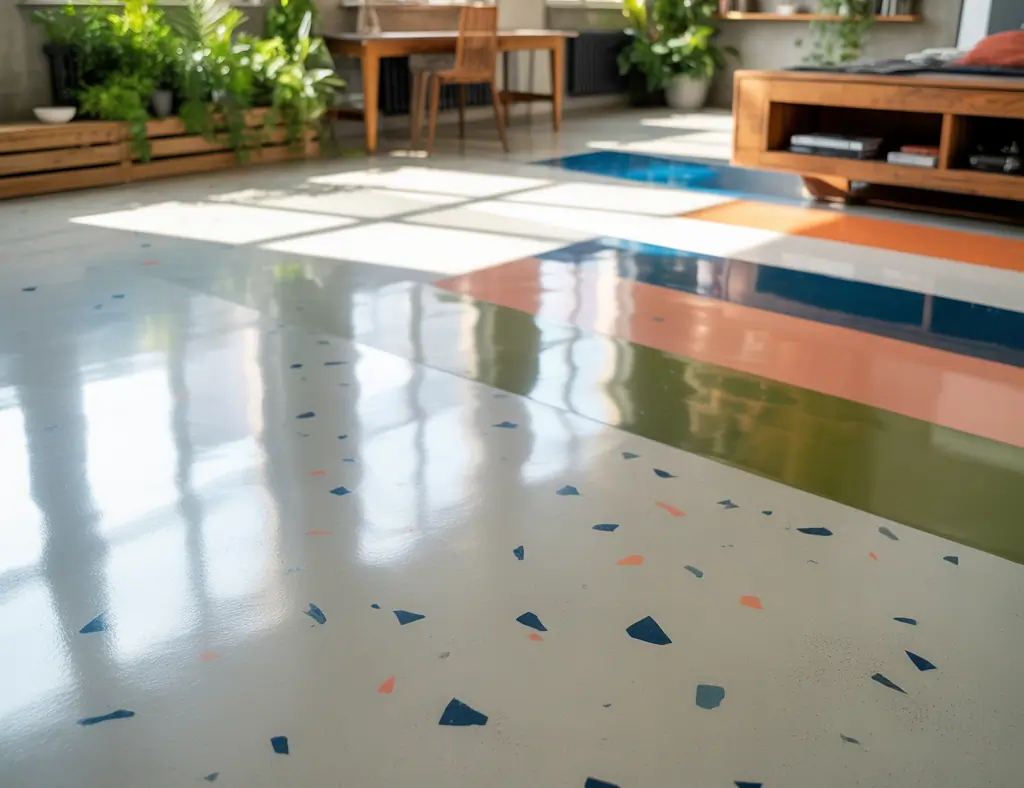
Have you ever stood in a basement, garage, or mudroom and thought, “This floor is dragging the whole room down”? You’re not alone. Many homeowners face the same challenge: durable concrete that’s perfect for everyday life but painfully bland. If you’ve been wondering how to refresh that cold slab without a full remodel, these paint ideas for indoor concrete floor will get you started — fast, affordably, and with pro-level results.
Why paint indoor concrete floors?
Painting concrete is one of the quickest ways to update a space. Beyond aesthetics, the right coatings protect against moisture, staining, and abrasion. Whether you’re tackling a basement, a laundry room, or an indoor playroom, painting concrete makes the floor easier to clean, helps define zones, and lets you create a style that fits your home — from modern industrial to cozy farmhouse.
Tools & materials you’ll need
- Concrete cleaner and degreaser
- Concrete patch/repair product for cracks
- Etching solution or floor grinder (mechanical etch for smooth slabs)
- Concrete primer or bonding primer
- Paint: epoxy floor coating, acrylic latex floor paint, or concrete stain
- Sealer/topcoat (polyurethane or epoxy sealer)
- Rollers, angled brush, squeegee, painter’s tape, and stencils (if desired)
- Safety gear: respirator, gloves, eye protection
Preparation: the step that makes or breaks the result
- Clear the room and remove dust and debris. Vacuum and mop with a degreaser.
- Repair cracks and pits with a concrete patch. Let cures fully.
- Etch or mechanically grind the surface so the coating bonds well. Rinse and allow to dry.
- Apply a concrete bonding primer if using latex paint or to improve adhesion for epoxy.
- Plan your layout and tape off edges or patterns before painting.
Skipping proper prep is the most common DIY mistake; good prep equals long-lasting finishes.
7 paint ideas for indoor concrete floor
Here are practical, stylish options that suit different rooms and budgets. Each idea includes quick tips for execution.
1. Solid neutral with satin finish
Choose an acrylic latex floor paint in warm gray, beige, or greige. A satin finish hides imperfections and cleans easily — ideal for basements and laundry rooms.
2. High-gloss epoxy for garages and busy rooms
Epoxy coatings resist chemicals and heavy foot traffic. Pick a two-part epoxy kit and consider metallic pigments for a showroom floor vibe. Add an anti-slip additive if the floor gets wet.
3. Acid stain or water-based stain for a natural look
Stains penetrate concrete to create variegated, marbled colors. This is a low-maintenance, stain-resistant solution that looks like polished concrete without grinding.
4. Stenciled geometric patterns
Use vinyl stencils to paint repeating tile motifs (Moroccan tile, hexagons, or chevrons). This gives an upscale look without laying tile — perfect for a mudroom or kitchen extension.
5. Checkerboard or faux tiles
Classic black-and-white or two-tone checkerboard instantly elevates a space. Measure carefully, use a chalk line for accuracy, and finish with a durable topcoat.
6. Two-tone zoning and safety stripes
For utility spaces or open-plan basements, paint zones (play area, utility area) with contrasting colors. Add reflective or high-visibility stripes in work areas.
7. Ombre wash or mural
For a bold designer touch, blend colors from light to dark (ombre) or paint a mural. These options require more skill but deliver a one-of-a-kind result.
Design inspiration and color choices
- Modern minimalist: soft gray base, black or charcoal accents.
- Farmhouse: warm off-white with distressed edges and stenciled motifs.
- Industrial chic: slate tones with metallic epoxy highlights.
- Family-friendly: medium-tone blue or green with non-slip sealer and washable finish.
Consider room function: cool colors visually expand basements, while warm tones add coziness to mudrooms and entryways.
Step-by-step mini project: Painted checkerboard floor
- Measure and mark a central reference line with chalk.
- Use painter’s tape and a square to map out even squares (e.g., 12″ to 18″).
- Etch, prime, and apply the base color. Let dry fully.
- Apply the contrasting squares with a roller and brush; remove tape carefully while paint is tacky.
- Once cured, seal with a clear polyurethane or epoxy topcoat for durability.
Tip: work from the center outward. Small sample patches help you confirm color and gloss under room lighting.
Maintenance and long-term care
- Wait full cure time before heavy use (epoxy often needs 72 hours to cure).
- Sweep daily, mop with pH-neutral cleaner weekly.
- Reapply a clear sealer every 2–5 years depending on wear.
- Touch up scuffs with matching paint; keep leftover paint for repairs.
- Use area rugs or mats in high-traffic spots to extend life.
Safety and practical tips
- Work in a well-ventilated space; use a respirator with epoxy and solvents.
- Follow manufacturer mixing ratios exactly for two-part systems.
- Test adhesion in a small inconspicuous area if unsure about the existing finish.
Frequently Asked Questions
- Q: What is the best paint for an indoor concrete floor?
- A: For durability, two-part epoxy floor coatings are top-rated. Acrylic latex floor paints are easier for DIY and adequate for light-to-medium traffic. Use a concrete primer and finish with a sealer for best results.
- Q: Can I paint a basement or garage concrete floor myself?
- A: Yes — with proper prep. Cleaning, etching or grinding, and patching are critical. Epoxy systems are slightly more complex but doable for confident DIYers. If the floor has moisture issues, address that before painting.
- Q: How long does a painted concrete floor last?
- A: Lifespan depends on product and traffic. Acrylic paints can last several years with maintenance; epoxy can last 5–10 years in residential settings. Regular cleaning and periodic resealing extend longevity.
Ready to start your floor makeover? Try one of these paint ideas for indoor concrete floor this weekend and see how quickly a fresh surface transforms the whole room. For step-by-step project plans and tools lists, explore our DIY projects page, check flooring tips for kitchens on our kitchen upgrades guide, or browse color and layout ideas on our home design ideas page.
Conclusion
Painting a concrete floor is a high-impact, low-cost way to update your home. From simple single-color coatings to elaborate stencils and epoxy finishes, there are paint ideas for indoor concrete floor to fit every skill level and style. Gather your supplies, follow the prep steps, and start small — you might be surprised how big a difference a painted floor makes. If you try a project, share your before-and-after photos or questions in the comments below — we’d love to help.
For more door ideas that can complement your newly painted concrete floor, check out Door Ideas Hidden.