Ever stood in your backyard with a wheelbarrow full of gravel, a stack of flat stones, or a pile of boulders and wondered, “How do I turn this into something beautiful?” If you’re tackling a small slope, a thirsty lawn, or a blank patio border, outdoor rock garden concept ideas can transform neglected corners into low-maintenance, high-impact features. Whether you’re a weekend DIYer or a first-time landscaper, this guide walks you through practical design inspiration, step-by-step improvement tips, and real-world advice to build a stunning rockery.
Why Choose a Rock Garden? Benefits and Design Mindset
Rock gardens (also called rockeries or stone gardens) offer several advantages: drought-tolerant landscaping, reduced mowing, year-round structure, and sculptural accents. They work well with xeriscaping, succulents, alpine plants, and ornamental grasses. Before you pick stones, think about focal points, sight lines from windows, and how the garden will look in winter.
Design Goals to Consider
- Function: erosion control, slope stabilization, or decorative border.
- Style: Japanese dry garden, Mediterranean pebble bed, desert xeriscape, or cottage rockery.
- Scale: match boulder size and stone texture to house and yard scale.
- Maintenance: choose plants and materials for low upkeep.
Outdoor Rock Garden Concept Ideas
Below are concept ideas that work in small urban yards and larger landscapes, with tips to adapt them to your site.
1. Alpine or Scree Rock Garden
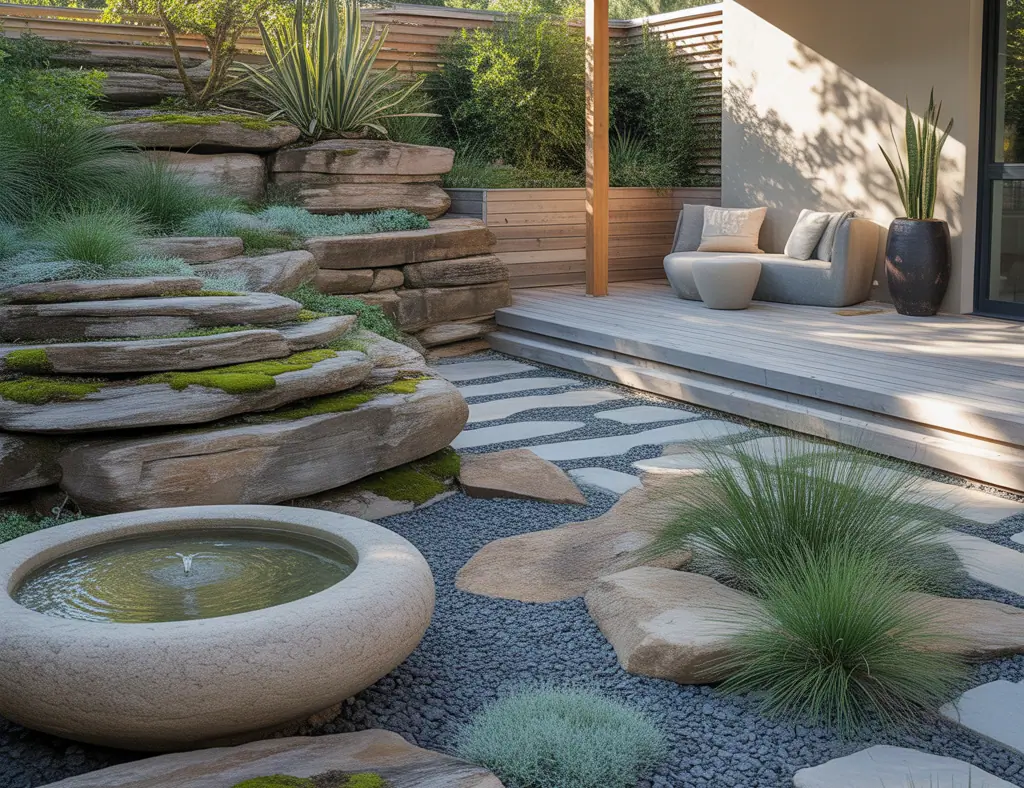
Ideal for sloped areas: create tiers with rugged boulders and coarse gravel. Use drought-tolerant alpine plants, sedums, and small saxifrages. This look mimics mountain scree and requires excellent drainage.
2. Dry River Bed (Seasonal Stream)
Lay river rocks and smooth pebbles down a natural drainage path to guide water and create a visual stream. Add native grasses and willow cuttings for a naturalized effect.
3. Succulent and Cactus Rock Garden
Perfect for hot, dry climates; combine low-profile rocks with shallow soil pockets for succulents, echeveria, agave, and yucca. Use sandier soil and light-colored gravel to reflect heat.
4. Japanese-Inspired Zen Rock Garden
Use larger, sculptural stones with raked gravel or sand and sparse planting. Emphasize negative space and sightlines from a patio or window.
5. Cottage Rockery
Integrate natural stones into mixed borders with perennial flowers, creeping thyme, and small shrubs for a softer, romantic look.
Step-by-Step DIY Rock Garden Build (Beginner-Friendly)
- Plan and map: Sketch the area, mark utilities, and measure. Decide on the focal point and plant palette.
- Prepare the site: Remove turf and weeds, loosen compacted soil. On slopes, build small terraces with flat stones or logs.
- Create drainage: Add a base layer of coarse gravel or crushed rock (2–4 inches) to prevent waterlogging.
- Place the big rocks: Set large boulders first—one or two anchor stones, then fill around them. Bury 1/3 of a rock for stability.
- Build micro-topography: Use smaller rocks to make ledges, crevices, and pockets for plants.
- Add soil and planting pockets: Mix gritty sand with potting soil for succulents; use well-draining soil mixes for alpine species.
- Plant strategically: Group plants by water needs. Use groundcovers and low-growing perennials to fill gaps.
- Finish with mulch/gravel: Top with 1–2 inches of decorative gravel to lock in moisture and define textures.
Practical Tools, Materials, and Cost-Saving Tips
Tools: wheelbarrow, shovel, garden rake, tamper, pry bar, gloves, and a level. Materials: boulders, flat stones, crushed gravel, weed fabric (optional), soil mix, and plants.
- Source rocks locally to save on delivery costs; check nearby quarries or reclaimed stone yards.
- Start small: design a 6–10 ft. focal bed first and expand later.
- Use recycled materials—broken concrete pieces, salvaged bricks, or old pavers make attractive edging.
Plant Selection and Placement Tips
Choose plants suited to your climate zone. For low water use, pick sedum, sempervivum (hens-and-chicks), lavender, rosemary, and ornamental grasses. For cooler zones, include dwarf conifers and alpine phlox.
Planting Rules of Thumb
- Place taller plants at the back or top of a slope.
- Group plants of the same water needs together.
- Use crevice planting—tuck plants into gaps between rocks for a natural look.
- Think seasonal interest—mix evergreen textures with spring-flowering bulbs.
Lighting, Edging, and Finishing Touches
Low-voltage landscape lights highlight stone textures and pathways at night. Use simple metal or stone edging to keep gravel in place. Add a bench, birdbath, or a sculptural boulder as a focal point for added character.
Maintenance: Keep It Low-Maintenance
Regular maintenance is simple: weed annually, replenish gravel as needed, prune spent growth, and check irrigation if you’ve installed drip lines. Rock gardens are inherently low-maintenance but do benefit from seasonal touch-ups.
Real-World Design Inspiration
Look at local rock outcrops, botanical rock gardens, or native landscapes for inspiration. Mix textures—coarse boulders, pebbles, and fine gravel—to create visual depth. Consider contrasting colors (dark basalt with light limestone) for dramatic effect.
Frequently Asked Questions
Q: How much sun does a rock garden need?
A: Most rock garden plants prefer full sun to partial shade. Succulents and many alpine plants thrive in 6+ hours of direct sun, while some ferns and shade-tolerant mosses can be used in dappled locations.
Q: Can I build a rock garden on clay soil?
A: Yes—improve drainage by raising beds, adding a thick gravel base, and using grit-based soil mixes. Plant species that tolerate heavier soil and create pockets of well-draining soil for more sensitive plants.
Q: Are rock gardens expensive to build?
A: Costs vary widely. You can keep expenses low by starting small, sourcing local or reclaimed stone, and choosing economical plants. A weekend DIY installation of a small bed is often affordable compared to hardscaping options like patios.
Conclusion — Start Your Outdoor Rock Garden Concept Ideas Today
Outdoor rock garden concept ideas give you a versatile, low-maintenance way to upgrade your landscape, control erosion, and add year-round interest. Start with a small plan, choose stones and plants that fit your climate, and enjoy a weekend project that elevates your yard. Ready to get started? Browse our DIY projects for step-by-step inspiration, or explore other home design ideas to integrate your new rockery with patios and paths. Share your progress and photos — your next great backyard transformation starts with one stone.