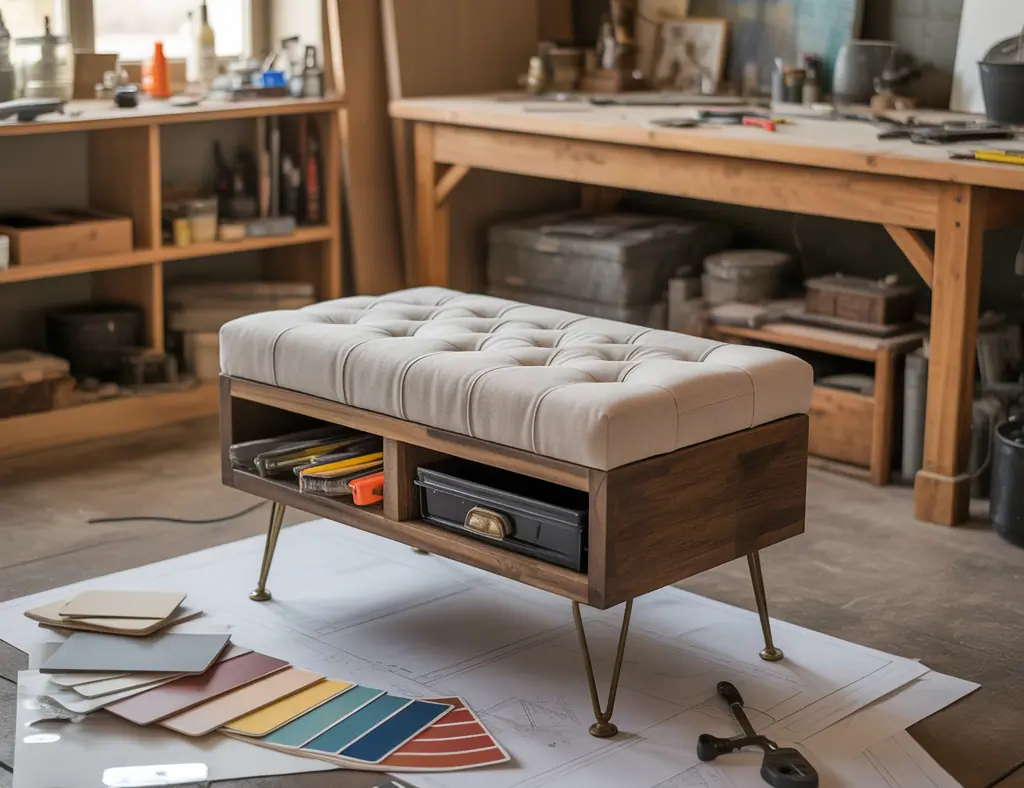
Ever stared at your living room and thought, “If only this space worked harder for me”? Maybe you need extra storage, a coffee table with personality, or a comfy footrest that doubles as seating. Ottoman ideas design can transform underused corners into stylish, functional features—without blowing your budget or hiring a contractor.
Why an Ottoman Is One of the Best Home Upgrades
Ottomans are multipurpose: storage ottomans hide blankets and toys, upholstered ottomans add texture, and ottoman coffee table ideas replace bulky furniture with something sleek. They’re also ideal for DIY projects, making them a favorite for home remodelers and weekend makers alike. Whether you want a tufted statement piece or a simple storage bench, the right ottoman design boosts both form and function.
Ottoman ideas design: styles & inspiration
Below are versatile ottoman design styles with quick ideas you can use right away.
1. Storage Ottoman (Hidden Storage Solutions)
Perfect for small homes and busy families. A hinged-top storage ottoman keeps throws, board games, or kitchen overflow out of sight. Choose durable upholstery like performance fabric or leather for high-traffic zones.
- Long-tail idea: “DIY storage ottoman with hinged lid”
- Design tip: Line the interior with a removable fabric liner to protect contents and simplify cleaning.
2. Ottoman Coffee Table Ideas
Swap your rigid coffee table for a large, low ottoman to soften the living room. Use a tray for drinks and a vase—this creates a balanced surface while maintaining a cozy look.
3. Tufted & Upholstered Ottomans (Classic Looks)
Tufting adds an upscale feel. For a refined aesthetic, use velvet or linen and deep button tufting. For pet-friendly homes, pick stain-resistant fabrics and lower pile textures.
4. Budget-Friendly DIY Ottoman Makeover
Give an old ottoman new life with reupholstery, fresh foam, and decorative trim. This is a low-cost way to match seasonal decor or switch colors without buying new furniture.
Step-by-Step: Build a Simple Storage Ottoman (Weekend DIY)
This quick guide creates a sturdy, attractive ottoman suitable for a sofa-end or at the foot of the bed.
- Materials: plywood (for base), 2x2s (frame), 2″ foam, batting, fabric, hinge, industrial staple gun, wood glue.
- Tools: saw, measuring tape, drill, screwdriver, clamps, scissors.
- Step 1 — Plan & Cut: Measure desired dimensions (e.g., 36″ L x 18″ W x 18″ H). Cut plywood for base and top, and 2x2s for side supports.
- Step 2 — Build Frame: Assemble a sturdy box with 2×2 supports and attach plywood base using screws and glue. Sand any rough edges.
- Step 3 — Top Cushion: Attach 2″ foam to the top, then batting for smoothness. Wrap fabric around and staple to the underside.
- Step 4 — Hinges & Finish: Attach hinges so the top opens smoothly. Add decorative legs or casters for mobility. Line the inside with fabric for a clean look.
- Step 5 — Styling: Add a tray or a set of decorative pillows to match your room’s palette.
Real-world advice: Plan for hinge clearance and ensure the lid stops before it hits the back of the ottoman when opened. If kids will use it, consider soft-close hinges to prevent finger-pinching.
Practical Tips for Choosing Fabrics, Sizes, and Shapes
- Room Size: For small rooms pick round or square ottomans to improve flow; rectangle or bench ottomans work well in long seating areas.
- Fabric Choice: Performance fabrics resist spills and pet wear. Leather adds durability and is easy to wipe clean.
- Scale & Proportion: Match ottoman height to your sofa seat height or slightly lower for comfort as a footrest.
- Multipurpose Use: Consider ottoman benches for entryways—add baskets underneath or a removable cushion for seating.
Creative Upgrades & Styling Ideas
Refresh existing furniture with these simple upgrades:
- Turn two small ottomans into a modular coffee table grouping for flexibility.
- Add decorative nailhead trim or piping for a custom look.
- Use contrasting fabric on the top and sides for a modern, two-tone ottoman.
Maintenance & Durability Advice
To make your ottoman last:
- Rotate cushions and pads to avoid uneven wear.
- Spot-clean fabric immediately; follow manufacturer care instructions for upholstery.
- Replace foam when it loses resilience—usually every 5–7 years with regular use.
Where to Use Ottomans Around the Home
Ottomans aren’t limited to the living room. Try these placement ideas:
- Bedroom foot-of-bed benches for storage and seating.
- Entryway ottomans for putting on shoes and storing seasonal gear.
- As extra seating in an open-plan kitchen lounge—pair with kitchen upgrades to tie styles together.
Frequently Asked Questions
Q: What size ottoman is best for a small living room?
A: Choose round or square ottomans no wider than two-thirds the width of your seating area. A 24–30″ diameter round ottoman often fits well without blocking traffic flow.
Q: Can I convert an ottoman into a coffee table?
A: Yes. Use a firm, flat-top ottoman and add a large decorative tray for cups and decor. For a sturdier surface, add a removable wooden or acrylic tray top.
Q: Is reupholstering an ottoman difficult for beginners?
A: Reupholstering a simple ottoman is a friendly beginner project. Start with a basic box ottoman—replace foam and fabric using a staple gun, and follow a step-by-step tutorial to build confidence.
Conclusion — Try These Ottoman Ideas Design Today
Ottoman ideas design offers endless possibilities—storage solutions, stylish coffee table alternatives, or weekend DIY makeovers. Start with one small project this weekend: reupholster an old ottoman or build a storage bench to clear clutter. If you’re looking for step-by-step inspiration, check out our DIY projects and broader home design ideas to match your style and skill level. Ready to begin? Pick a fabric, measure your space, and make your ottoman project a reality.
Call to action: Share your ottoman makeover photos or tell us which design you’ll try first in the comments — let’s build beautiful, functional spaces together.