Ever climbed into your attic and wondered if that awkward, underused space could become the best room in the house? If you’ve got kids, toys overflowing the living room, or a desperate need for a dedicated craft corner, a loft playroom idea might be your perfect weekend project. This guide walks you through planning, designing, and DIYing a safe, stylish loft play area that fits your budget and skills.
Why convert a loft into a playroom?
Turning a loft into a playroom frees up living space, gives kids a place for imaginative play, and can add functional value to your home. A loft playroom is ideal for:
- Creating a contained play zone that reduces living room clutter.
- Giving kids their own private nook for reading, crafts, and playdates.
- Using vertical space efficiently in smaller homes.
Planning your loft playroom idea
1. Measure and audit the space
Start with measurements: ceiling height, floor area, window placement, access (stairs or ladder), and insulation. Check the roofline for low spots and note where light switches and outlets are. A simple floor plan drawn to scale makes layout decisions much easier.
2. Safety first
- Ensure stair or ladder access has secure handrails and non-slip steps.
- Install a gate if the loft opens to stairs; use rounded corner guards on built-ins.
- Check the floor joists’ load capacity—add reinforcement if you plan to include heavy shelving or play equipment.
- Use cordless blinds and secure furniture to walls to prevent tipping.
3. Choose a theme and durable finishes
Decide on a color palette and theme that will grow with your children—neutral base with colorful accents works well. Choose wipeable paints, hard-wearing flooring, and washable textiles.
DIY step-by-step makeover
Step 1 — Prep and insulation
Seal any drafts, add insulation if needed, and ensure proper ventilation. This is the best time to run new wiring for lighting or outlets if required.
Step 2 — Flooring
Options that balance comfort and durability:
- Engineered wood or laminate with area rugs for warmth.
- Interlocking foam tiles for a soft play surface and easy cleaning.
- Low-pile, stain-resistant carpet for cozy reading nooks.
Step 3 — Lighting
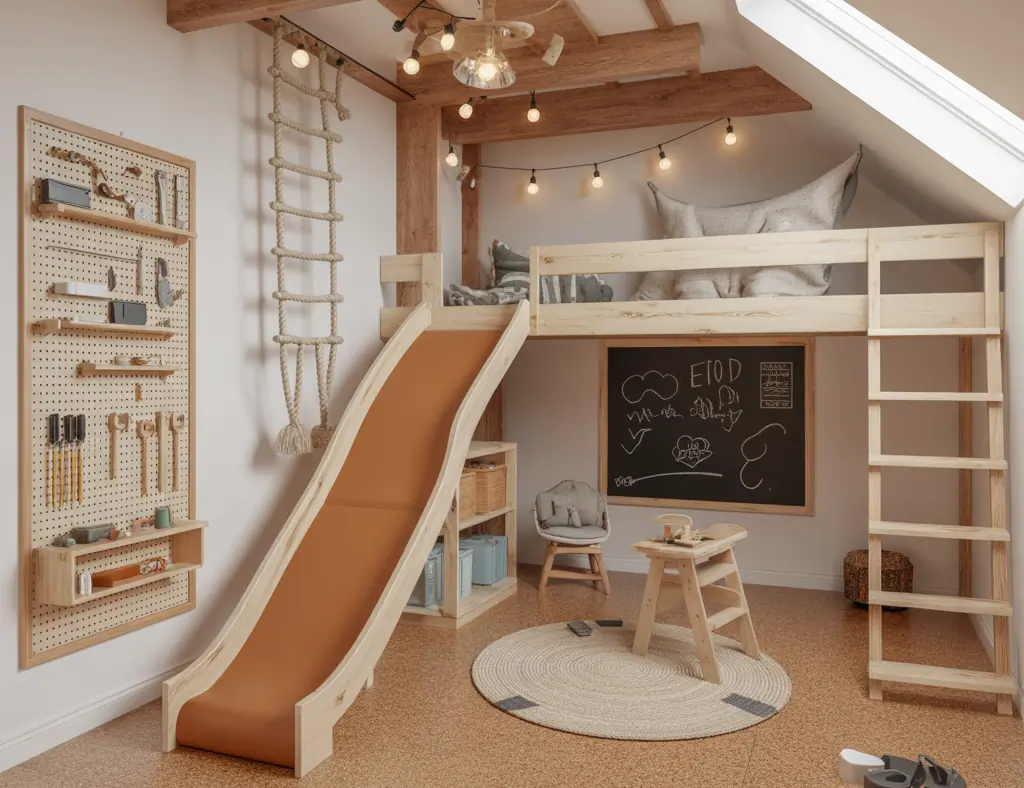
Lofts can be dim—add layered lighting: recessed lights for general illumination, clip-on lamps for desks, and string lights for whimsy. Skylights are a premium upgrade if your roof allows it.
Step 4 — Storage solutions
Smart storage keeps chaos at bay:
- Built-in bench seating with lift-up storage for toys and board games.
- Open cubbies and labeled bins for easy clean-up routines.
- Hanging shelves and pegboards for art supplies and backpacks.
Step 5 — Create activity zones
Divide the loft into purposeful areas: a reading nook with cushions and a bookcase, a craft table with washable mats, and an open play space for building sets or small indoor slides. Use rugs and low shelving as subtle zone dividers.
Design inspiration and layout ideas
Here are a few popular loft playroom layouts:
- Cozy reading loft: low shelving, beanbags, soft lighting, and a window bench.
- Creative studio: long craft table, pegboard wall, washable flooring, and a drying rack.
- Active play loft: foam tiles, wall-mounted climbing holds for older kids, and a foldable gym mat.
For small loft playroom ideas, think vertical storage and multipurpose furniture. If you’re converting an attic or small upper-level space, consider built-in storage under eaves and fold-away furniture to maximize floor area.
Budget-friendly materials and tools
To keep costs low without sacrificing style:
- Repurpose existing furniture—refinish or reupholster instead of buying new.
- Use peel-and-stick flooring for a cheap, easy update.
- Shop bulk bins and thrift stores for toys and storage baskets.
- Essential tools: drill, stud finder, circular saw, level, measuring tape, and safety gear.
Real-world advice & troubleshooting
Common problems and how to solve them:
- Low light: add mirrors and light-colored paint to brighten the space.
- Noise concerns: install a thick rug and soft furnishings to dampen sound, or add door seals if applicable.
- Heating/cooling: consider a portable heater or fan and consult an HVAC professional for permanent solutions.
Remember: start small. You can phase upgrades—start with storage and flooring, then add built-ins or skylights later.
Frequently Asked Questions
Q1: Is a loft safe for a children’s playroom?
A1: Yes, with the right precautions. Secure railings and gates, check the weight-bearing capacity of the floor, remove trip hazards, and choose soft surfaces for play areas. Regularly inspect for loose boards or exposed nails.
Q2: How much does it cost to convert a loft into a playroom?
A2: Costs vary widely based on scope. A basic DIY refresh (paint, flooring, storage) can be done for a few hundred to a few thousand dollars. Structural changes, insulation, or electrical work increase costs. Break the project into phases if you’re on a tight budget.
Q3: What are the best flooring options for a loft play area?
A3: Durable, easy-to-clean floors are ideal. Interlocking foam tiles are excellent for toddlers, while engineered wood or laminate with area rugs offers a more grown-up look. Consider low-pile stain-resistant carpet for cozy reading nooks.
Conclusion — Ready to try this loft playroom idea?
Transforming your loft into a practical, playful space is one of the most rewarding DIY projects you can tackle. With thoughtful planning, basic tools, and a few budget-friendly materials, you can create a loft playroom that sparks creativity and keeps your home organized. Start by measuring your space, prioritizing safety, and picking one zone to upgrade this weekend.
Want more project ideas? Browse our DIY projects for weekend builds, check out related home design ideas for styling tips, or explore kitchen upgrades if you’re tackling multiple renovations. Share your loft playroom photos or questions below — I’d love to help you plan the next step!