Ever stood in front of a window, staring at bare glass and wondering how a single change could make your living room feel finished? Whether you’re renting, renovating, or just craving a quick upgrade, the right curtains can dramatically change light, mood, and perceived room size. If you’ve ever asked, “How do I make my living room look more polished without spending a fortune?” this guide to living room ideas curtains is for you.
Why Curtains Matter: The Big Impact of Window Treatments
Curtains are more than decoration. They control light, create privacy, insulate against drafts, and act as a major design anchor. A well-chosen set of drapes can tie colors together, add texture, and define the style of your entire living area. In small rooms they can make ceilings seem taller; in large rooms they can add coziness.
Design benefits
- Define scale and proportion — floor-to-ceiling panels make rooms feel taller.
- Introduce pattern and texture — curtains let you experiment without repainting.
- Control ambiance — sheer curtains soften daylight; blackout panels darken for TV time.
Living room ideas curtains: Styles That Work (and How to Choose)
Choosing a style depends on function and aesthetics. Below are practical curtain styles and the best scenarios for each.
Sheer Curtains for Soft, Airy Light
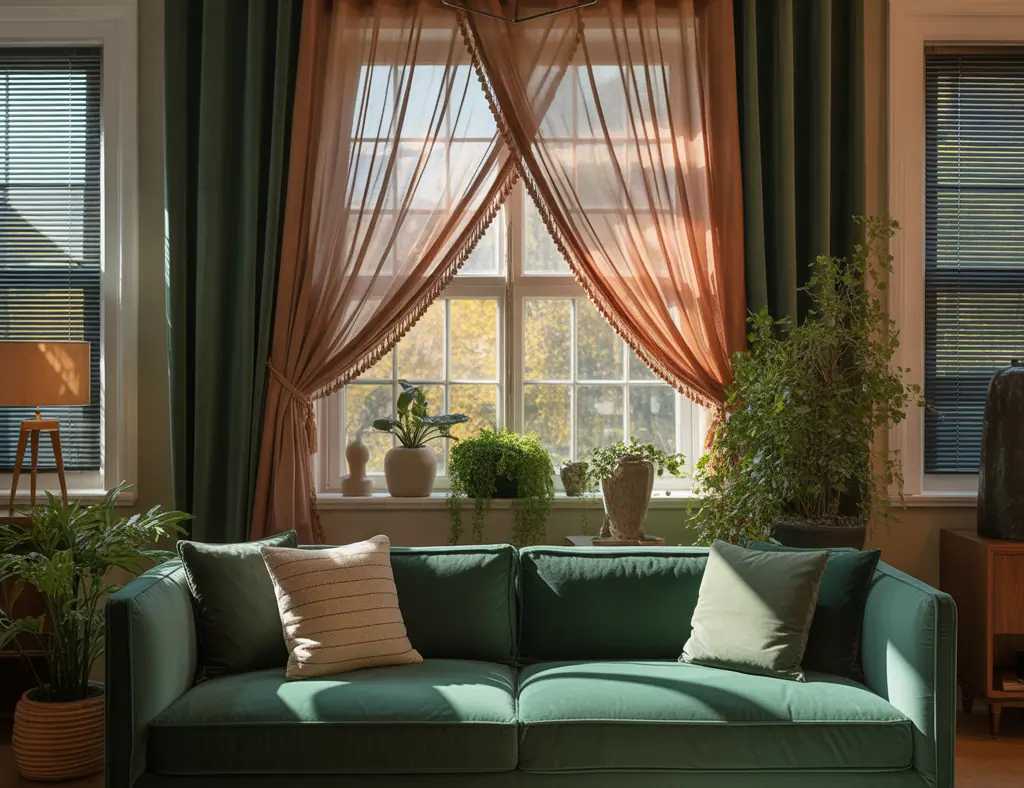
Sheers filter light beautifully, ideal for living rooms that get harsh sunlight. Use sheers alone for a light, Scandinavian feel or layer them beneath heavier panels for versatility.
Blackout Curtains for Media and Sleep-Friendly Spaces
Blackout drapes are perfect if you watch movies, have light-sensitive sleepers, or aim to reduce glare. Look for thermal-lined blackout curtains to add insulation and reduce noise.
Patterned Drapes for Personality
Introduce personality with geometric prints, florals, or bold stripes. If your furniture is neutral, patterned curtains can become the focal point. For a cohesive look, echo one color from the curtain in a throw pillow or rug.
Layered Window Treatments
Layering combines function with style: install blackout panels on a track, then hang decorative drapes on a rod, finishing with sheer panels inside. This allows complete light control and a high-end hotel look.
Practical DIY Tips: How to Measure, Hang, and Style Curtains
DIY curtain projects are one of the most satisfying weekend upgrades. Follow these step-by-step tips for professional-looking results.
Step 1 — Measure Like a Pro
- Measure width: Multiply the window width by 1.5–3 to calculate fabric width for fullness (2x is typical).
- Measure height: Mount the rod 4–6 inches above the window frame or close to the ceiling for a taller look.
- Decide length: For a modern look, let curtains just touch the floor; for a luxurious feel, allow them to puddle an extra 3–6 inches.
Step 2 — Choose Hardware
Select a sturdy curtain rod rated for the weight of your drapes. Consider double rods for layered looks. Use decorative finials or hidden brackets depending on your style.
Step 3 — Install the Rod
- Mark brackets with a level and pencil.
- Drill pilot holes and insert wall anchors for drywall.
- Mount brackets and slide on the rod with curtains attached.
Step 4 — Hemming and Finishing (No-Sew Options)
No-sew hem tape is an instant fix if you don’t have a sewing machine: iron-on hem tape secures fabric quickly. For a sturdier DIY hem, hand-stitch using a blind stitch. Add curtain weights or sewn-in chain at the hem for crisp drape.
Budget-Friendly and High-Impact DIY Curtain Projects
Trying to upgrade on a budget? These easy projects deliver big design returns:
- No-sew curtains using grommet tape and pre-washed fabric.
- Painted drop-cloth drapes for a modern, durable look — inexpensive and machine-washable.
- Upcycled sheets or quilts turned into patterned drapes — ideal for boho or cottage styles.
- DIY curtain tiebacks using rope, leather scraps, or wooden beads for a custom feel.
Step-by-step: Make Your Own Thermal Liner
- Measure the panel size and cut thermal fabric 1 inch smaller all around.
- Sew (or use fabric adhesive) the liner to the back of the curtain at the top only, letting it hang freely to prevent stiffness.
- Attach with Velcro if you want removable liners for washing.
Color, Texture, and Pattern Advice
Choose curtain colors based on the room’s light and purpose. Lighter shades reflect light and make rooms feel larger; deep hues add drama and warmth. Mix textures — velvet for richness, linen for casual elegance, and cotton for everyday durability.
For patterned curtains, keep other large elements (sofas, rugs) relatively simple to avoid visual chaos. Use accent colors from curtains in small decor touches like cushions or vases.
Real-World Advice: What to Splurge On and What to Save
- Splurge on quality hardware and well-made panels for high-traffic rooms.
- Save on curtains for rarely used rooms by using no-sew or ready-made panels.
- Buy a little extra fabric — panels with extra fullness hang better and look more luxurious.
- Keep a consistent rod finish (brass, matte black) across rooms for a cohesive home design.
Maintenance and Care
Regularly vacuum or shake out curtains to reduce dust. Follow care labels: many linen and cotton curtains are machine-washable; velvet or silk usually need professional cleaning. Steam wrinkles rather than ironing for a smoother finish without damaging fibers.
Design Inspiration: Matching Curtains to Style
Scandinavian
Sheer linen panels in neutral tones with simple wooden rod — minimal, airy, functional.
Modern Farmhouse
Heavy cotton or woven textures in warm whites and soft grays, paired with rustic metal hardware.
Contemporary
Floor-to-ceiling drapes in bold solids or geometric patterns, high-mounted rods, and layered sheers.
If you want more weekend projects to elevate your space, check out our DIY projects page. Thinking about open-plan ideas that flow into the kitchen? See our tips on kitchen upgrades. For a broader look at cohesive styling across rooms, explore our home design ideas collection.
Frequently Asked Questions
1. How high should I hang my curtain rod?
Mount a rod 4–6 inches above the window frame for a subtle lift, or closer to the ceiling for the illusion of higher ceilings. For dramatic effect, place it 8–12 inches above the trim if your ceilings allow.
2. What curtain length is best for a living room?
Standard looks are “just touching the floor” for a clean finish or 3–6 inches puddled on the floor for a luxurious feel. Avoid curtains that ride above baseboards unless that’s your intentional modern look.
3. Can I use curtains in a small living room without making it look cramped?
Yes. Use light-colored, floor-to-ceiling panels mounted close to the ceiling to visually heighten the space. Choose narrow rod widths that extend beyond the window to reveal more daylight when open.
Conclusion — Start Reimagining Your Windows Today
Living room ideas curtains are one of the fastest, most affordable ways to refresh a space. With the right measurements, simple hardware, and a few DIY techniques, you can elevate the entire room in a weekend. Ready to pick your style and get started? Measure your windows, choose a fabric you love, and transform your living room with new curtains today.
Call to action: Share your before-and-after photos or ask for personalized advice — I’d love to help you plan the perfect window treatment for your living room!