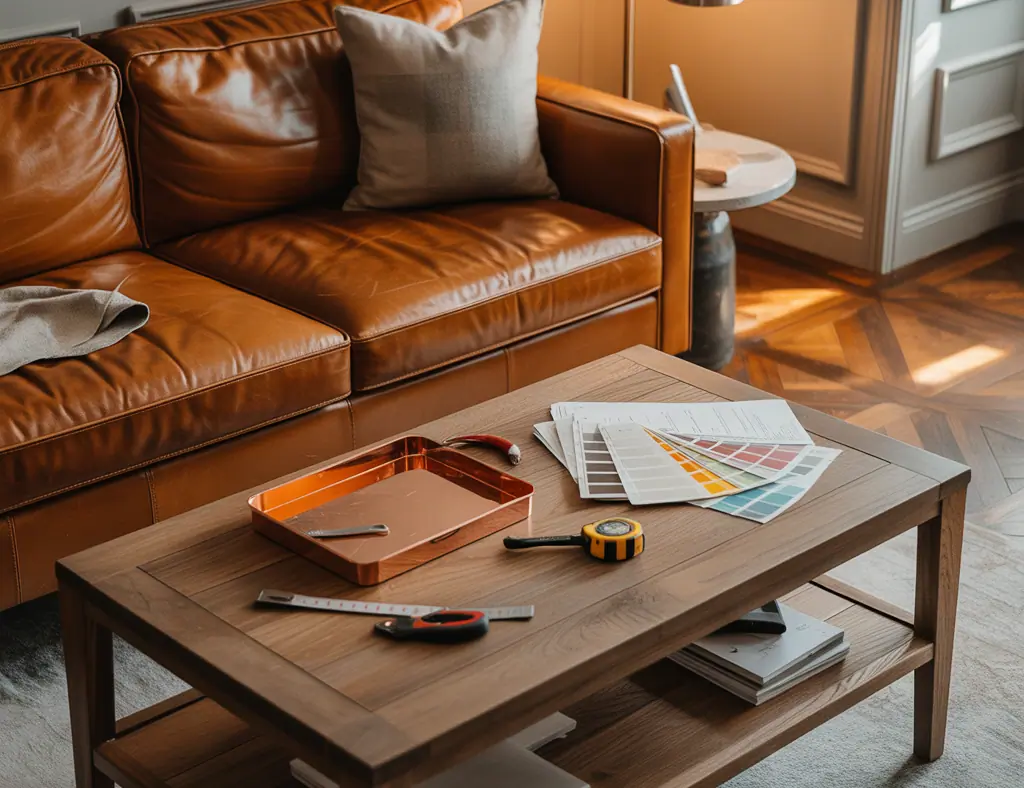
Picture this: you’ve just finished reupholstering your leather sofa and now your living room looks sleek — but the old coffee table feels like it belongs in another decade. Do you replace it, buy something expensive, or try a DIY leather couch coffee table that ties the room together? If you love hands-on projects and want a custom centerpiece without breaking the bank, this guide is for you.
Why a leather couch coffee table works in modern living rooms
Leather adds warmth, durability, and a luxe feel to a room. A coffee table that echoes or complements leather upholstery creates cohesion and elevates the entire space. Whether you choose a leather-topped table, a tufted leather ottoman used as a coffee table, or a mixed-material design with reclaimed wood and leather accents, you’re aiming for balance: comfort, function, and style.
Design inspiration: styles that pair well with a leather sofa
- Industrial — metal base + leather top for contrast and durability.
- Mid-century modern — tapered legs, walnut wood base, subtle leather inset.
- Rustic farmhouse — distressed leather with reclaimed wood and iron brackets.
- Contemporary — low-profile leather ottoman with hidden storage or casters.
Choosing the perfect leather couch coffee table
Picking the right size, height and material is essential. The main keyword — leather couch coffee table — isn’t just about looks; it’s about function. Aim for a table height within 1–2 inches of your sofa seat height. Width should be no wider than two-thirds the length of your couch to maintain visual proportion and traffic flow.
Materials and tools for a DIY leather coffee table
- Plywood or MDF for the top (3/4″ recommended)
- Foam padding (1″–2″) for a cushioned leather top
- Leather hide, faux leather, or repurposed leather cushions
- Staple gun, heavy-duty staples, and spray adhesive
- Table base: hairpin legs, wooden frame, or metal trestle
- Upholstery thread, tufting buttons (optional), and drill/screws
- Leather conditioner and leather cleaner for finishing
Step-by-step DIY leather-topped coffee table
- Measure and plan: Match the table height to your couch and determine dimensions that allow comfortable circulation.
- Cut the top: Cut plywood to size. Sand edges smooth and round corners slightly for safety and a refined look.
- Attach foam: Spray adhesive lightly to tack foam to the plywood; trim foam to fit precisely.
- Stretch leather: Lay the leather or upholstery fabric face-down, place the foam-topped panel on it, and begin stapling from the center of each side, pulling leather taut as you go.
- Optional tufting: For a tufted leather coffee table look, mark tuft locations, drill small holes through the plywood and secure tufting buttons with upholstery thread or screws.
- Attach legs: Mount legs or build a frame depending on your design. Reinforce corners if you expect heavy use.
- Finish: Clean and condition the leather. Add protective felt pads under legs to prevent floor scratches.
Practical tips & real-world advice
Use what you already have
Repurpose a leather couch cushion or an old sofa seat as a coffee table top. Cutting and reinforcing it to sit on a plywood base can save money and preserve a sentimental piece.
Choose the right leather
Full-grain leather is durable but pricey. Top-grain or high-quality faux leather can mimic the look at lower cost and easier maintenance. For high-traffic homes, consider stain-resistant finishes or leather that ages well — scratches can look like character on some hides.
Maintenance and care
Clean spills immediately with a dry cloth. Use leather cleaner and conditioner every 6–12 months to keep the surface supple. Avoid direct sunlight to prevent fading and keep heat sources away to avoid drying the hide.
Creative variations and advanced builds
- Storage coffee table: Add a hinged top to convert your leather table into storage for blankets and remotes.
- Glass inset: Cut a small tempered glass panel to sit flush within a leather border for a hybrid modern look.
- Convertible ottoman-table: Install lockable casters so the coffee table can move and double as extra seating when needed.
Styling your leather couch coffee table
Balance leather’s texture with softer elements: a wool throw, woven tray, ceramic vases, and a stack of books. For an anchored look, place an area rug underneath that complements both the sofa and the table rather than matching exactly.
Budget breakdown
Expect basic DIY costs between $80–$250 depending on leather choice and legs. Repurposing materials can reduce costs dramatically. Buying a pre-made leather ottoman coffee table typically starts around $200 and can go up quickly for designer brands.
Frequently Asked Questions
1. Can I use faux leather for a coffee table?
Yes. High-quality faux leather can look convincing, is easier to clean, and is often more budget-friendly. Choose a vinyl-backed faux that resists peeling and test a small area for durability before committing.
2. How high should a leather coffee table be compared to my sofa?
Aim for a coffee table height within 1–2 inches of your sofa seat height. This keeps reaching for drinks and items comfortable and visually balanced.
3. Is a leather ottoman a good alternative to a coffee table?
Absolutely. A leather ottoman doubles as seating and a coffee table, and it creates a softer, more casual vibe. Add a tray for stability if you set drinks on it regularly.
Conclusion: Make your leather couch coffee table the room’s centerpiece
Whether you build a leather-topped DIY coffee table, repurpose an ottoman, or customize a mixed-material design, a leather couch coffee table can transform your living room. Start small: sketch a plan, gather materials, and try a prototype. If you’re ready to tackle hands-on projects, explore related DIY projects for more step-by-step guides, browse home design ideas for styling tips, or check out kitchen upgrades if you’re rethinking multiple rooms. Try a build this weekend — and share your finished photos to inspire others!