It’s Saturday morning: you’ve got coffee in hand, a weekend project list, and two cars that somehow never seem to fit comfortably in the garage. Sound familiar? Whether you’re squeezing in a lawn mower, a bike, and a workbench or trying to create a tidy two-car parking space with storage, the right layout ideas 2 car garage can transform chaos into a practical, attractive workspace.
Why a good two-car garage layout matters
A well-planned two-car garage layout does more than park cars. It maximizes usable square footage, improves safety, protects tools and vehicles, and creates a flexible zone for projects. Good planning reduces wasted space and prevents expensive rework later. In this guide you’ll find design inspiration, practical DIY tips, and step-by-step ideas you can implement this weekend or plan into a larger remodel.
Assess your space before remodeling
Measure and map
Start by measuring the interior dimensions, door openings, ceiling height, and where utilities run. Common two-car garage sizes are:
- 20′ x 20′ — minimal for two compact cars
- 22′ x 22′ — better for moderate storage
- 24′ x 24′ or larger — ideal for parking plus workshop
List priorities
Decide what matters most: parking, storage, workshop, mudroom entry, or laundry. Rank needs so layout decisions reflect how you use the space daily.
Top layout ideas 2 car garage (practical options)
Below are popular two-car garage plans with real-world pros and cons and quick DIY tips to implement each.
1. Parking-first layout (simple and clean)
Keep two full parking bays centered, with storage along the sidewalls and overhead racks. This layout is best when protecting cars is the primary goal.
- Pros: Easy vehicle access, minimal modifications
- Cons: Limited workshop space
- DIY tip: Install wall-mounted slatwall panels for modular storage that won’t eat into floor space.
2. Workshop + parking combination
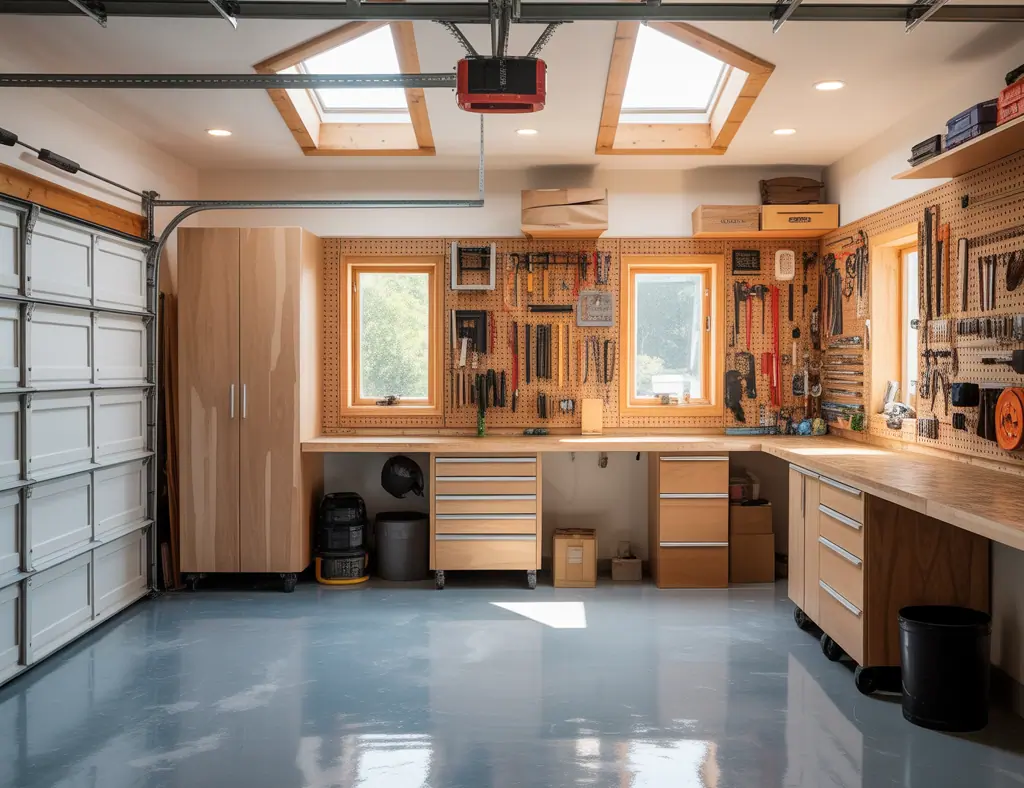
Design one side for parking and the other for a dedicated workshop and workbench. Leave enough clearance to open doors and move around tools safely.
- Pros: Functional workspace for DIY projects
- Cons: May limit parking size for larger vehicles
- DIY tip: Build a fold-down workbench that tucks away when not in use to maximize space.
3. Storage-first layout with cabinetry and overhead racks
If storage is king, fit floor-to-ceiling cabinets on one wall and overhead ceiling storage for seasonal items. Create a small walkway for access to both cars.
- Pros: Highly organized, great for families and gear
- Cons: Requires careful planning to maintain vehicle access
- DIY tip: Use labeled, stackable bins and clear plastic tubs for faster organization and inventory.
4. Split-zone: mudroom, laundry, and parking
If your garage connects to the house, carve a small mudroom area with hooks and a bench to contain dirt and clutter. This layout improves flow and reduces house mess.
- Pros: Reduces indoor mess, creates dedicated drop zone
- Cons: Reduces storage/parking footprint slightly
- DIY tip: Add durable flooring like epoxy or rubber mats in the mudroom zone for easy cleaning.
Step-by-step DIY improvements to implement now
These practical upgrades work with any of the layouts above and can dramatically improve function and look.
- Declutter and categorize: Pull everything out, sort into keep/donate/sell, and photograph items for easier decisions.
- Plan zones: Mark parking, storage, work, and entry zones with tape on the floor.
- Upgrade the floor: Clean, repair cracks, and apply an epoxy or polyaspartic coating for durability and a tidy finish.
- Install lighting: Replace dim bulbs with bright LED fixtures. Add task lighting over workbench areas.
- Add wall systems: Slatwall, pegboards, and magnetic strips keep tools visible and off floors.
- Create overhead storage: Use safe, rated ceiling racks for bins and seasonal gear to free floor space.
- Secure heavy items: Anchor cabinets and shelving to studs to prevent tipping.
Budget-friendly tips and real-world considerations
Not every garage remodel needs a contractor. For lower budgets:
- Buy used cabinetry or repurpose kitchen cabinets for garage storage.
- Use DIY epoxy kits for the floor instead of professional pours.
- Build modular storage on a weekend—simple cube shelving and labeled bins go a long way.
Consider climate: Insulate walls and garage door if you plan to use the garage as a workshop. Add a small heater for cold climates and proper ventilation if running chemicals or paint.
Design inspiration and finishing touches
Small design choices elevate function to style. Paint a bright color on the back wall to create depth, add matching cabinetry fronts for a cohesive look, and choose durable hardware finishes. Add a chalkboard or whiteboard for project lists. If you have a utility sink, surround it with water-resistant cabinets and a backsplash for a polished, practical zone.
Frequently Asked Questions
1. What is the best size for a 2-car garage?
The recommended minimum is 20′ x 20′, but 24′ x 24′ offers more comfortable parking, storage, and workshop options. Measure your vehicles and include clearance for doors and movement when selecting a size.
2. How can I fit storage and parking in a small 2-car garage?
Use vertical space with wall systems and ceiling racks, install slimline cabinets, and consider fold-away workbenches. Prioritize items you use frequently and store seasonal items overhead.
3. Can I convert part of my 2-car garage into a workshop?
Yes. Partition one side with a workbench and tool storage while keeping ample clearance for car doors. Insulate, add electrical outlets and good lighting, and use durable flooring. Check local zoning or HOA rules before making major structural changes.
Conclusion — plan your perfect two-car garage layout
A thoughtful approach to layout ideas 2 car garage turns a crowded, frustrating space into a functional zone for parking, storage, and DIY projects. Start by measuring, prioritize your needs, and choose a layout that balances parking with the activities most important to you. Try small weekend projects like wall systems, floor coatings, and overhead racks to see immediate gains.
Ready to get hands-on? Browse our project guides for step-by-step help and inspiration—check out our DIY projects and explore related ideas in home design ideas and kitchen upgrades for cohesive home improvement planning. Share your garage makeover photos and questions in the comments below — let’s build smarter spaces together!