Ever stood on your back deck on a rainy afternoon and wondered what to do with the muddy, dark area underneath? You’re not alone. Many homeowners treat the space under a deck as wasted real estate—cluttered with tools, soggy soil, and spiders—when it can become a beautiful, practical extension of the yard. If you’re tackling a DIY home improvement weekend and want smart, low-cost ways to improve curb appeal and function, these landscaping ideas under deck will give you practical inspiration and step-by-step tips you can apply now.
Why landscaping under a deck matters
Landscaping under a deck improves drainage, reduces erosion, adds usable outdoor living space, and boosts property value. With a little planning, you can solve moisture problems, create hidden storage, or craft a cozy shaded garden spot. Whether you plan a shaded patio, storage solution, or a plant-friendly undercroft, thinking like a designer helps you maximize the area beneath your deck.
Top landscaping ideas under deck
Below are creative, practical concepts—each includes materials, steps, and real-world tips to help you complete the project yourself.
1. Create a dry patio with under-deck drainage
- Why: Keeps the space usable even in rain and protects furniture and accessories.
- Materials: Gravel, pavers, landscape fabric, French drain or under-deck drainage panels, geotextile filter, and a slight slope for runoff.
- Steps:
- Tip: Use permeable pavers and connect the drainage to a dry well for sustainable runoff management.
2. Shade garden: low-maintenance plants for under deck landscaping
If you want a green, natural look, pick shade-tolerant, low-rooting plants and groundcovers that thrive in low light and compact soil.
- Recommended plants: fern varieties, hostas, heuchera (coral bells), vinca minor (periwinkle), ajuga (bugleweed), and ivy (use carefully).
- Planting tips:
- Real-world advice: Avoid plants that need full sun and watch for pest/disease hotspots under poorly ventilated decks.
3. Gravel and walkways for low-maintenance under-deck landscaping
Simple, budget-friendly, and quick to install, a pea gravel floor with stepping stones is ideal for storage, workshop, or kids’ play areas.
- Materials: landscape fabric, 3/4″ crushed stone base, pea gravel or decomposed granite, stepping stones.
- Steps:
- Tip: Add a simple storage bench built from pressure-treated lumber to keep tools tidy and dry.
4. Concealed storage and workshop zone
Turn the under-deck area into hidden storage with clean access and weather protection.
- Ideas: sliding screens, lattice panels, lockable storage boxes, and built-in shelving.
- DIY steps:
- Safety tip: Keep a 6–12″ clearance from the house foundation to allow inspection for pests and mold.
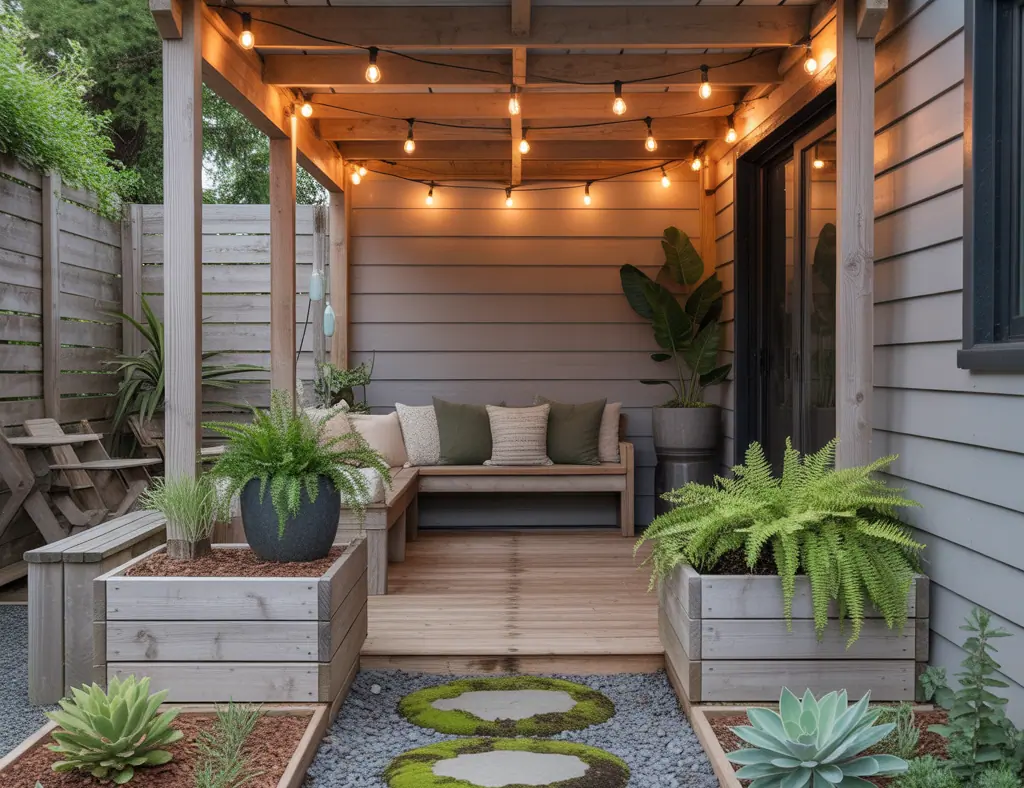
5. Cozy outdoor living room
With weatherproof furniture, string lights, and a simple floor upgrade, the under-deck area becomes an inviting retreat.
- Materials: composite decking tiles, outdoor rugs, waterproof cushions, LED string lights, and a dehumidifying solution (ventilation or small heater).
- Design tip: Use light-colored materials and mirrored surfaces to brighten the shaded space.
- Practical advice: Install outdoor-rated electrical outlets and use solar or battery-operated lighting if wiring is difficult.
Practical steps to plan landscaping under deck
Before you start digging or buying materials, use this checklist to avoid costly mistakes:
- Assess water flow and drainage — watch where roof and deck runoff goes during storms.
- Check building codes and clearance requirements for under-deck modifications.
- Test soil and make needed amendments for planting or install raised beds/containers.
- Prioritize ventilation to prevent mold and wood rot—don’t block airflow around joists.
- Pick rot-resistant, outdoor-rated materials for anything touching the ground (composite, treated lumber, or galvanized metal).
Budget-friendly tips and time-saving DIY techniques
- Reuse materials: reclaimed pavers, pallets (for screening), and recycled gravel can cut costs.
- Phase the project: start with drainage, then flooring, then lighting and furniture to spread out costs.
- Rent tools like plate compactors and wet saws for a weekend rather than buying them.
- Use container gardens instead of digging to avoid major soil work and speed up planting.
Frequently Asked Questions
1. What is the best ground cover for a shaded area under a deck?
Shade-loving, low-maintenance plants like hostas, ferns, ajuga, and vinca minor are excellent choices. For an ultra-low-maintenance option, use pea gravel or mulch and add potted shade plants. Always improve soil where possible and provide raised beds if drainage is poor.
2. How do I keep water from dripping through my deck onto the patio below?
Install an under-deck drainage system or waterproof membrane attached to the deck joists to capture and channel water away from the area. Ensure the deck has gutters or a positive slope away from the foundation. Adding a French drain or directing runoff into a dry well or landscape bed helps manage excess water.
3. Can I build a garden under my deck if it’s low to the ground?
Yes—use raised planter boxes or containers instead of planting directly in compact, low-light soil. Raised beds improve drainage, provide better soil conditions, and protect plants from pests. If headroom is very limited, consider low-growing groundcovers, shade-tolerant succulents, or vertical planters mounted along the deck supports.
Design inspiration and final thoughts
Think of the area under your deck as a flexible zone: a shaded garden, hidden storage, an extra patio, or a workshop. Small changes—like adding gravel, installing a simple drainage panel, or planting a few hostas—can dramatically improve function and curb appeal. For more hands-on ideas and project instructions, check out our DIY projects and explore other home design ideas for turning overlooked spaces into highlights of your property.
Conclusion — Ready to transform your under-deck space?
Landscaping ideas under deck can turn wasted space into useful, beautiful areas with modest effort and budget. Start by addressing drainage and ventilation, then choose a finish—gravel, pavers, plants, or storage—that fits your lifestyle. If you’re excited to try a project this weekend, pick one small upgrade (like a pea gravel floor or lattice screening) and build from there. Want more project guides and material lists to get started? Explore our DIY projects page and begin your transformation today.