Enhancing Public Safety and Sustainability with Modern Surfaces
We often take the surfaces around us for granted. Yet, these foundations profoundly impact our safety, health, and environment. From the playgrounds where our children play to the paths we walk every day, the materials beneath our feet matter.
Modern surface solutions are now much more than just pavement. They are designed for durability, improved safety, and environmental care. We are seeing exciting advancements. These make our public spaces better for everyone.
This article explores these innovative solutions. We will look at how they improve public safety and promote sustainability. We will also see how they revitalize our essential infrastructure. For instance, consider how Recycled poured in place rubber solutions are changing playgrounds and recreational areas. They offer both safety and eco-friendly benefits.
We aim to highlight the many ways advanced surfacing contributes to healthier, more resilient communities.
The Evolving Need for Advanced Surfaces
The demands on our public and private spaces are constantly growing. Communities expect not only functional areas but also spaces that are safe, aesthetically pleasing, and environmentally responsible. This evolution has driven significant innovation in surface solutions. Safety standards, for instance, have become increasingly stringent, particularly for areas frequented by children. The need for ADA accessibility ensures that all members of society can steer and enjoy public spaces.
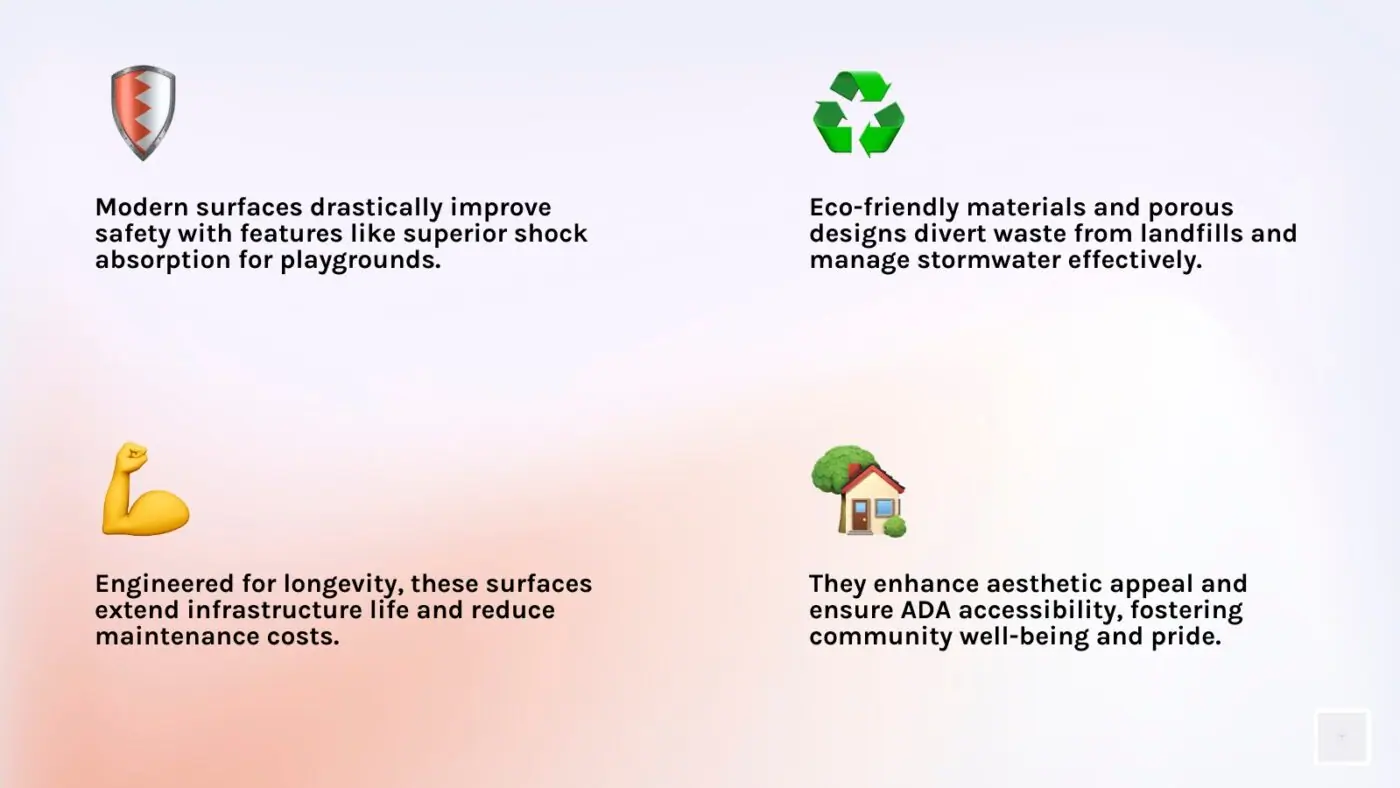
Environmental concerns also play a pivotal role. As we become more aware of our ecological footprint, there’s a growing push for sustainable practices and materials. This includes everything from diverting waste from landfills to managing stormwater runoff more effectively. Furthermore, the aesthetic value of surfaces contributes to the overall quality of life in urban and suburban environments, influencing community wellness and pride. Modern surface solutions are rising to meet these complex challenges, offering multifaceted benefits that go far beyond simple ground cover.
The intersection of public safety and environmental sustainability is a critical area where modern surface solutions are making a profound impact. Our collective responsibility to create safe environments, particularly for vulnerable populations, is paramount. Simultaneously, the imperative to protect our planet by adopting eco-friendly practices has never been stronger. Surface solutions today are engineered to address both these concerns simultaneously.
For example, the use of recycled materials in surfacing directly contributes to diverting waste from landfills, a significant environmental benefit. At the same time, these recycled materials can be engineered to provide superior shock absorption, drastically improving safety in recreational areas. This dual benefit underscores the transformative potential of innovative surface technologies. From playground safety to water conservation and effective stormwater management, these solutions are reshaping how we build and maintain our communities.
Playground and Recreational Surface Solutions
Playgrounds are vibrant hubs of childhood activity, and ensuring their safety is a top priority. Traditional playground surfaces, such as wood chips or sand, often fall short in providing consistent fall height protection and can require extensive maintenance. Modern solutions, particularly those utilizing rubber, offer superior shock absorption, significantly reducing the risk of serious injury from falls. These surfaces are designed to meet specific safety standards, including critical fall height requirements, making them ideal for high-traffic play areas.
Beyond safety, these surfaces are crafted for durability and longevity, capable of withstanding heavy use and diverse weather conditions. Non-slip textures are incorporated to prevent accidents, even when wet, ensuring a safer play environment year-round. The versatility of these materials also extends to a wide array of recreational applications. From vibrant playgrounds and interactive splash pads to high-performance sports courts and resilient pool decks, specialized surfacing improves both the safety and enjoyment of these spaces. The advancements in materials like Recycled poured in place rubber solutions offer not only unparalleled safety but also allow for creative designs and custom color schemes that invigorate public spaces.
Common applications include:
- Playgrounds: Providing critical fall height protection and a vibrant, engaging aesthetic.
- Splash Pads: Offering a soft, non-slip surface that is water-permeable and quick-drying.
- Sports Courts: Delivering consistent ball bounce, shock absorption for athletes, and durable wear.
- Pool Decks: Creating a slip-resistant, comfortable, and cooler surface around aquatic areas.
Eco-Friendly Materials and Their Impact
The commitment to environmental stewardship is a cornerstone of modern surface solution development. A significant leap in this direction has been the widespread adoption of recycled materials, particularly recycled tires. Millions of tires are discarded annually, posing a considerable environmental challenge. By changing these waste products into durable and safe surfacing materials, we are actively diverting them from landfills, mitigating pollution, and conserving natural resources. This process not only reduces waste but also lessens the demand for virgin materials, further decreasing environmental impact.
Many of these eco-friendly systems are designed to contribute to green building certifications, such as LEED (Leadership in Energy and Environmental Design) credits. For example, porous paving solutions, often made from recycled rubber, allow rainwater to percolate through the surface and into the ground below. This natural filtration process helps replenish groundwater, reduces stormwater runoff, and minimizes the burden on municipal drainage systems. This approach combats urban flooding and helps prevent the pollution of waterways. The environmental benefits extend to supporting regional tire recyclers and fostering a circular economy where waste products are given a new, valuable life. This commitment to sustainability ensures that our infrastructure is built not just for today, but for a healthier, greener future.
Revitalizing Infrastructure: Durable and Cost-Effective Surface Solutions
Maintaining public infrastructure is a continuous and often costly endeavor for municipalities. Roads, sidewalks, and public pathways are subject to constant wear and tear from weather, traffic, and pedestrian activity. Deterioration leads to safety hazards, increased maintenance budgets, and a diminished aesthetic for communities. Innovative surface solutions are providing durable and cost-effective answers to these persistent challenges, extending the lifespan of infrastructure and reducing long-term expenses.
By focusing on materials that offer superior resilience and require less frequent repair, we can ensure that public funds are used more efficiently. These advancements also mean less disruption for residents and businesses due to ongoing construction. From advanced concrete repair techniques to specialized materials for trails, the goal is to create infrastructure that is not only robust but also contributes positively to the urban landscape.
Concrete and Pavement Innovations
Concrete and asphalt are foundational elements of our urban infrastructure, forming the backbone of sidewalks, roads, and public squares. However, they are susceptible to cracking, spalling, and uneven settling, which create trip hazards and necessitate costly repairs. Modern concrete and pavement innovations focus on enhancing durability, improving safety, and extending the service life of these essential surfaces.
One key area of innovation involves advanced crack repair techniques and surface leveling technologies. These methods not only fix existing damage but also often incorporate materials that are more flexible and resistant to future cracking. For instance, Patented concrete surface solutions offer specialized approaches to address common issues like uneven sidewalks, effectively removing trip hazards without requiring full slab replacement. This not only saves time and resources but also minimizes waste.
Pervious pavement is another significant advancement, offering environmental benefits by allowing water to filter through, reducing stormwater runoff and replenishing groundwater. These innovations contribute to a more sustainable and resilient urban environment, ensuring that our pathways and public spaces remain safe and functional for years to come. By investing in these cutting-edge solutions, communities can significantly extend the life of their infrastructure, reduce maintenance costs, and improve public safety.
Specialized Trail and Walkway Surface Solutions
Beyond traditional concrete, there is a growing demand for specialized surfaces custom to specific pedestrian and recreational needs. Jogging trails, walking paths, and multi-use walkways require materials that offer comfort, safety, and environmental compatibility. Modern surface solutions provide a range of options that meet these diverse requirements.
Rubber sidewalks and flexible pavements, often made from recycled materials, offer a softer, more forgiving surface than concrete or asphalt. This reduced impact is particularly beneficial for joggers and pedestrians, as it lessens stress on joints and muscles, promoting a more comfortable and enjoyable experience. These flexible surfaces are also less prone to cracking from tree roots or ground movement, reducing maintenance needs and extending their lifespan.
Furthermore, many of these specialized trail solutions are porous, allowing for excellent drainage and minimizing puddles after rain. This feature improves safety by reducing slip hazards and contributes to better stormwater management. The ability to customize colors and textures also allows these surfaces to blend seamlessly with natural landscapes or to create distinct visual pathways in urban parks. These innovations ensure that our trails and walkways are not only durable and safe but also improve the overall quality of outdoor public spaces.
The Growing Importance of Specialized Industrial Surface Solutions
Industrial environments present some of the most demanding conditions for surfaces. From heavy machinery and chemical spills to constant foot traffic and extreme temperatures, industrial flooring must withstand relentless abuse while maintaining safety and operational efficiency. The right industrial surface solution is not just about aesthetics; it’s a critical component of asset protection, worker safety, and regulatory compliance.
Specialized industrial coatings and flooring systems are engineered to meet these rigorous demands, offering superior resistance to wear, chemicals, and impact. These solutions contribute significantly to a facility’s overall productivity by minimizing downtime for repairs, improving sanitation, and enhancing the longevity of the infrastructure. The investment in high-performance industrial surfaces translates directly into improved operational resilience and a safer working environment.
Coatings for Wear, Corrosion, and Chemical Resistance
In industrial settings, surfaces are constantly exposed to factors that can lead to rapid deterioration. Abrasion from heavy equipment, corrosive chemicals, and the constant threat of impact require specialized protection. This is where advanced coatings come into play, offering custom solutions to improve durability and safety.
- Epoxy Coatings: Widely used for their exceptional durability and resistance to chemicals and abrasion. Epoxy floors create a seamless, non-porous surface that is easy to clean and highly resistant to stains, making them ideal for manufacturing plants, warehouses, and automotive facilities. They can also be formulated with anti-slip additives for improved safety.
- Urethane Concrete: Offers even greater thermal shock resistance and impact strength than epoxy, making it suitable for environments with extreme temperature fluctuations, such as food and beverage processing plants. It also provides excellent chemical resistance and a long lifespan.
- Anti-Corrosion Paint: Essential for protecting metal structures and equipment from rust and chemical degradation. These paints form a barrier that prevents moisture and corrosive agents from reaching the underlying material, significantly extending the life of assets in harsh industrial environments.
- Thermal Spray Coatings: Applied to metal components, these coatings provide superior wear and corrosion resistance, and can improve properties like hardness or lubricity. They are crucial in industries where components are subjected to extreme friction, heat, or abrasive conditions, such as in aerospace or heavy machinery.
- Metal Finishing: A broad category that includes processes like plating (e.g., electroless nickel plating for corrosion resistance) and anodizing. These techniques improve the surface properties of metal parts, improving their hardness, wear resistance, and aesthetic appeal, which is vital in precision manufacturing and component longevity.
These advanced coatings and finishes are not merely cosmetic; they are engineered solutions that safeguard valuable assets, ensure operational continuity, and contribute to a safer, more compliant industrial environment.
Meeting Industry-Specific Demands
Different industries have unique challenges and regulatory requirements that necessitate highly specialized surface solutions. A one-size-fits-all approach simply won’t suffice when dealing with the intricacies of various operational environments.
- Food and Beverage Processing: This sector demands flooring that is seamless, non-porous, and resistant to acids, alkalis, and thermal shock. Urethane concrete systems are often preferred due to their ability to withstand aggressive cleaning regimes and temperature extremes, preventing bacterial growth and ensuring hygiene compliance.
- Manufacturing: Facilities range from light assembly to heavy industrial production. Flooring must resist abrasion, impact, and chemical spills. Epoxy and polished concrete floors provide durable, easy-to-maintain surfaces that can also be marked for safety zones and traffic flow.
- Healthcare Facilities: Hospitals, clinics, and laboratories require surfaces that are antimicrobial, easy to sterilize, and capable of supporting heavy rolling loads. Seamless vinyl, epoxy, and specialized resin floors minimize infection risks and provide a clean, quiet environment.
- Oil and Gas Sector: While our focus is on public and recreational surfaces, it’s worth noting that even in highly specialized sectors like oil and gas, surface solutions are critical. For instance, companies in this sector use advanced coatings for pipelines and equipment to prevent corrosion and ensure regulatory compliance, often leveraging sophisticated data acquisition technologies for optimal performance and safety.
The ability to tailor surface solutions to these diverse needs underscores the innovation within the industry. By understanding the specific demands of each sector, we can implement surfaces that not only perform under pressure but also contribute to the overall efficiency, safety, and compliance of the operation.
Frequently Asked Questions about Modern Surfacing
Using recycled rubber for surfacing offers a multitude of benefits, making it an increasingly popular choice for various applications. Primarily, it significantly improves safety through its excellent shock-absorbing properties, which is crucial for playgrounds and recreational areas to mitigate fall injuries. Environmentally, it provides a vital solution for diverting millions of tires from landfills annually, reducing waste and conserving natural resources. Beyond this, recycled rubber surfaces are known for their durability and low maintenance requirements, resisting cracking, fading, and degradation from weather, which translates to long-term cost savings. Many options are also porous, allowing for superior drainage and reducing standing water, thus preventing slip hazards and contributing to effective stormwater management.
Modern surface solutions play a pivotal role in achieving green building standards, such as LEED certification, through several key contributions. Many systems incorporate a high percentage of recycled content, particularly from post-consumer waste like tires and plastics, which directly earns credits for sustainable materials. Additionally, porous surfaces are engineered to allow rainwater to infiltrate the ground, effectively managing stormwater runoff, reducing the strain on municipal drainage systems, and helping to replenish groundwater. This minimizes environmental impact and can contribute to water efficiency credits. Some lighter-colored or reflective surfaces can also help reduce the urban heat island effect in developed areas by reflecting solar radiation, lowering ambient temperatures and reducing energy consumption for cooling. These integrated benefits showcase how modern surfacing is a foundational element of sustainable construction.
The typical lifespan of an advanced surface like poured-in-place (PIP) rubber can vary depending on factors such as installation quality, usage intensity, climate, and maintenance practices. Generally, with professional installation and proper care, a high-quality PIP rubber surface can last 10 to 15 years or even longer. Key factors contributing to longevity include the quality of the rubber granules (EPDM vs. SBR), the binder used (which should be UV-stable to prevent degradation from sunlight), and the thickness of the wear layer. Regular cleaning and occasional repairs to address minor damage can significantly extend the surface’s functional and aesthetic life. Manufacturers often provide warranties reflecting the expected durability of their systems.
Conclusion: The Future is Resurfaced
The journey through innovative surface solutions reveals a landscape transformed by continuous improvement and a deep commitment to safety, sustainability, and durability. From the shock-absorbing playgrounds that protect our children to the porous pathways that conserve our water resources, and the robust industrial floors that underpin our economy, modern surfacing is redefining our built environment.
We’ve seen how technology integration and advanced material science are leading to solutions that are not only more resilient but also more environmentally responsible. The emphasis on recycled materials, green building standards, and long-term cost-effectiveness underscores a collective shift towards smarter, more conscientious infrastructure development. The future of our public and private spaces is undoubtedly one that is safer, greener, and more resilient. As we continue to push the boundaries of what’s possible beneath our feet, these innovative surface solutions will play a crucial role in shaping healthier, more vibrant communities for generations to come.
To explore a comprehensive range of cutting-edge surfacing options for your next project, from recreational areas to specialized industrial needs, we invite you to find our diverse offerings. Whether you’re seeking solutions for playgrounds, sports facilities, or residential applications, our expertise can guide you to the ideal surface. Learn more about our specialized surfacing solutions, including those for playgrounds, sports, splash pads, Nike Grind projects, and residential needs, by visiting our dedicated pages. You can also find information about our services in specific locations like Orlando, Seattle, Chicago, Denver, San Francisco, Phoenix, Miami, Dallas, New York, Austin, Los Angeles, and Las Vegas.
Apart from that, if you want to know more about Built to Last: Expert Advice on Roofing, Fencing, and Home Construction then visit our Roof Repair category.