Have you ever stared at tired carpet or scratched hardwood and wondered, “Can I make this better on a weekend (and without breaking the bank)?” If you’re ready to refresh a room with something durable, low-maintenance, and surprisingly stylish, indoor concrete floors might be your answer. Whether you’re tackling a full renovation or a focused DIY upgrade, these concrete floor ideas will inspire practical improvements you can actually do yourself.
Why choose concrete for indoor floors?
Concrete has evolved from utilitarian basements to a design-forward choice for whole-home renovations. It’s tough, easy to clean, and adaptable — you can polish it for a sleek, modern look, stain it for rustic warmth, or add an epoxy coating for a colorful, easy-to-maintain finish. For homeowners looking for budget-friendly flooring solutions that last, concrete delivers long-term value and many styling options.
Top Indoor Concrete Floor Ideas for Every Room
Below are creative and practical concrete floor design ideas for home interiors, broken down by look and technique so you can pick what fits your skill level and style.
1. Polished concrete: modern minimalism
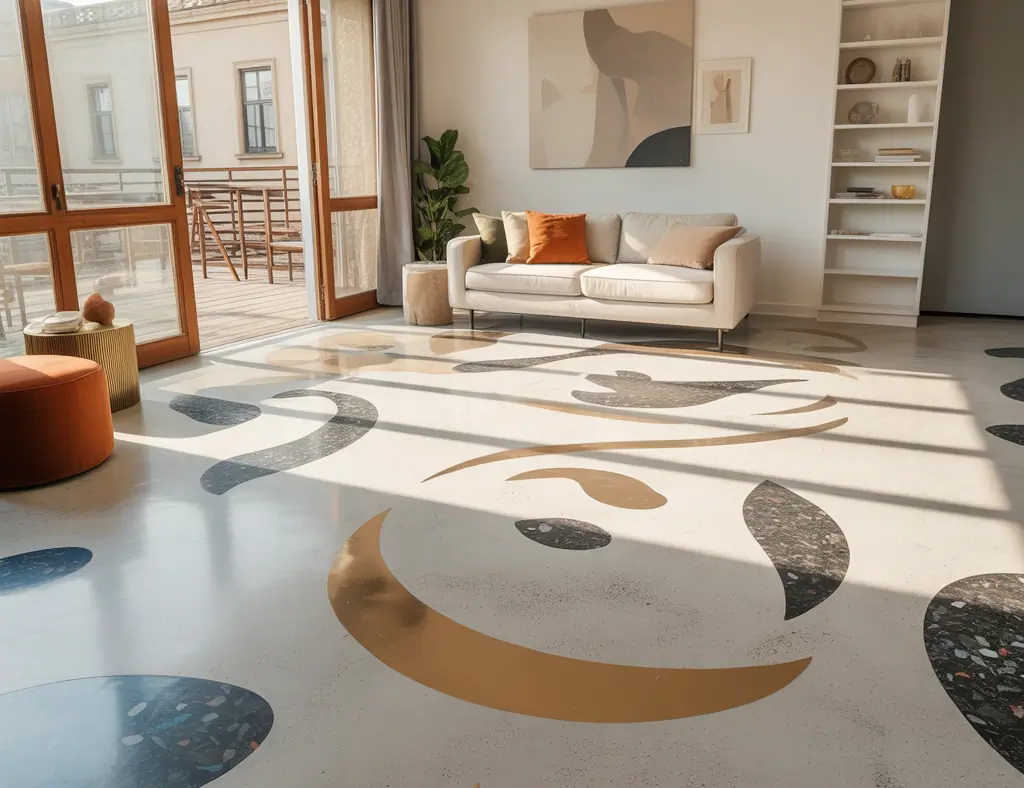
- Look: Smooth, glossy surface with natural aggregates showing through. Great for living rooms, hallways, and open-plan spaces.
- Why it works: Low maintenance, reflective surface brightens rooms, long-lasting.
- DIY tip: Rent a concrete floor grinder and progressively use lower-grit diamonds. Finish with a densifier and a high-quality sealer.
2. Stained concrete: warm tones and depth
- Look: Acid or water-based stains create variegated, natural-looking color — from earthy browns to jewel-toned blues.
- Why it works: Mimics stone or tile at lower cost and can complement rustic or industrial decor.
- DIY tip: Always test stain on a small patch. Neutralize acid stains per product instructions and finish with a satin polyurethane sealer to protect the color.
3. Epoxy and flake systems: colorful, durable finishes
- Look: Smooth or textured, with customizable color and flake patterns — great for kitchens, mudrooms, and basements.
- Why it works: Extremely durable, chemical-resistant, and easy to clean.
- DIY tip: Ensure concrete is dry and free of grease. Use a moisture test (calcium chloride) before epoxy; high moisture may cause adhesion failure.
4. Concrete overlays and microtoppings: cover and transform
- Look: Thin overlays can recreate tile, woodgrain, or decorative patterns without removing existing flooring.
- Why it works: Great for resurfacing uneven or damaged concrete without full demolition.
- DIY tip: Proper substrate prep is essential — clean, etch, and prime. Use a trowel for thin overlays and consider a stamped texture for patterning.
Step-by-step: How to stain and seal an indoor concrete floor
Here’s a straightforward DIY process for transforming a slab into a stained, sealed floor.
- Prepare the room: Remove furniture, cover vents, and ensure good ventilation.
- Inspect and repair: Patch cracks with a concrete patch compound; fill joints if desired.
- Clean the surface: Degrease with concrete cleaner and scrub. Rinse thoroughly and let dry.
- Profile the surface: Grind or acid-etch to open the pores so stain adheres.
- Apply stain: Work in small sections; use a sprayer or applicator. Blot uneven spots with a clean cloth for a mottled look.
- Neutralize (if acid stain): Follow manufacturer directions and rinse until pH is neutral.
- Seal: After stain fully dries (24–72 hours), apply 2–3 coats of polyurethane or penetrating sealer.
- Maintenance: Use pH-neutral cleaners; re-seal every 3–7 years depending on traffic.
Practical materials and tools checklist
- Grinder or acid-etch kit, patching compound, concrete cleaner
- Stain (acid or water-based), sprayer or brush, protective gear (gloves, goggles, respirator)
- Sealer (polyurethane, epoxy topcoat, or penetrating sealer), roller kits
- Moisture test kit, floor squeegee, drop cloths
Design inspiration: pairing concrete floors with decor
Concrete floors are a versatile base. Here are styling tips to make them pop:
- Warm the space: Add area rugs, layered textiles, and warm wood furniture if the concrete feels cold.
- Create contrast: Use matte walls and glossy floors, or vice versa, to add depth.
- Use color strategically: Stained concrete in warm tones works well in kitchens and dining areas; cool grays suit contemporary living rooms.
- Layer lighting: Reflective polished concrete benefits from natural light and layered lighting to show off finishes.
Budget-friendly tips and real-world advice
Not every project needs to be professional to look great. Here are cost-saving strategies and honest tips from experienced DIYers:
- Test on a hidden area first — many finishes look different when applied than in photos.
- Rent specialty tools (grinder, buffer) rather than buy; this lowers upfront costs.
- Start small: Try a bathroom or entryway before committing to an entire house.
- Watch for moisture — solving damp concrete is more expensive than the finish itself.
- If you’re short on skill or time, consider professional polishing after you prep the floor to save labor costs.
Frequently Asked Questions
1. Are concrete floors cold and uncomfortable?
Concrete can feel cool underfoot, but adding area rugs, underfloor heating, or insulating subfloor membranes can make it comfortable year-round. Warm finishes and rugs also balance the aesthetic.
2. How much does it cost to install a finished concrete floor?
Costs vary by finish: DIY staining and sealer can be under a few hundred dollars for a small room. Professional polishing or complex overlays can run much higher. Your region, surface prep needs, and materials drive the final price.
3. Can I install concrete flooring over existing tile or wood?
Yes — thin concrete overlays and microtoppings can be applied over properly prepared tile or wood substrates. The surface must be clean, structurally sound, and primed; consult product instructions for compatibility.
Conclusion: Ready to try indoor concrete floor ideas in your home?
Indoor concrete floors are a practical, stylish option whether you want a DIY weekend project or a full room transformation. From polished minimalism to colorful epoxy finishes, there’s a concrete floor idea to fit your design goals and skill level. If you’re inspired, start small, gather the right tools, and follow manufacturer instructions for prep and sealing. For more project inspirations, check out our DIY projects, explore kitchen-specific solutions in kitchen upgrades, or browse broader home design ideas to pair with your new floor. Ready to get started? Pick a room, order test samples, and bring a fresh, durable floor into your home today.