Have you ever looked at your cramped bathroom and imagined a spa-like retreat — one where you step down into a sleek, sunken shower that feels like a mini getaway? Whether you’re tackling a weekend remodel, salvaging an awkward floor plan, or simply craving a modern, accessible shower, step down showers can transform a bathroom’s look and function. In this guide, I’ll walk you through practical, stylish ideas for step down showers, real-world DIY tips, and the step-by-step improvements that make a project successful.
Why Choose a Step Down Shower?
Step down showers (also called sunken showers or recessed showers) offer several benefits: they create a visual focal point, improve water containment, allow for easier drainage plumbing options, and can be adapted for accessibility with a gentle slope and curbless transition. They work well in master baths, guest bathrooms, and even small spaces when thoughtfully planned.
Planning Your Step Down Shower Design
Assess Space and Structure
Start by evaluating floor joists, ceiling height, and plumbing locations. A step-down shower requires lowering the shower floor relative to the bathroom floor — often 2–6 inches — which means checking for sufficient clearance under the subfloor for drains and slope.
Set a Style Direction
Decide on a design language: minimalist curbless, rustic stone sunken shower, Mediterranean tile, or industrial concrete. This choice guides materials, tile sizes, and trim details. For small bathrooms, consider a glass partition to visually expand the space.
Step-by-Step Improvement Ideas for Step Down Showers
- Measure & Mark: Sketch the layout, mark the drop depth, note plumbing stub locations, and create a materials list.
- Prepare the Subfloor: Remove flooring and create the lowered cavity. Reinforce joists if necessary — consult a structural pro if you’re unsure.
- Install Proper Drainage: Install a linear or center drain. Ensure you have enough slope (typically 1/4″ per foot) from the shower edges to the drain.
- Waterproofing: Apply a waterproof membrane (liquid-applied or sheet) to the pan and up the walls. This is critical to prevent leaks and costly damage.
- Build the Pan: Construct a mortar bed or use premade shower pans designed for sunken installations. Confirm slope and compactness before tiling.
- Tile & Finish: Use slip-resistant tile on the floor and complementary wall tiles. Grout with a mildew-resistant formula and seal as recommended.
- Install Fixtures & Accessories: Fit shower doors, glass panels, benches, niches, and grab bars. Test drainage and waterproofing before final caulking.
Design Inspiration: Stylish Ideas for Step Down Showers
1. Minimalist Curbless Look
Use large-format tiles, a frameless glass partition, and a linear drain. Keep the color palette neutral for a spa-like feel. This is perfect for modern and Scandinavian designs.
2. Rustic Stone or Tile Sunken Shower
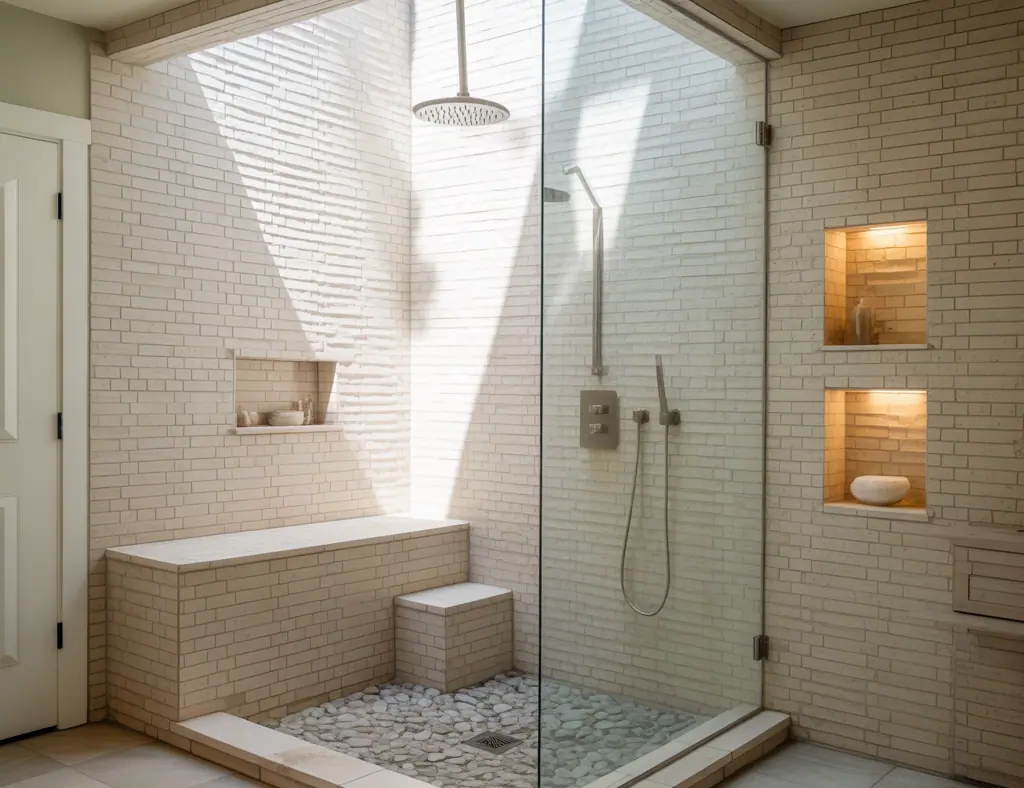
Incorporate river rock flooring or textured stone tiles to bring warmth and slip resistance. Pair with matte black fixtures for a striking contrast.
3. Wet Room Conversion
If your bathroom is large enough, consider a full wet room approach — the entire space acts as the shower area with a continuous slope to a drain. This creates an expansive, open feeling but requires watertight finishes across the whole floor.
4. Accessible Step Down with Gentle Slope
Design a low step down with a wide entry or a ramp for wheelchair access. Add a bench and strategically placed grab bars. Choose textured tile for safety.
Practical DIY Tips & Real-World Advice
- Know When to Hire Pros: DIY the demolition and tile work if you’re experienced, but hire a licensed plumber for drainage relocation and a structural engineer if floor joists need alteration.
- Waterproofing is Non-Negotiable: Always use industry-tested membranes and flash corners properly. A small mistake here causes major headaches later.
- Choose the Right Drain: Linear drains simplify slope requirements and look modern; center drains are traditional and can be cheaper. Consider accessibility when choosing.
- Test the Slope: Before tiling, flood-test the pan area to confirm proper drainage. Let it sit for 24 hours to check for leaks.
- Think Maintenance: Choose grout and sealants that resist staining. A removable grate on a linear drain makes cleaning simple.
- Lighting & Ventilation: Use recessed, damp-rated lights above the shower and ensure the exhaust fan is adequate to prevent mold.
Cost Considerations & Timeline
Costs vary: a basic DIY sunken shower can start around a few thousand dollars for materials and minimal plumbing, while a full remodel with premium tile, linear drain, and professional labor can exceed $10,000. Expect a timeline of 1–3 weeks for most projects (longer if structural work or permits are required).
Common Mistakes to Avoid
- Underestimating the space needed for proper slope and drainage.
- Skipping waterproofing or using improper materials for wet environments.
- Neglecting ventilation and lighting — they’re essential for comfort and durability.
Ideas for Step Down Showers: Quick Design Checklist
- Decide curbless vs. curb and drain type.
- Confirm joist depth and structural needs.
- Plan slope and test drain capacity.
- Choose waterproof membrane and tile with grip.
- Add lighting, bench, and niches for function and style.
Frequently Asked Questions
Q1: How deep should a step down shower be?
A: Most step down showers drop between 2 to 6 inches. The exact depth depends on the required slope for drainage, joist depth, and whether you use a mortar bed or a premade pan. Aim for enough depth to achieve a 1/4″ per foot slope to the drain.
Q2: Can I convert my existing shower into a step down or curbless shower?
A: Yes, but it can require significant changes: you may need to lower the subfloor, rework plumbing, and install new waterproofing. It’s often doable as a DIY project with the right skills, but consult a plumber and consider hiring professionals for drainage and waterproofing.
Q3: What flooring is best for a sunken shower?
A: Slip-resistant porcelain or ceramic tile, natural stone with textured finishes, or pebble tiles are popular. Choose tiles with a good coefficient of friction and grout designed for wet areas to minimize slipping and maintenance.
If you’re inspired and want to try a weekend update or a full bathroom overhaul, check out some related internal resources for more project ideas and planning help: DIY projects and home design ideas. You might also enjoy our guides on kitchen upgrades for matching home-wide style updates.
Conclusion: Take the Plunge with Step Down Showers
Ideas for step down showers range from budget-friendly DIY updates to full-scale remodels that elevate your bathroom into a relaxing retreat. With careful planning, proper waterproofing, and the right materials, a sunken shower can be a beautiful and functional addition to your home. Ready to design your perfect shower? Start by sketching the layout, list the tools and materials you’ll need, and decide which steps you’ll DIY versus hire out. If you loved these ideas and want more project inspiration, explore our DIY projects and home design ideas pages — then dive into the transformation!
Call to action: Share your bathroom dimensions and style goals in the comments (or your project brief) and I’ll suggest a tailored step down shower layout and materials list to get you started.