Have you ever walked past the skinny strip between your house and the fence and thought, “What on earth can I do with this?” You’re not alone. Narrow side yards often become dumping grounds for tools, weeds, or a forgotten utility access. But with a little planning, these tight corridors can become functional, attractive extensions of your home. If you’re searching for ideas for small narrow side yard that actually work and are DIY-friendly, read on — this guide is written for homeowners who want smart, realistic transformations.
Why a narrow side yard is an untapped design opportunity
Small, narrow side yards usually get bad light and tight dimensions, but those constraints are a blessing in disguise. When you design for a slim space you can focus on vertical interest, clever storage, and circulation. A narrow zone can become a secret garden path, a service corridor that looks intentional, or even a micro-kitchen garden that supplies fresh herbs. Thinking vertically and functionally will maximize every inch.
ideas for small narrow side yard — top practical concepts
Below are tested ideas and step-by-step DIY methods you can adapt to your climate and budget.
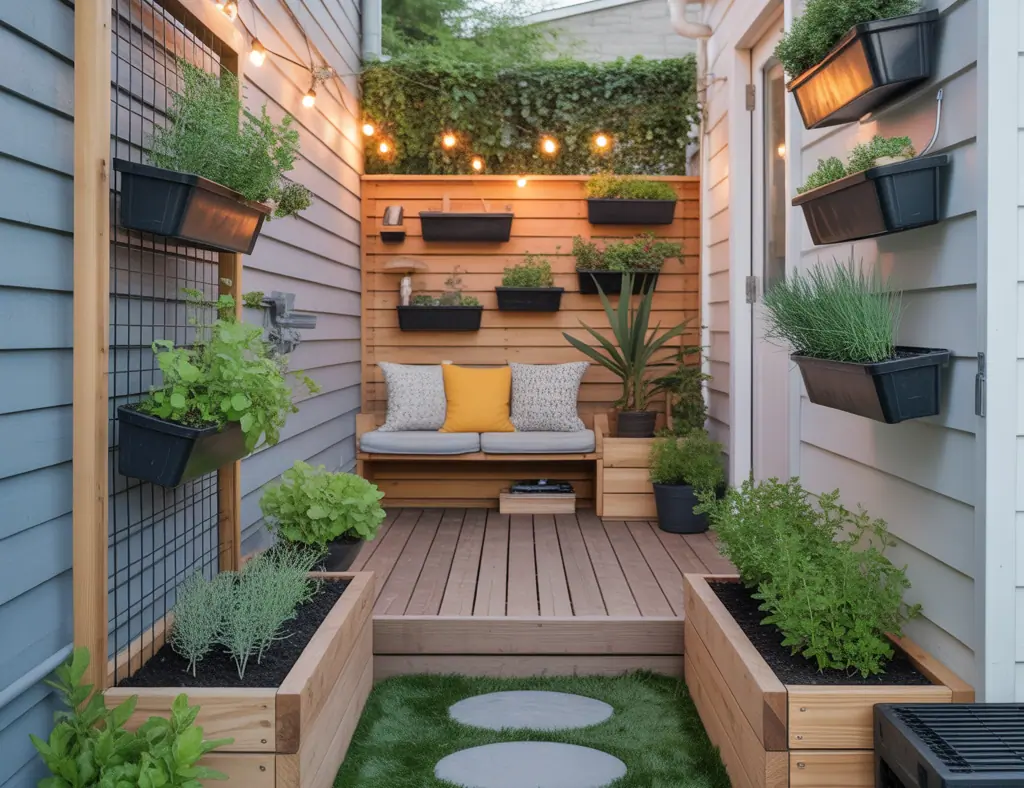
1. Vertical garden wall (best for tiny footprints)
Why it works: Planting up instead of out frees floor space and adds lushness.
- Materials: Wall planters, pallet frame, or pocketed fabric planter; potting mix; drip irrigation or watering can.
- DIY steps:
- Choose a sunny/shady wall depending on plants and attach support brackets at regular intervals.
- Install pocket planters or a reclaimed wooden pallet lined with landscaping fabric.
- Fill with fast-draining soil and plant herbs, succulents, or trailing vines.
- Add a simple drip line to keep watering consistent.
2. Stepping stone path with low groundcover
Create a clear walkway that reads wider than it is by using large stepping stones spaced with low groundcover (e.g., thyme, mondo grass).
- DIY tips: Use landscape fabric under crushed stone to prevent weeds; make stones level and spaced to match your stride.
3. Slim container garden for herbs and edibles
A row of narrow containers along the wall gives easy access to kitchen herbs without taking up much room. Stack planters vertically for extra capacity.
4. Privacy screens, trellises, and climbing plants
Install a lightweight trellis or lattice panels for privacy and training vines such as clematis, jasmine, or climbing roses. Choose rot-resistant materials like cedar or composite.
5. Fold-down bench or hidden seating nook
For a cozy pause spot, mount a hinged bench that folds up when not in use — great for maintenance tasks or a quick cup of coffee.
6. Built-in storage and utility upgrades
Use narrow, wall-mounted cabinets or vertical storage racks for garden tools, hoses, and recycling bins to keep the walkway tidy.
7. Lighting for safety and ambiance
String lights, solar path lights, or low-level LED uplights create a welcoming path and deter intruders. Aim for soft, warm temperatures to enhance the mood.
8. Drainage-friendly rain garden or permeable path
If your side yard collects water, design a shallow rain garden or use permeable pavers and gravel to improve drainage and reduce maintenance.
9. Artificial turf strip for low maintenance
A narrow strip of artificial turf can create a clean, green look without mowing. Pair with gravel beds and potted plants to avoid a monotonous appearance.
10. Decorative screens and artwork
Turn a plain fence into a focal point with weatherproof artwork, a painted mural, or metal screens that add depth and visual interest.
11. Multi-use path with utility zones
Divide the side yard into zones — a narrow path, a maintenance area, and a micro-garden. Use different materials (stone, wood chips, gravel) to define each area visually.
Step-by-step DIY makeover plan
Follow this simple sequence to convert your narrow side yard into a purposeful space:
- Measure the dimensions and note sun exposure and drainage patterns.
- Decide on primary functions: storage, garden access, aesthetics, or all three.
- Create a budget and choose materials — durable and low-maintenance are best.
- Start with hardscape: install path, edging, and any drainage solutions.
- Add vertical structures and storage next (trellis, cabinets, bench).
- Plant last: choose small-clumping plants and vertical growers suited to light levels.
- Finish with lighting and seasonal decor for curb appeal year-round.
Practical DIY tips for long, narrow yards
- Choose slim, linear elements — long planters and horizontal slats visually widen the space.
- Repeat a limited color palette to reduce visual clutter and create continuity.
- Use mirrors or reflective surfaces to add perceived width in shady spots.
- Opt for evergreen structural plants and seasonal containers for year-round interest.
- Keep a 3-foot minimum clearance for comfortable walking and garden maintenance, if possible.
Design inspiration and plant ideas by light level
Sunny narrow side yard: lavender, rosemary, sedum, ornamental grasses.
Partial shade: ferns, hostas, coleus, heuchera.
Full shade: Japanese painted fern, boxwood (for small hedges), ivy (managed carefully).
Mix textures — small-leaved groundcovers with bold-leaved perennials — to make the narrow space interesting up close.
Frequently Asked Questions
Q: How can I make my narrow side yard look bigger?
A: Use vertical elements, long linear planters, and repeated materials or colors to create continuity. Light-colored paving and reflective surfaces can also increase the sense of width. Keep clutter minimal and maintain a clear primary path.
Q: What plants work best in a small, shady side yard?
A: Choose shade-tolerant perennials like ferns, hostas, heuchera, and shade-loving groundcovers. Use containers near brighter spots for seasonal color. Avoid large root-spreading plants that will overcrowd the area.
Q: Do I need permits to build a trellis or install hardscaping in my side yard?
A: Minor elements like freestanding trellises and small garden beds usually don’t require permits, but local rules vary. Check local building codes for fences, permanent structures, and drainage changes. When in doubt, contact your municipal planning office.
Conclusion — Ready to try these ideas for small narrow side yard?
Your narrow side yard doesn’t have to be an afterthought. Whether you choose a vertical herb wall, a tidy stepping-stone path, or built-in storage and a fold-down bench, small changes add up to big improvements. Start with a single project — maybe a vertical planter or a new path — and build from there. Need hands-on inspiration? Browse our DIY projects for step-by-step tutorials and explore related home design ideas or kitchen upgrades to see how small transformations create big returns.
Ready to reclaim your side yard? Pick one idea above and try it this weekend — then share your before-and-after to inspire others.