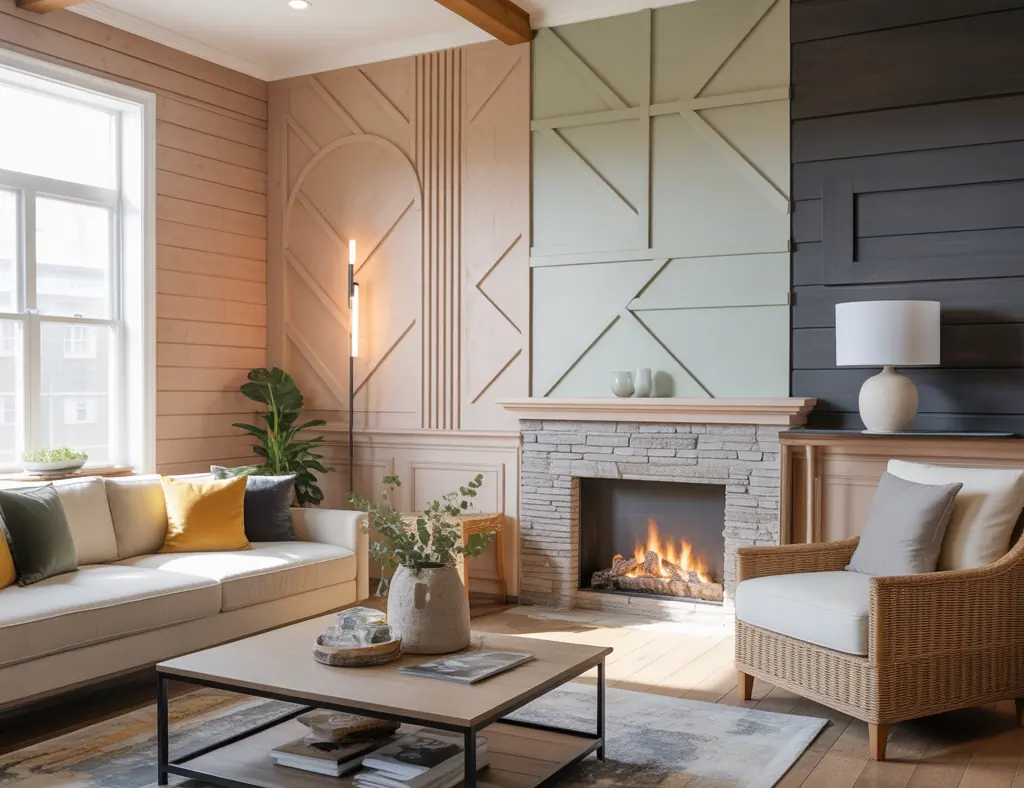
Have you ever stood in your living room, coffee in hand, staring at a big blank wall and wondered how to make it feel intentional and cozy without hiring a contractor? Whether you’re fighting bland drywall, hiding scuffs from a busy family life, or craving a modern update, wall paneling can transform the space faster and more affordably than a full remodel.
Why choose wall paneling for your living room?
Wall paneling adds texture, architectural interest, and depth. It can serve as an accent wall, frame a media center, or become a timeless backdrop for artwork. From budget-friendly beadboard to dramatic 3D panels, there’s a paneling solution to match every style and skill level.
Quick overview: styles and materials
- Board and batten: Vertical or horizontal battens over panel sheets for a clean, cottage look.
- Shiplap/tongue-and-groove: Horizontal planks for farmhouse or coastal vibes.
- MDF geometric panels: Modern, painted, and economical for sculptural accents.
- Wainscoting: Classic, often applied to the lower third of walls with a chair rail.
- Reclaimed wood: Warm, rustic, and great for statement accent walls.
- Peel-and-stick panels: Ideal for renters or quick updates with minimal tools.
Ideas for living room wall paneling
Below are practical ideas with step-by-step guidance and design tips so you can pick the right approach for your home.
1. Board and batten accent wall (DIY-friendly)
Why it works: Affordable, forgiving for imperfect walls, and very customizable.
- Measure the wall and plan batten spacing—typical widths are 12″–24″.
- Cut 1×3 or 1×4 lumber to fit; paint or prime battens before installation to reduce drips.
- Attach a 1/4″ plywood or MDF backer if your wall is uneven, then nail battens to studs using a brad nailer.
- Caulk seams, fill nail holes, prime and paint in one color for a cohesive look or paint battens a contrasting shade for drama.
- Choose pre-primed shiplap or real wood planks; MDF shiplap is easier to paint and budget-friendly.
- Start at the bottom, fasten each board to studs, and stagger plank ends for a natural look.
- Fill gaps and paint for a seamless finish, or lightly distress for a rustic outcome.
- Buy or DIY geometric panels (squares, hexagons, or triangles) from 1/2″–3/4″ MDF.
- Glue panels to the wall with construction adhesive and reinforce with brad nails if needed.
- Caulk seams and paint a single color or use two tones for contrast.
- Acclimate reclaimed boards indoors for a few days to reduce warping.
- Install a plywood backer, then nail the boards to the backer or directly to the studs.
- Seal with a matte poly to protect finishes and reduce dust.
- Choose panels with adhesive rated for walls and low-VOC materials.
- Follow installation instructions and remove slowly to prevent paint lift.
- Scale matters: narrow battens suit smaller rooms; larger panels suit tall ceilings.
- Keep molding heights proportionate—wainscoting height is often 1/3 of wall height.
- Coordinate colors with trim and furniture; an accent wall can be darker to anchor seating areas.
- Plan for built-ins and TVs: create a recessed panel or floating shelf to integrate electronics cleanly.
- Prep: remove outlet covers, clean the wall, and mark studs.
- Cut and paint battens and backerboard if using.
- Install a top and bottom rail (optional), then space and install battens using a level.
- Caulk edges, fill nail holes, prime, and paint.
- Reinstall outlet covers and enjoy your refreshed space.
DIY tip: Use a laser level to keep battens perfectly straight—this saves hours of rework.
2. Shiplap or tongue-and-groove for a cozy feel
Why it works: Adds horizontal lines that can make a room feel wider; perfect for farmhouse or modern coastal styles.
3. Geometric MDF panels for a contemporary statement
Why it works: Creates a high-end look with paintable panels that mimic custom millwork.
4. Reclaimed wood accent wall for warmth
Why it works: Adds texture, history, and a cozy atmosphere—great behind a sofa or fireplace.
5. Temporary and renter-friendly options
Why it works: For short-term solutions, consider peel-and-stick panels or lightweight foam tiles that mimic real paneling without damaging drywall.
Design tips to make paneling look intentional
Practical tools, materials, and cost considerations
Essential tools: measuring tape, level or laser level, circular saw or miter saw, brad nailer, caulk gun, putty knife, sandpaper. Materials: MDF or wood boards, adhesive, finishing nails, primer and paint.
Budget guide: Simple board and batten or MDF projects can be done under $200 for a small accent wall. Reclaimed wood and custom millwork cost more—plan accordingly.
Step-by-step quick project: budget board and batten in a weekend
Frequently Asked Questions
How much does living room wall paneling cost per square foot?
Costs vary by material: basic MDF or beadboard panels can be $3–$7 per sq ft installed DIY, while real wood or custom panels can range $10–$30+ per sq ft. Factor in paint, fasteners, and tools if you don’t already own them.
Can I install wall paneling over existing drywall?
Yes—most paneling can be installed over drywall. For uneven walls, add a thin plywood or MDF backer to create a flat surface. Ensure you locate studs and use appropriate adhesive plus nails for a secure hold.
Is wall paneling suitable for small living rooms?
Absolutely. Choose narrow battens or horizontal shiplap to make small rooms feel wider. Stick to lighter colors or subtle textures to prevent the space from feeling overwhelmed.
Conclusion: Ready to try ideas for living room wall paneling?
Wall paneling is one of the highest-impact, lowest-cost upgrades you can do in a living room. Whether you choose a DIY board and batten, a shiplap refresh, or modern MDF panels, the result can completely change the mood and value of your home. Pick a project that matches your skill level, gather the right tools, and carve out a weekend—you’ll be amazed at the transformation.
Want step-by-step inspiration? Check out our DIY projects page for more tutorials, explore related ideas in home design ideas, or if you’re thinking about matching your living room upgrade to kitchen changes, browse kitchen upgrades for complementary styles. Ready to get started? Grab your measuring tape and pick your first wall—then share your results to inspire other DIYers!