Ever stood in your living room staring at scuffed floors and thought, “This needs to change — but where do I start?” Between spilled wine, kids’ toys, and occasional pet chaos, choosing the right floor can feel overwhelming. Whether you’re planning a full renovation or a weekend DIY refresh, these ideas for living room flooring will help you pick a look that fits your lifestyle, budget, and design goals.
How to choose the right living room flooring
Before diving into materials, think about the practical factors that should guide your decision. Use these quick filters to narrow down the best floor type for your space:
- Traffic and lifestyle: Do you host often? Have pets or children?
- Durability and maintenance: How much time will you spend cleaning and repairing?
- Comfort and acoustics: Do you want a warmer, softer feel underfoot?
- Budget and resale value: Are you aiming for long-term investment or a budget-friendly refresh?
- Installation method: DIY-friendly options vs. professional installation.
Popular living room flooring materials (pros, cons, and tips)
Hardwood floors
Classic and high-value, solid hardwood adds warmth and resale value. It takes well to refinishing but can dent and scratch. Best for dry climates and homeowners looking for a long-term investment.
Engineered wood
Looks like hardwood but with better dimensional stability — suitable for homes with slight moisture. It’s often more budget-friendly and can be installed as a floating floor (DIY-friendly).
Laminate flooring
A cost-effective option that mimics wood or tile. Laminate is scratch-resistant and easy to install with a click-lock system. Good for active households on a budget.
Luxury vinyl plank (LVP)
Water-resistant, durable, and realistic in appearance. LVP is one of the best living room flooring options for busy homes and DIYers — many planks click together without glue.
Tile (porcelain or ceramic)
Extremely durable and low-maintenance. Modern tile comes in wood-look styles and large formats that can make a living room feel chic. Installation is more involved and often best handled by a pro.
Carpet and area rugs
Carpet adds softness and sound absorption. If you love the coziness of carpet but prefer hard floors, pairing hardwood or LVP with area rugs gives the best of both worlds.
Cork and bamboo
Eco-friendly choices — cork is soft and insulating, bamboo is sustainable and durable. Both give a unique aesthetic and are growing in popularity for modern living rooms.
Ideas for living room flooring: creative styles and design inspiration
Here are practical, stylish ideas to transform your living room floor — with design tips you can apply right away.
- Herringbone or chevron hardwood: Instantly elevates the room with pattern and movement. Consider engineered wood for easier installation.
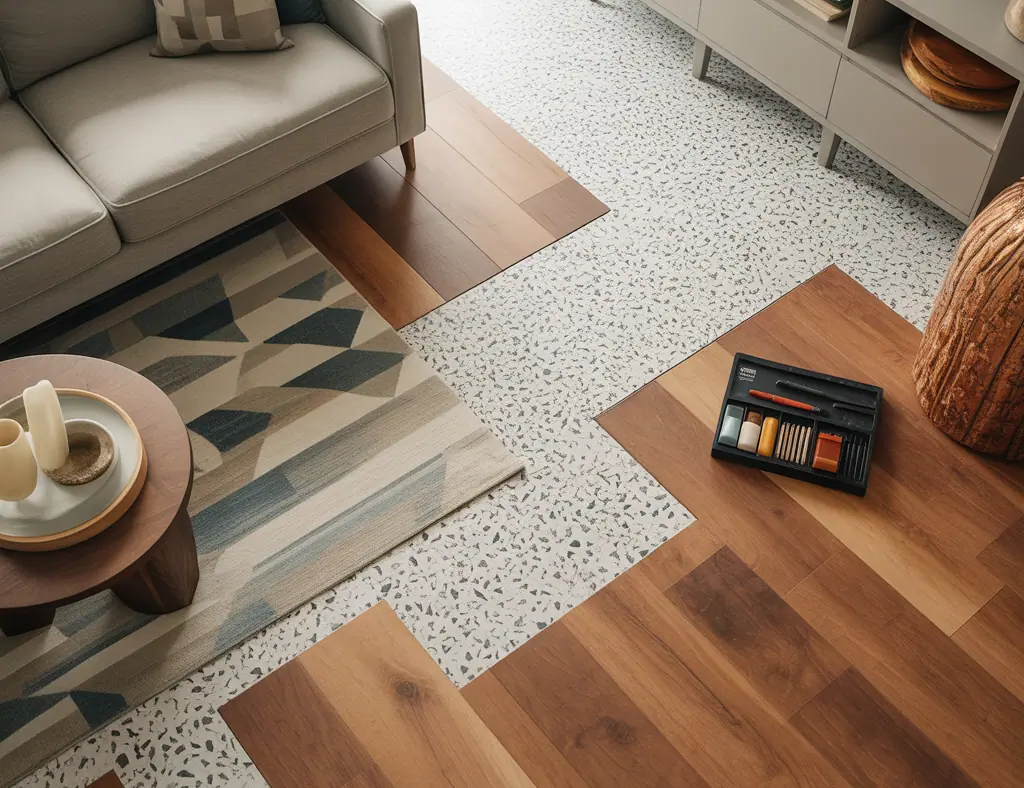
- Mixed materials: Combine tile near an entryway and wood in the main seating area to define zones without walls.
- Large-format tile: Makes small rooms feel bigger; grout color impacts the overall look.
- Neutral LVP with bold area rugs: Keep floors practical and use rugs to introduce texture and color.
- Painted or stenciled floors: A budget-friendly DIY to refresh older wood or plywood floors—good for renters or creative looks.
- Parquet revival: Classic parquet patterns are back and pair well with mid-century or contemporary designs.
- Two-tone floors: Paint a border around the room or create a patterned inlay for a bespoke look.
Step-by-step DIY living room flooring projects
Not all flooring projects require a pro. Below are two practical DIY projects with step-by-step guidance.
DIY: Install click-lock luxury vinyl plank (LVP)
- Measure the room and purchase 10% extra for cuts and waste.
- Remove baseboards and undercut door jambs for a clean fit.
- Level and clean the subfloor; add underlayment if recommended.
- Acclimate planks per manufacturer instructions (usually 48 hours).
- Start along the longest wall with spacers for expansion gaps; click planks together row by row.
- Trim end pieces, install transition strips and reattach baseboards.
- Allow recommended time before moving furniture back in.
DIY: Refresh wood floors with stain and area rugs
- Clean and sand the surface to remove finish and scratches.
- Choose a stain color and apply evenly; wipe excess with a cloth.
- Seal with polyurethane (2–3 coats), sanding lightly between coats.
- Place pads under heavy furniture and layer rugs to protect high-traffic zones.
Maintenance tips & real-world advice
- Use felt pads and furniture coasters to prevent scratches.
- Keep humidity between 30–50% for wood and engineered floors to prevent cupping or gaps.
- Use mats at entrances to trap grit and reduce wear.
- For pets, choose scratch-resistant finishes and rugs in play areas.
- When hiring installers, get three quotes and ask to see past projects.
Frequently Asked Questions
1. What is the best flooring for a high-traffic living room?
Luxury vinyl plank (LVP) and high-quality laminate are top choices for durability, water resistance, and low maintenance. Engineered wood is also durable and looks premium while handling moderate traffic well.
2. Can I install new flooring over existing floors?
Often yes — many LVP and laminate products can be floated over existing smooth surfaces. However, tile and warped floors may need removal. Always check manufacturer guidelines and ensure the subfloor is level.
3. How much does living room flooring cost?
Costs vary widely: carpet and laminate can be the most budget-friendly, while solid hardwood and high-end tile cost more. Expect a range from economical DIY-friendly options to premium installations depending on material and labor.
Conclusion — Ready to pick the perfect floor?
From classic hardwood and coastal cork to budget-friendly laminate and DIY-friendly luxury vinyl, these ideas for living room flooring give you the tools to choose a floor that matches your style and everyday needs. Start with your lifestyle priorities, test samples in your space, and try a small DIY project to see how a new floor can transform the room.
Want step-by-step project inspiration? Check our DIY projects page for weekend-friendly guides, or explore complementary tips on kitchen upgrades and home design ideas to coordinate your whole house. Ready to get started? Pick a material, order samples, and tackle the first step this weekend!