Ever stared at a blank wall and a growing pile of books and wondered how to turn that clutter into a design statement? Whether you’ve outgrown a tiny bookcase or want a floor-to-ceiling library wall that anchors your living room, these ideas for large book shelf solutions will help you plan, build, and style a shelf that fits your space and personality.
Why choose a large bookshelf? Practical benefits and style gains
Large bookcases do more than store books — they create focal points, add vertical interest, hide clutter and can double as room dividers. From built-ins that look custom to modular wall systems you can reconfigure, the right approach depends on your budget, DIY skill level, and design goals.
Top ideas for large book shelf
Below are practical, real-world designs with DIY tips so you can pick an approach and start building or refreshing today.
1. Built-in floor-to-ceiling bookcase
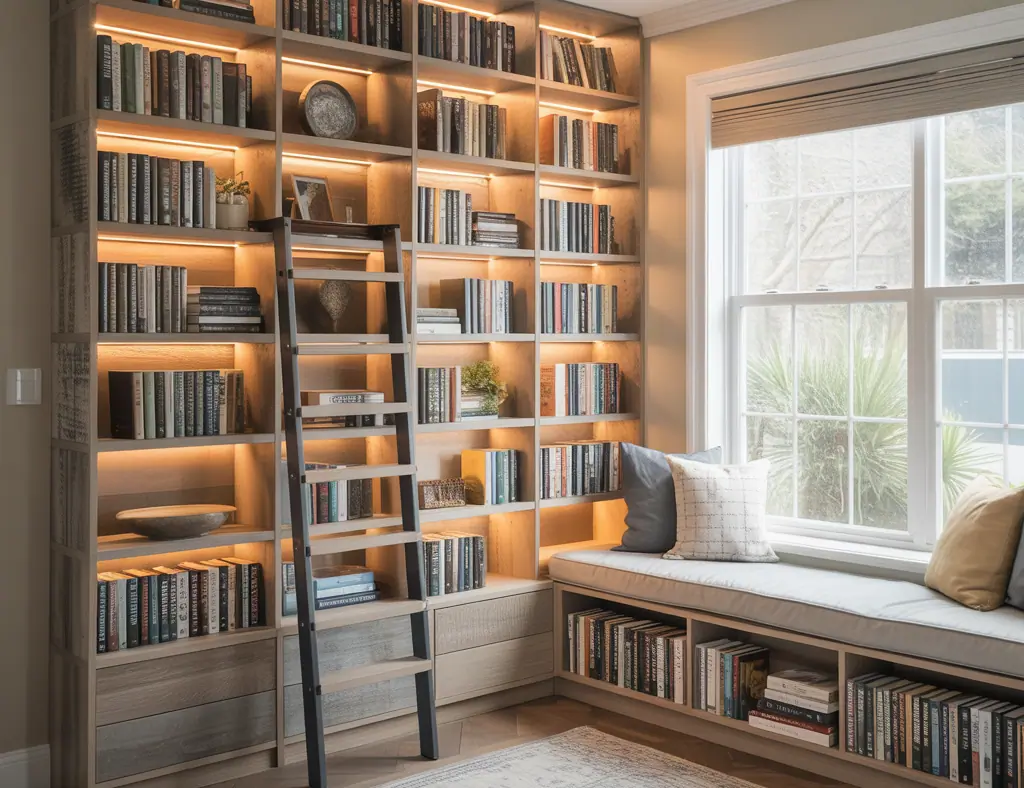
Perfect for maximizing storage and creating a seamless look. Frame the unit to fit between studs, add adjustable shelving, and finish with crown molding for that custom, library-like feel.
- Tip: Use 3/4″ plywood for shelves and a 1/4″ cabinet-grade backing to prevent bowing.
- Spacing: 10–12″ tall per shelf for most books, deeper (12–15″) for oversized volumes.
2. Freestanding statement bookcase
Choose an oversized industrial metal-and-wood unit or a painted wooden tower. These are easier to install and can be anchored to studs for stability.
3. Room-divider shelving
Use an open-backed shelf to separate a dining area from a living room—this keeps light flowing while providing storage on both sides.
4. Modular and cube systems
Modular units let you scale up and rearrange pieces. Good for renters or changing collections.
5. Ladder-style and rolling library shelves
Add a sliding ladder for a dramatic library vibe, or choose rolling shelves for flexibility in small spaces.
6. Bookcase with built-in desk and window seat
Combine seating and workspace with shelving that wraps a window. Great for cozy reading nooks and making the most of a sunlit alcove.
Materials, tools, and cost-saving tips
Common options: pine or maple face-frame with plywood shelves, MDF with veneer, or 2x stock with painted finish. For heavy loads, plywood is preferred over MDF for stiffness.
- Tools: circular saw or table saw, Kreg pocket jig (optional), level, stud finder, drill, brad nailer.
- Hardware: adjustable shelf pins, heavy-duty wall anchors, L-brackets for reinforcement.
- Save money: buy 3/4″ sanded plywood and finish with paint or veneer instead of custom milled lumber.
Step-by-step: Build a simple floor-to-ceiling bookshelf
- Measure wall height and width. Subtract 1/4″ total for wiggle room if wall is slightly out of square.
- Cut top/bottom and side panels from 3/4″ plywood. Cut shelves to length allowing 1/8″ clearance on each side.
- Assemble the frame using pocket holes or screws with wood glue. Add a 1/4″ plywood back for rigidity.
- Install adjustable shelf clips or fixed shelves. Anchor the unit into studs with long screws through the top rail into studs.
- Caulk seams, sand, prime and paint. Add trim and crown molding for a built-in appearance.
Real-world tip: Attach cleats on the wall for the bottom shelf to sit on — this helps with leveling and reduces stress on the shelf joins.
Styling and organization for large bookcases
Large shelves can feel heavy; break up expanses with decor and negative space.
- Group books by color, height, or theme. Use stacks to vary scale.
- Add closed storage (baskets or cabinets) at the bottom for cords, games, or media.
- Introduce art, plants, and task lighting — picture lights or integrated LED strips — to create depth and warmth.
Customization ideas: doors, lighting, and tech integration
Add glass doors to protect collections from dust, or sliding barn doors for a rustic look. Integrate outlets into a shelf bay for charging stations or to hide speakers and smart home hubs.
Safety and practical considerations
Always anchor tall furniture to studs to prevent tipping. For heavy collections, avoid wide unsupported spans — add vertical dividers or center supports. Consider humidity control if you store valuable books.
Frequently Asked Questions
1. What shelf depth is best for a large bookcase?
For most books, a depth of 10–12 inches is comfortable. For oversized art books or storage boxes, 14–15 inches works better. If space is tight, mix depths on different bays to accommodate variety.
2. Can I build a large bookshelf myself without professional carpentry skills?
Yes — many large shelves are achievable for DIYers with basic tools. Start with a simple freestanding or modular design before attempting built-ins. Use clear plans, and recruit a helper for lifting and leveling large panels.
3. How do I make a large bookcase look custom and integrated?
Add finishing touches like a painted or stained finish that matches trim, crown molding, toe kick, and a recessed top with molding. Lighting and a matching back panel (painted or shiplap) also make it feel built-in.
Design inspiration checklist
- Choose a focal wall and plan symmetry or an intentional asymmetry
- Decide between built-in vs freestanding based on permanence
- Pick materials based on load and finish preference
- Plan wiring, lighting and ventilation before final installation
Ready to tackle a large shelving project? Start with a clear plan and a list of materials, and don’t hesitate to test one bay first. If you’re looking for project plans and step-by-step guides, check out our DIY projects and browse inspiring home design ideas. For creative storage ideas that carry into other rooms, see our tips on kitchen upgrades for matching cabinetry style.
Conclusion: Transform your space with smart ideas for large book shelf
Large bookcases are an opportunity to combine storage, style, and personality. Whether you choose a custom built-in, a modular wall of cubes, or a dramatic laddered library, planning the dimensions, materials, and lighting will make the difference between clutter and a curated display. Pick a design from this list, draft a simple plan, and try a single DIY bay to gain confidence. Ready to build? Explore our DIY projects and start your next home improvement today.
Call to action: Share your bookshelf photos and questions in the comments or subscribe for detailed plans and material lists for several of these projects.