Have you ever opened your garage door only to be greeted by a sea of boxes, old paint cans, and a lonely workbench—and thought, “This could be an amazing home office”? Whether you’re suddenly working from home, need a quiet design studio, or want a professional Zoom backdrop, converting a garage into an office is one of the most impactful home improvement projects you can do. But where do you start?
Why convert your garage into an office?
Turning a garage into an office gives you a separate work zone without building an addition. It can increase usable square footage, boost home value, and create a private environment for focused work. With the right planning—insulation, lighting, heating/cooling, and smart storage—you can build a comfortable, functional workspace on a tight budget.
Quick checklist before you begin
- Check local building codes and permits for a garage office conversion.
- Assess structural needs: floor level, roof condition, and garage door integrity.
- Plan HVAC and insulation for year-round comfort.
- Evaluate electrical load for outlets, lighting, and internet connections.
- Create a budget and timeline—small projects can take 1–3 weekends; full conversions 2–6 weeks.
Smart layout and design ideas for garage to office
Effective garage office layouts balance functionality and comfort. Use these ideas depending on your garage size and work style:
Open-plan studio (single-car garage)
- Keep a compact desk against a long wall to preserve floor space.
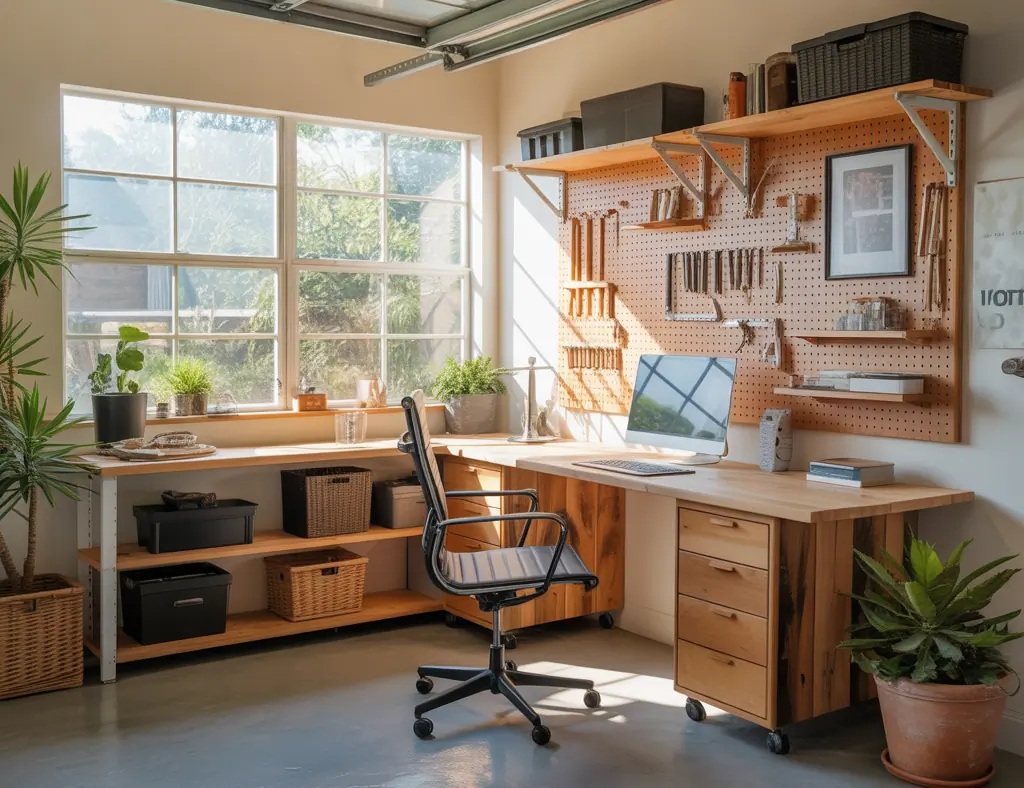
- Use vertical storage—shelving, pegboards, and cabinets—to free up the floor.
- Add a fold-down desk or Murphy-style workstation for occasional use.
Multi-zone office (two-car garage)
- Create separate areas: dedicated desk, meeting nook, and creative station.
- Use area rugs or modular shelving as visual dividers.
- Consider a small client seating area with comfortable chairs and good lighting.
Soundproofed creative studio
- Install acoustic panels and dense insulation in walls and ceiling.
- Seal gaps around doors and windows to reduce noise transfer.
- Use soft furnishings—rugs, curtains, upholstered furniture—to absorb sound.
Step-by-step DIY garage to office conversion
- Declutter and plan: Remove stored items and create a layout sketch. Decide whether to replace the garage door with a wall and window or keep it for aesthetic reasons.
- Address the shell: Repair the floor (epoxy or engineered wood over subfloor), patch walls, and check the roof. Ensure the structure is sound before proceeding.
- Insulation and drywall: Add insulated wall studs and ceiling insulation. Install moisture-resistant drywall to prevent damp issues.
- Electrical and internet: Hire a licensed electrician to add circuits, recessed lighting, outlets, and Ethernet. Consider a dedicated 20-amp circuit for heavy equipment.
- HVAC and ventilation: For mild climates, a wall-mounted mini-split heat pump is efficient and relatively easy to install. Portable heaters or ductless systems work for smaller budgets.
- Flooring: Install durable, easy-to-clean flooring. Vinyl plank, engineered wood over a subfloor, or painted/epoxy concrete are great options.
- Finishing touches: Paint the walls in calming tones to enhance productivity, add window treatments for glare control, and install built-in shelving for organization.
Budget-friendly tips and cost-saving DIY ideas
- Keep the existing door if it’s structurally sound—insulate it and add weather stripping instead of replacing it.
- Use recycled or reclaimed wood for desks and shelving for a low-cost, eco-friendly look.
- Install energy-efficient LED lighting and smart switches to save on electricity.
- Buy modular furniture and multi-use pieces (bench with storage) to reduce costs.
- Handle cosmetic tasks yourself—painting, installing shelves, and basic landscaping—to lower labor costs.
Design inspiration and decor ideas
Think of your garage office as a blank canvas. Here are on-trend styles to consider:
- Industrial chic: Exposed beams, metal shelving, concrete-look floors, and Edison bulbs.
- Scandinavian minimalism: Light wood, neutral palette, lots of natural light, and clean lines.
- Cozy cottage: Soft textures, warm lighting, built-in bookshelves, and layered rugs.
Tip: Add greenery and good task lighting to improve air quality and reduce eye strain. A large wall clock and cork board or whiteboard improve functionality and aesthetics.
Real-world advice: permits, timeline, and pitfalls
Many cities require permits for changes to insulation, electrical, and structural elements. Apply early—permit processing can add weeks. Expect a full conversion to take 2–6 weeks depending on complexity. Common pitfalls include underestimating HVAC needs, ignoring moisture control, and not planning adequate lighting. Avoid these by making a checklist and consulting professionals for electrical and HVAC work.
Creative storage solutions for a tidy workspace
- Overhead racks for infrequently used items.
- Built-in cabinets along one wall to keep clutter out of sight.
- Mobile tool chests and rolling carts to keep flexibility.
- Labelled bins and pegboards for small tools and supplies.
DIY tools and materials list (starter)
- Insulation (batts or spray foam)
- Drywall and joint compound
- LED recessed lights and wall outlets
- Mini-split or portable HVAC solution
- Flooring materials (vinyl plank or epoxy kit)
- Shelving brackets, screws, and anchors
- Paint, brushes, and painter’s tape
Frequently Asked Questions
Do I need a permit to convert my garage into an office?
Most municipalities require permits for structural changes, electrical upgrades, and HVAC work. Check local building codes before starting. Simple cosmetic changes may not require permits, but anything affecting the structure or systems likely will.
Can I keep the garage door or should I replace it with a wall and windows?
Either option works. Keeping the garage door can create a unique design (consider insulated, weather-sealed doors with windows), but replacing it with a wall and window improves insulation and security. The choice depends on aesthetics, budget, and climate.
How much does a garage-to-office conversion cost?
Costs vary widely. A basic DIY-friendly conversion (insulation, drywall, flooring, lighting) can be $3,000–$10,000. A fully finished conversion with HVAC, professional electrical, and high-end finishes can be $15,000–$40,000. Get multiple quotes for professional work to compare.
Conclusion — take your ideas for garage to office and make them real
Converting a garage into a home office is a practical, rewarding way to add usable space and improve your daily life. From budget-friendly DIY projects to full professional conversions, there are ideas for garage to office that fit every need and style. Start with a clear plan, check permits, and prioritize insulation, lighting, and electrical work for a comfortable, productive workspace. Ready to begin? Explore our DIY projects and home design ideas pages for more inspiration and step-by-step guides—your new office awaits.