Ever stood in your dining room with a stack of catalogues, paint swatches and an empty curtain rod, wondering how to turn bland windows into a warm, inviting focal point? Choosing the right window treatments can feel overwhelming—do you want light-filtering linen panels or dramatic floor-to-ceiling drapes? In this guide I’ll walk you through creative, budget-friendly ideas for dining room curtains that are easy to DIY and guaranteed to elevate your space.
Why the Right Curtain Choice Matters
Dining room curtains do more than frame windows. They control natural light, set the mood for dinner parties, add texture and color, and even improve acoustics during lively family meals. Before we dive into specific ideas, consider these real-world factors:
- Lighting needs: Do you want bright daylight or intimate, lamp-lit evenings?
- Privacy level: Street-facing rooms often need more coverage than backyard-facing windows.
- Scale and proportion: Curtain length and rod placement impact ceiling height perception.
- Maintenance and durability: Dining rooms can get spills and grease—choose washable fabrics when possible.
Top Ideas for Dining Room Curtains
1. Classic Linen Panels for a Timeless Look
Linen curtains bring a relaxed yet refined vibe. Their natural texture complements wood dining tables and neutral color palettes. Choose light-filtering linen if you want soft daylight, or add an inner lining for more privacy and durability.
2. Sheer + Blackout Layering for Versatility
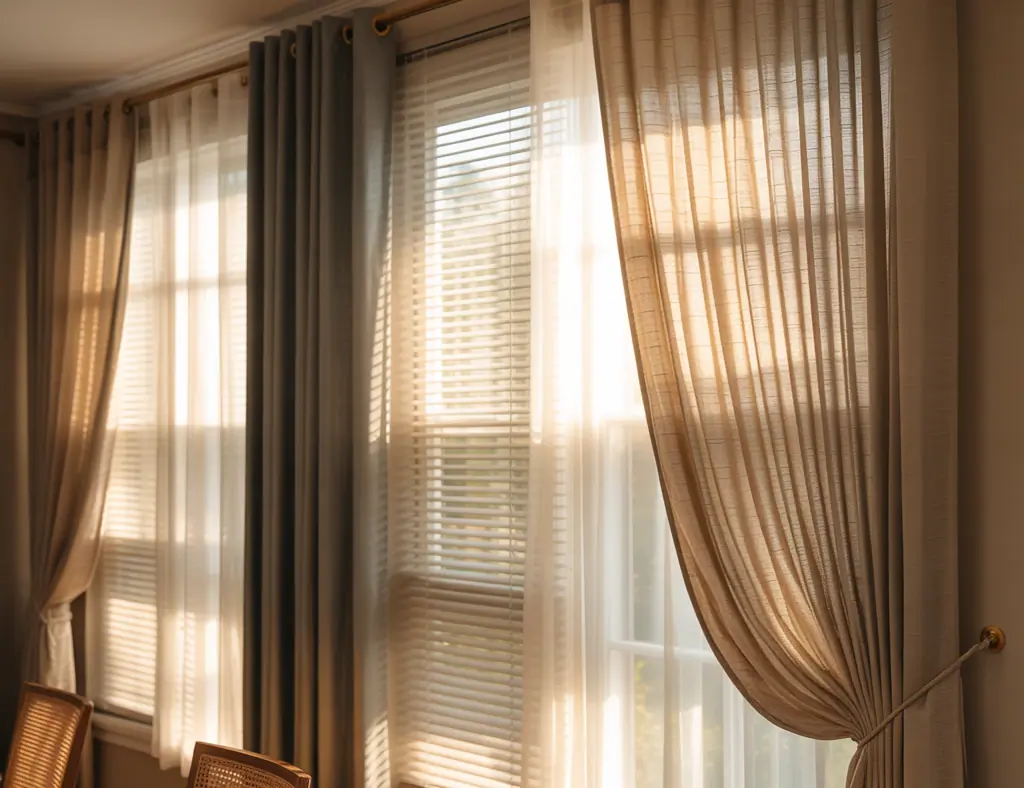
Layering sheer curtains with blackout drapes gives you the best of both worlds: gentle daylight during the day and total darkness for movie nights or intimate dinners. Use a double rod or a ceiling-mounted track for a tidy layered look.
3. Bold Patterns to Make a Statement
If your dining room is understated, patterned curtains can be the focal point. Try large-scale geometrics or botanical prints. Keep the rest of the room simple—solid upholstery and minimal accessories—to avoid visual clutter.
4. Floor-to-Ceiling Drapes to Heighten the Room
Mount curtain rods close to the ceiling and select floor-length panels to create the illusion of taller ceilings. This is a dramatic, designer-friendly trick that works especially well in rooms with low crown molding.
5. Cafe Curtains for a Cozy, Casual Feel
Cafe curtains cover just the lower half of the window and are perfect for daytime privacy while still letting in light. They suit small dining nooks, country-style homes, and casual breakfasts.
6. Textured Weaves and Velvet for Formal Dining
For formal dining rooms, consider velvet or heavy jacquard panels. These fabrics add richness and help dampen sound—ideal for large gatherings where echoes can be distracting.
DIY Tips: Make Your Own Dining Room Curtains
Want to save money and customize your look? Here are practical DIY steps for making simple curtain panels and small upgrades.
Basic No-Sew Curtain Panels (Quick Weekend Project)
- Measure: Width = (window width x 2) for fullness. Length = desired drop plus seam allowances.
- Choose fabric: Pre-washed cotton or linen blends are forgiving and easy to handle.
- Hem with iron-on tape: Fold, press, and use fabric tape for clean edges without sewing.
- Top finish: Use clip rings or a simple rod pocket with hem tape to hang your panels.
Step-by-Step: Adding Lining to Existing Curtains
- Lay your curtain flat and measure the panel dimensions.
- Cut lining fabric to match plus 1″ seam allowance on all sides.
- Attach lining by sewing or using fabric adhesive along the top edge, then tack at the sides and bottom.
- Re-hang the curtain—the lining improves opacity and extends the life of lighter fabrics.
Easy Upgrades to Change the Look Without New Panels
- Swap rings or change to grommet headers for a modern update.
- Add tassel tiebacks or leather straps to enhance rustic or boho styles.
- Use a decorative valance or cornice board for added formality.
Design Inspiration: Matching Curtains to Dining Room Styles
Scandinavian Minimalism
Stick to pale, natural fabrics—think white linen or light grey. Choose simple rod pockets or discreet ceiling tracks for a clean aesthetic.
Farmhouse and Rustic
Layered cotton panels with subtle stripes or checks, finished with rope tiebacks, reinforce a cozy farmhouse vibe. Warm neutrals and natural fibers work best.
Modern and Bold
Make a statement with high-contrast colors or oversized geometric prints. Metal rods with sleek finials add to the contemporary look.
Practical Advice and Real-World Considerations
- For small dining rooms, hang curtains higher and wider than the window frame to make the space feel larger.
- Machine-washable fabrics save time—avoid dry-clean-only if you’d prefer low maintenance.
- Consider flame-retardant treatments if your dining area includes candles or open flames frequently.
- Match curtain hardware (rod finish and finials) to dining room fixtures like light fittings and cabinet pulls for a cohesive look.
Frequently Asked Questions
What length should dining room curtains be?
Floor-length curtains are the most versatile: either just touching the floor for a neat look or a slight “puddle” (1–3 inches extra) for formality. For a modern finish, stop ½ inch above the floor. Measure from where the rod will sit to your desired hem.
How wide should dining room curtains be?
For proper fullness, aim for 1.5 to 2 times the window width. For a luxurious look, use 2.5 times the width. If using multiple panels, divide evenly across the rod and ensure the overlap when closed is sufficient for privacy.
Are lined curtains worth it in the dining room?
Yes—lining adds opacity, protects fabric from sun damage, improves insulation, and gives panels a better drape. If your dining room gets strong sun or you want extra privacy, adding lining is a smart upgrade.
Conclusion: Try One of These Dining Room Curtains Ideas Today
Whether you’re after airy linen panels, layered sheers and blackout drapes, or a weekend DIY no-sew project, these ideas for dining room curtains will help you transform your space. Start with fabric and light needs, then choose a style that supports your dining room’s personality—formal, cozy, or contemporary. Ready to tackle a curtain makeover? Try a simple no-sew panel this weekend or experiment with layering to see how light and mood change. For more step-by-step inspiration, check out our DIY projects, browse dining-adjacent tips in kitchen upgrades, or explore broader home design ideas.
Feeling inspired? Share your before-and-after photos or ask for custom recommendations—let’s make your dining room the space everyone wants to gather in.