Is your backyard a dusty suntrap that begs for a makeover but you worry about water bills, scorching heat, or endless upkeep? If you live in an arid climate or face strict watering restrictions, transforming that barren space into a beautiful, low-maintenance outdoor room is easier than you think. In this post I’ll share practical ideas for desert landscapes that balance style, drought-tolerance, and DIY-friendly steps so you can create a stunning yard without wasting water—or money.
Why Choose Desert Landscaping?
Desert-style landscaping—or xeriscaping—emphasizes drought-tolerant plants, efficient irrigation, and smart hardscaping. The benefits are huge: lower water use, reduced maintenance, and a distinctive, modern aesthetic that blends native succulents, gravel, and architectural rocks. Whether you want a mid-century modern courtyard or a natural desert garden, these designs fit urban and rural lots alike.
Quick Planning Checklist Before You Start
- Assess sun exposure and slope: map full sun, partial shade, and runoff areas.
- Check soil type and drainage: many desert plants prefer sandy or rocky soils; amend heavy clay with grit and compost.
- Decide function: entertaining patio, low-care front yard, wildlife habitat, or a succulent display?
- Set a water budget: pick plants and irrigation that match local restrictions.
- Choose a focal point: boulder, sculpture, mature cactus, or a small shade pergola.
Top ideas for desert landscapes
Below are tried-and-true concepts and step-by-step DIY tips to build a compelling desert landscape that performs well in hot, dry climates.
1. Succulent and cactus garden — low-maintenance focal bed
Succulents and cacti are classic choices for desert yards. Mix columnar cacti, agave, yucca, and compact succulents for varying heights and textures.
- Planting tip: dig a shallow basin for each plant and add gritty mix for fast drainage.
- Design tip: group plants by height and watering needs; use odd-number groupings (3,5,7) for natural arrangement.
- DIY step: lay a 2–3 inch layer of decomposed granite or pea gravel around plants to reduce evaporation and suppress weeds.
2. Drought-tolerant native plant palette
Use native shrubs and grasses—such as salvia, penstemon, desert marigold, and native grasses—to support pollinators and thrive with minimal irrigation. These plants are adapted to local seasons and often resist pests and disease.
3. Rock, gravel, and hardscape composition
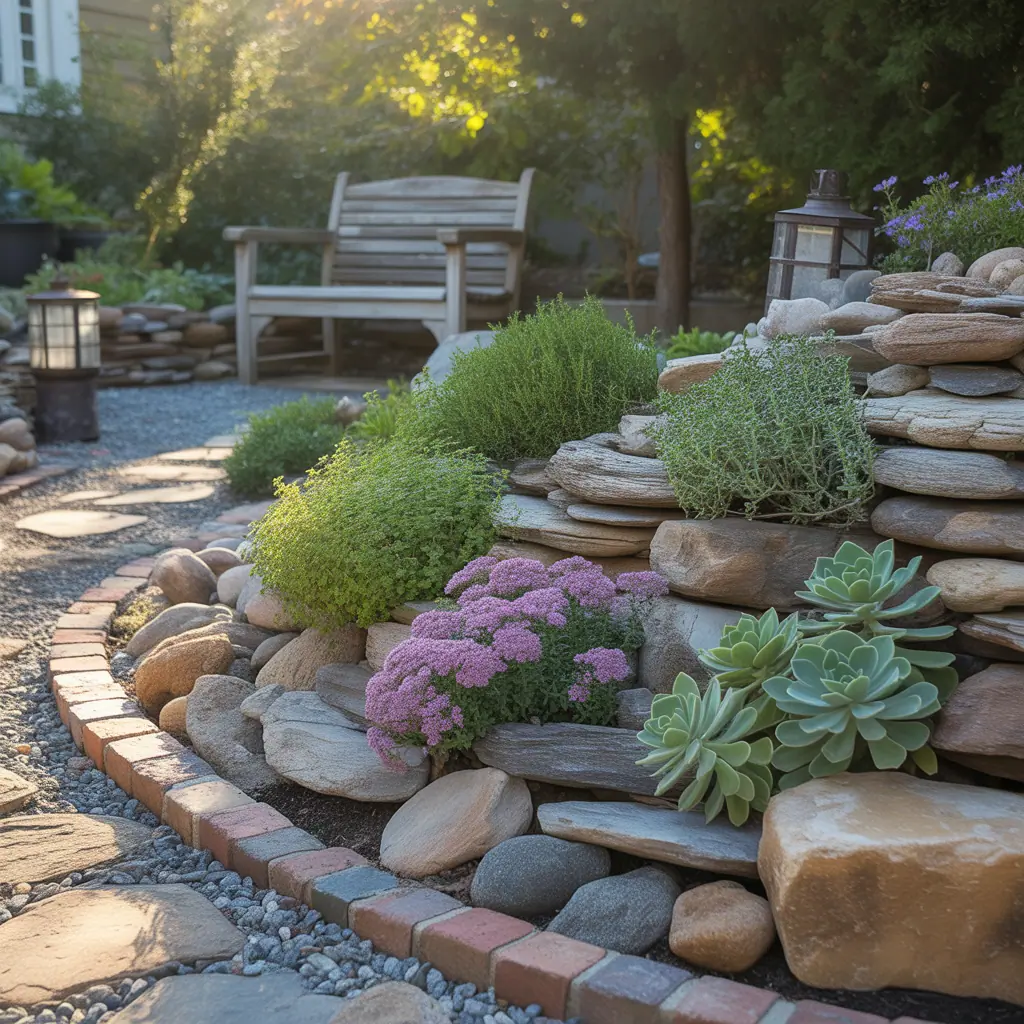
Hardscape forms the visual backbone of desert landscapes. Combine flagstone patios, decomposed granite paths, and boulder clusters to create contrast and structure.
- Edge gravel paths with steel or stone to keep materials in place.
- Create a dry riverbed to handle runoff and add movement—use smooth river rock for contrast.
4. Shade structures, seating, and outdoor rooms
Add a pergola, shade sail, or arbor to create a cool seating area. Use heat-tolerant materials like steel and reclaimed wood. Consider a built-in bench with a gravel base for easy maintenance.
5. Water-wise irrigation and mulching
Drip irrigation paired with a smart controller provides targeted watering to root zones and saves gallons compared to spray systems. Combine drip lines with 2–3 inches of mulch (inert gravel for desert aesthetics) to reduce evaporation.
6. Native rock and accent planting for curb appeal
Create focal points with a large boulder or a cluster of rocks and surround them with low groundcovers or succulents. This adds depth and makes even a small yard feel intentional.
DIY Step-by-step Project: Build a Gravel Garden in One Weekend
This easy weekend project creates an elegant desert bed that’s simple to maintain.
- Clear the area of weeds and turf. Remove top sod and loosen soil to about 4–6 inches.
- Laying fabric: optional weed barrier goes down next, but leave gaps around plants for root growth.
- Install drip tubing in a spiral or grid pattern, with emitters near each planting spot.
- Place plants in prepared holes with a gritty soil mix and backfill. Space for mature size.
- Spread 2–3 inches of decomposed granite or pea gravel. Use a plate compactor lightly for a smooth surface.
- Add boulders and accent pots. Water deeply after installation and then follow a reduced watering schedule for established plants.
Design Inspiration: Styles That Work in Arid Climates
- Modern minimalist: clean lines, monochrome gravel, sculptural agave, steel edging.
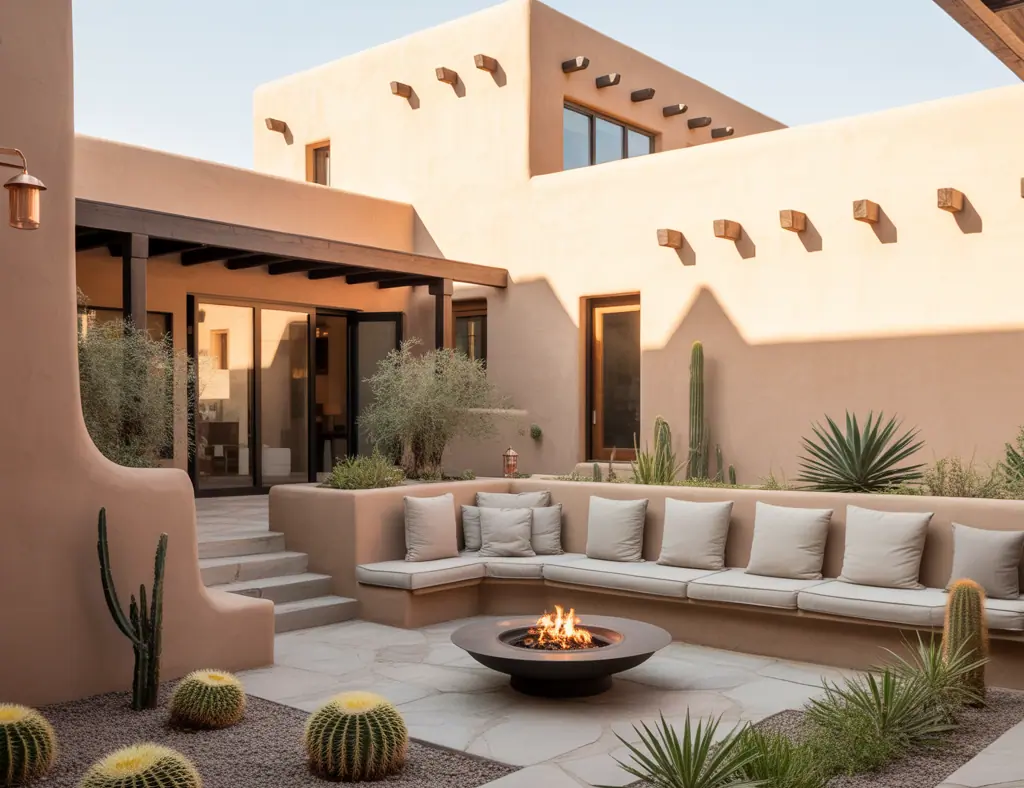
- Southwestern patio: adobe tones, terracotta pots, cacti, and a fire pit for evenings.
- Native meadow: clustered native perennials and grasses for a softer, wildlife-friendly look.
- Zen desert garden: raked gravel, sparse planting, and a few carefully placed rocks for meditation space.
Maintenance Tips to Keep Your Desert Landscape Thriving
- Water deeply but infrequently—established drought-tolerant plants prefer deep soakings every few weeks to shallow daily watering.
- Prune sparingly and remove spent blooms to encourage tidy growth.
- Replace organic mulch every few years if using wood chips; replace or rake inorganic gravels to maintain appearance.
- Watch for pests and scale on succulents; treat small infestations early with manual removal or horticultural oil.
Frequently Asked Questions
Q: Are desert landscapes expensive to install?
A: Initial costs vary by materials. Gravel, native plants, and drip irrigation are moderate-cost and reduce long-term water and maintenance expenses. You can phase projects to fit your budget—start with a focal bed and expand over time.
Q: Will my yard get too hot without turf?
A: Hardscapes and gravel can radiate heat, but strategic shade structures, trees, and light-colored materials reduce heat buildup. Using groundcovers and porous paving helps cool surfaces compared to artificial turf or dark concrete.
Q: Can I mix ornamental turf with desert landscaping?
A: Yes—use small, low-water turf areas for play and combine them with xeriscape beds to limit irrigation. Choose drought-tolerant grass varieties and install drip irrigation around beds to minimize overlap and waste.
Final Thoughts and Next Steps
Transforming your property with ideas for desert landscapes is a smart, attractive, and sustainable choice. With the right plant palette, efficient irrigation, and a few weekend DIY projects, you can create a low-maintenance yard that reflects your style and respects local water resources. Ready to start? Sketch a plan this weekend, pick one DIY project from this post, and try it out. For more hands-on inspiration check out my DIY projects and home design ideas pages—if you’re sprucing up outdoor areas near the kitchen, you might also enjoy some tips from our kitchen upgrades section.
Want a personalized plan for your yard? Leave a comment below describing your space and climate, and I’ll suggest a simple, step-by-step approach to get you started.