Have you ever stood on your sloped backyard, frustrated by erosion, soggy soil, or wasted space, and wondered how to turn that slope into a beautiful, usable area? Concrete retaining walls can solve those problems—and with the right design, they can become a focal point of your landscape. In this article you’ll find practical, inspired, and DIY-friendly ideas for concrete retaining walls that range from simple functional solutions to stylish, modern installations you’ll be proud to show off.
Why choose concrete? The benefits in a nutshell
Concrete is durable, versatile, and can be finished in many ways—stamped, stained, painted, or clad with stone. Whether you want a poured concrete wall, concrete block (CMU) wall, or a garden wall using concrete sleepers, this material provides structural strength and design flexibility. Concrete retaining walls work for erosion control, terracing, planter beds, seating, and even outdoor kitchens.
Planning checklist before you dig
- Check local building codes and permits—walls over a certain height often require permits or engineering.
- Call utility services to mark underground lines.
- Assess drainage—adequate backfill and a perforated drain pipe (weeping tile) behind the wall prevents hydrostatic pressure.
- Decide on wall height—small garden walls under 3 feet are usually DIY-friendly; taller walls may need geogrid and pro engineering.
- Budget time and materials—concrete options vary widely in cost and labor.
Practical DIY tips for building concrete retaining walls
Basic step-by-step for a low concrete block wall (DIY-friendly)
- Mark the wall line and excavate a trench for the footing—usually 6–12 inches deep for small walls.
- Compact a 4–6 inch crushed stone base and level it.
- Set the first course of concrete blocks on a bed of mortar or compacted gravel, ensuring level and straight alignment.
- Fill block cores with gravel and rebar for additional strength where needed.
- Backfill with free-draining material (crushed stone) behind the wall and install a perforated drain pipe at the footing level.
- Cap the wall with capstones or poured concrete coping, then seal if desired.
Tips for poured concrete walls
- Use sturdy formwork and proper bracing—the pressure of wet concrete is significant.
- Place rebar per engineer recommendations; tie and support rebar before pouring.
- Consider fiber-reinforced concrete or admixtures to reduce cracking.
- Control joints and proper curing are essential to long-term durability.
Design ideas for concrete retaining walls (functional & stylish)
1. Smooth modern poured concrete
Sleek, minimalist walls with crisp lines suit contemporary landscapes. Finish with natural or colored concrete stain for a sophisticated look. Add LED strip lighting along the top to emphasize the form at night.
2. Stamped and textured concrete
Use form liners or stamping tools to create patterns that mimic wood, stone, or geometric textures—great for blending a concrete wall into rustic or formal designs.
3. Exposed aggregate finish
Expose the stone in the mix for a natural, tactile surface that hides dirt and age gracefully. It works especially well in Mediterranean or cottage-style yards.
4. Built-in planters and seating
Turn retaining walls into usable features by integrating planters at the top or seating ledges along the face. This is perfect for terraced vegetable gardens or entertaining areas.
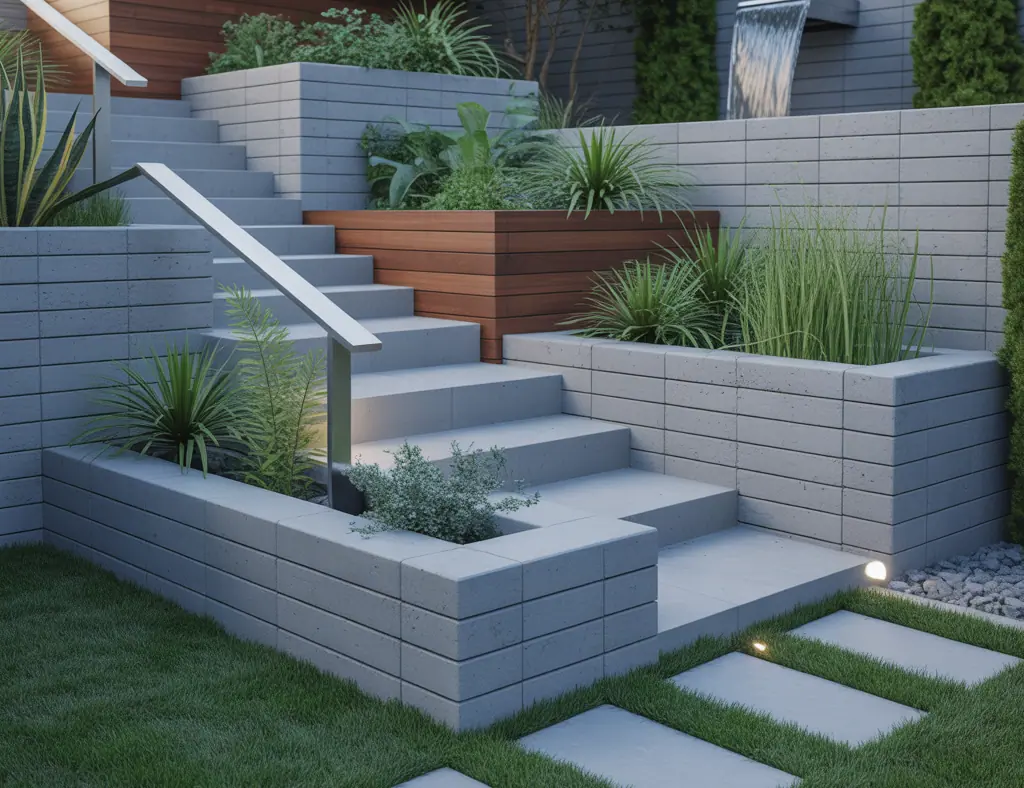
5. Tiered terraces for a hillside
Break a steep slope into multiple levels with several lower walls rather than one tall barrier. Terracing creates usable lawn or garden space, reduces runoff, and looks intentional.
6. Stone veneer or timber cladding over concrete
If you love the strength of concrete but prefer natural materials, apply a thin stone veneer or cedar cladding over a concrete wall for a warm, textured appearance while keeping structural benefits.
7. Planter-wall hybrid
Design a retaining wall with integrated planter pockets or narrow soil beds along the top for cascading plants—perfect for herbs, succulents, or trailing vines.
8. Water features and cascading walls
Add a linear water channel or small cascade down a stepped concrete wall for soothing sound and strong visual interest. Waterproofing and proper drainage are critical for these designs.
When to hire a professional
Consider hiring a structural engineer or professional contractor if your wall is taller than about 3–4 feet, will retain heavy loads (driveways, structures), or if soil conditions are poor. Pros can design footings, geogrid reinforcement, and proper drainage to ensure longevity and safety.
Maintenance tips to keep concrete walls looking great
- Seal concrete surfaces every 2–5 years to protect against moisture and staining.
- Keep vegetation trimmed away from the wall to prevent roots from disturbing the structure.
- Inspect drainage: clear perforated pipes and weep holes of debris to avoid buildup of pressure behind the wall.
- Repair small cracks early with flexible concrete repair caulk to prevent larger issues.
Creative budget-friendly alternatives
- Use interlocking concrete blocks—faster and cheaper than poured concrete for small to medium walls.
- Consider concrete sleepers (railway-tie style) for a modern rustic look with lower installation cost.
- Combine concrete elements with reused materials—salvaged capstones or reclaimed brick for unique character.
Ideas for concrete retaining walls: finishing touches that elevate the space
Small details make a big difference: top the wall with contrasting capstones, add integrated lighting, install a narrow ledge for potted plants, or combine with paving to create a cohesive patio. Using complementary materials from your home design ideas plan ties the yard back to your house for a unified look.
Frequently Asked Questions
Q: How deep should the footing be for a concrete retaining wall?
A: For small garden walls under 3 feet, a footing 6–12 inches deep with a compacted gravel base often suffices. Taller walls require deeper and wider footings; consult local code or an engineer for specific dimensions.
Q: Can I build a retaining wall myself?
A: Yes—many homeowners successfully build low concrete block or interlocking block retaining walls as DIY projects. If the wall is tall, bears significant load, or the site has drainage or soil concerns, hire a professional. Start with research and proper permits for a safe, compliant build.
Q: What maintenance does a concrete retaining wall need?
A: Regularly check drainage and clear debris from weep holes, reseal surfaces every few years, and repair minor cracks promptly. Keep plants and trees’ roots away from the wall to prevent structural damage.
Conclusion — take the next step with your retaining wall project
From simple DIY block walls to striking poured concrete features with integrated planters and lighting, there are countless ideas for concrete retaining walls to suit every yard and budget. Start by assessing your slope, drainage needs, and local codes, then pick a design that fits your style—whether modern, rustic, or natural. Ready to transform your outdoor space? Browse our DIY projects for step-by-step guides or explore more Fresh DIY & Home Improvement Twists to plan a cohesive outdoor refresh. If the job looks large, consult a pro to make sure your wall lasts for decades.