Do you stand at the back door, stare down a steep slope, and wonder how to turn that awkward hill into a useful, beautiful backyard? You’re not alone. Many homeowners see a hill and think “expensive” or “impossible,” but with a little planning and some smart DIY work you can create terraces, paths, and cozy patios that make the most of the grade. This guide will walk you through practical, budget-friendly hill backyard ideas and plans you can actually build.
Why Hills Are Opportunities, Not Problems
Hills add character, natural drainage, and vertical interest to a yard. Instead of fighting the slope, use it to create multi-level entertaining areas, terraced gardens, and dramatic retaining walls. Proper planning reduces erosion, improves access, and gives you usable outdoor spaces that increase curb appeal and resale value.
Hill Backyard Ideas and Plans: Top Slope-Friendly Designs
Below are design strategies and step-by-step projects to help you choose a direction that fits your site, budget, and skill level.
1. Terraced Gardens for Ease and Beauty
Terracing converts a steep slope into a series of flat beds. It’s ideal for vegetable gardens, perennial borders, or layered rock gardens.
- Survey your slope and mark level lines with stakes and string.
- Build small retaining walls using modular blocks, timber sleepers, or natural stone. Keep each terrace under 3–4 feet high for DIY safety.
- Add compacted gravel and topsoil to create planting beds.
- Plant drought-tolerant perennials and native shrubs for erosion control.
DIY tip: Use reclaimed railroad ties or concrete blocks to save costs—just ensure proper drainage behind the wall with gravel and perforated pipe.
2. Switchback Paths and Steps for Access
Steep yards become usable with switchback paths or graded steps. Natural stone steps, stacked timbers, or poured concrete can all work well.
- Plan a gentle grade by increasing the path length with switchbacks.
- Use compacted crushed stone for the tread and landscape fabric underneath to prevent weed growth.
- Install simple risers or cut into the slope for stone steps—stabilize with geogrid if needed.
3. Retaining Walls: Function + Form
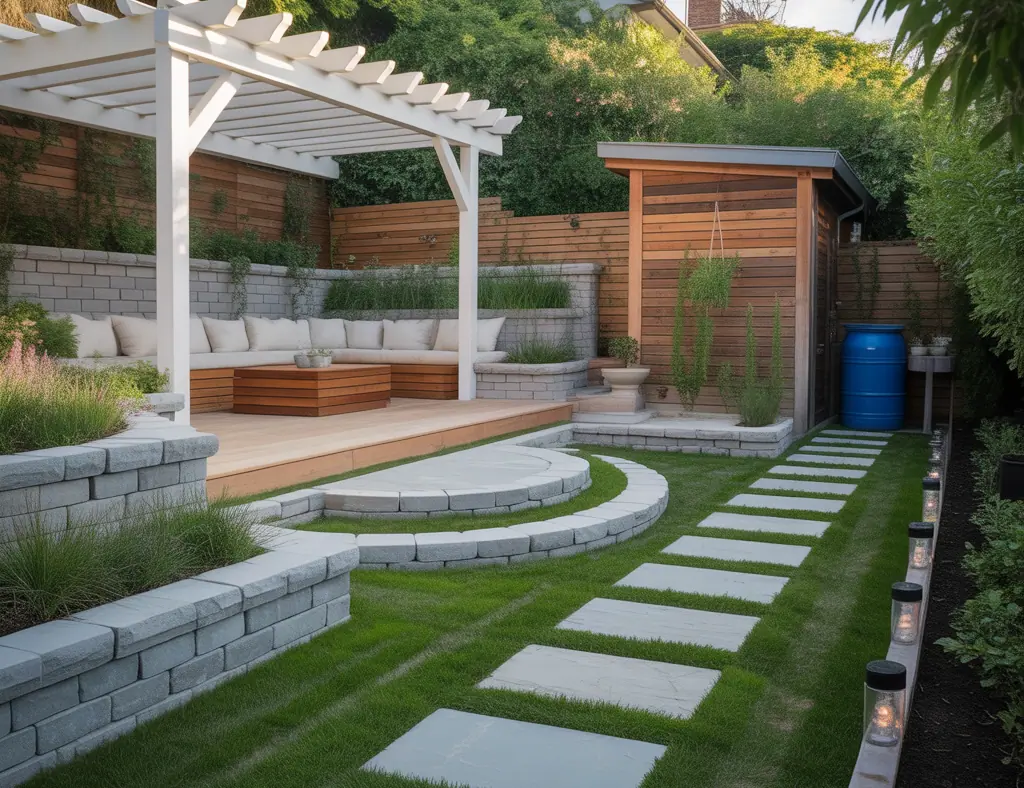
Retaining walls control erosion and create level areas. For smaller walls, dry-stack stone or interlocking concrete blocks are DIY-friendly. Taller walls may require a contractor and permitting.
Real-world advice: Always include proper drainage (gravel backfill and a drain pipe) and compact the base. For aesthetics, cap the wall with wide stones or wood seating to double as bench seating.
4. Slope-Friendly Patio or Deck
Build a platform or multi-level deck anchored to the hill. A floating deck with posts driven into the slope can create a level entertaining space with minimal excavation.
- Locate the patio near a house entrance for safety and utility.
- Choose materials that require little maintenance—composite decking, pavers, or permeable concrete.
- Plan for railing and lighting on steep drops for safety and ambiance.
Practical DIY Tips for Working on a Hill
These are hands-on recommendations I use on every slope project:
- Check local codes and call before you dig—utilities plus permits for larger retaining walls.
- Start with drainage: grade toward drainage points and incorporate dry creek beds or rain gardens to manage runoff.
- Use native, deep-rooted plants for erosion control: ornamental grasses, native shrubs, and groundcovers.
- Compact backfill in layers to prevent settling; use mechanical compaction for heavier projects.
- Consider modular or segmented retaining systems if you want a phased, budget-friendly approach.
Step-By-Step Mini Projects You Can Do This Weekend
Build a Small Gabion Bench
- Buy pre-formed gabion baskets and stack them to bench height.
- Fill with local stone and cap with a wooden plank or concrete slab.
- Anchor to the slope and add gravel base for drainage.
Create a Dry Creek for Drainage and Interest
- Dig a shallow swale along the natural drainage line.
- Line with landscape fabric and add river rock of varied sizes.
- Plant moisture-tolerant plants along the edges to stabilize soil.
Install Tiered Planters Using Railroad Ties
- Stack treated ties to create retaining beds.
- Add gravel, landscape fabric, and good planting soil.
- Plant layered herbs, vegetables, or cascading flowers for a cottage look.
Design Inspiration and Materials Guide
Mix hardscape materials (stone, timber, concrete) with softscape (native plants, mulch, grasses) for a balanced hillside look. For a modern hillside design choose clean lines and stacked stone; for a rustic vibe go with timbers, dry-stacked boulders, and wildflowers. Consider lighting along steps and paths for safety and nighttime ambiance.
Want more weekend ideas and how-to instructions? Check our DIY projects hub for step-by-step builds. For broader styling tips, see our home design ideas gallery.
Frequently Asked Questions
1. How do I prevent erosion on a steep backyard hill?
Use a combination of terracing, groundcover plantings, and proper drainage. Install retaining walls where needed, add mulch to bare soil, and choose deep-rooted native plants to stabilize the slope.
2. When do I need a permit for retaining walls or excavation?
Permit requirements vary by location and wall height. As a rule of thumb, walls over 3–4 feet or any structural excavation likely require permits and an engineer’s input—check local building codes before starting.
3. What are low-maintenance plants for a hillside?
Consider ornamental grasses (e.g., feather reed grass), groundcovers (e.g., creeping thyme, sedum), and native shrubs (e.g., lavender, manzanita). These tolerate slopes, need less watering, and help control erosion.
Conclusion: Start Small, Plan Smart, and Transform Your Slope
A hill backyard doesn’t have to be a headache. With thoughtful planning—terraces, retaining walls, switchback paths, and smart plantings—you can create layered outdoor living that’s both beautiful and functional. Begin with one small project (a terrace, a path, or a dry creek) and build from there. Ready to turn that slope into an asset? Pick a project, gather tools, and start your transformation today. For more hands-on step guides, explore our DIY projects and get inspired by other home design ideas.
Call to action: Share a photo of your hill backyard or tell me about the slope you’re working with and I’ll suggest a tailored plan you can tackle in a weekend or two.