Have you ever stood at the top of a slope in your yard or looked at a weedy patch between stepping stones and thought, “There has to be an easier way?” You’re not alone — many homeowners want lush, tidy ground without constant weeding, mowing, or watering. If you’re tackling a DIY landscaping upgrade, these ground cover plants low maintenance ideas will help you replace high-maintenance lawn or bare soil with attractive, durable, and easy-care plantings.
Why choose low-maintenance ground covers?
Low-maintenance groundcovers save time, water, and money. They’re ideal for slopes, shady corners, pathways, and areas where grass struggles. Beyond practicality, the right groundcover adds texture, color, and protects soil from erosion. Focus on drought-tolerant, slow-growing, or spreading plants that suppress weeds so you spend weekends enjoying your yard — not maintaining it.
Ground cover plants low maintenance ideas
Below are tested plant choices and design ideas that perform well in many climates. Choose plants suited to your USDA zone, sun exposure, and soil drainage for best results.
Top low-maintenance groundcover plants
- Creeping Thyme – Drought-tolerant, fragrant, and great between pavers; flowers attract pollinators.
- Ajuga (Bugleweed) – Shade tolerant, fast-spreading, with colorful foliage; useful for under trees.
- Sedum (Stonecrop) – Succulent groundcovers ideal for rock gardens and hot, dry spots.
- Pachysandra – Evergreen, excellent for deep shade and forming a dense carpet.
- Sweet Woodruff – Small white flowers in spring; thrives in moist shade.
- Corsican Mint – Tiny leaves, soft carpet, pleasant aroma when walked on, works in light shade.
- Vinca minor (Periwinkle) – Evergreen with blue flowers; fast and durable in shade.
Practical DIY planting tips
Getting the best performance from your groundcover plants comes down to site prep and planting technique. Follow these steps for long-term success.
Step-by-step planting guide
- Evaluate the site: Note sun exposure, soil type, slope, and drainage. Pick plants matched to those conditions.
- Clear the area: Remove weeds, grass, and roots. For larger areas, sheet-mulch with cardboard to smother persistent grass for a few weeks.
- Improve soil if needed: Add compost for nutrient-poor soils and work it in lightly. Many groundcovers prefer well-draining soil.
- Plan spacing: Check mature spread and plant at recommended spacing — tighter spacing fills in faster and suppresses weeds.
- Plant correctly: Dig a hole slightly larger than the root ball, set plants at the same depth as in their container, and water in well.
- Mulch carefully: Apply a thin 1–2 inch layer of bark or shredded compost around plants, avoiding direct contact with stems to prevent rot.
- Water establishment: Keep newly planted groundcovers moist for the first month, then cut back as plants establish deeper roots.
Design inspiration and layout ideas
Groundcovers are not only practical — they’re a design tool. Mix textures and flowering times for year-round interest.
Popular layout ideas
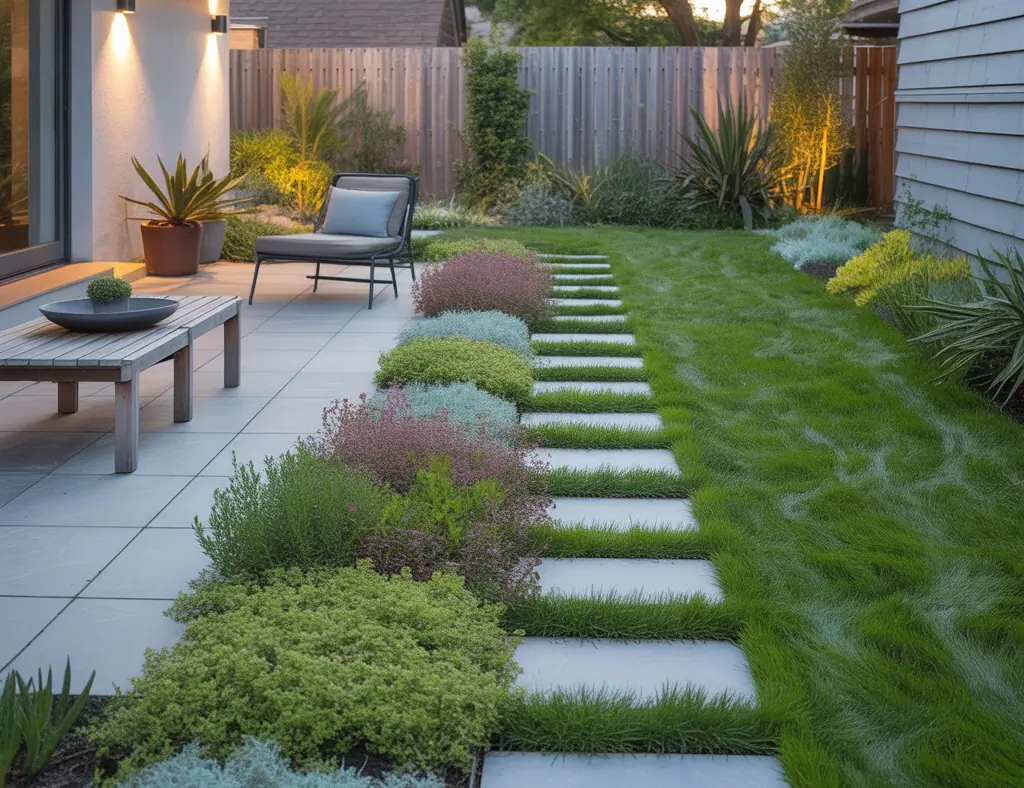
- Stepping stone runner: Use creeping thyme or corsican mint between pavers for a soft, fragrant path.
- Slope stabilization: Plant sedum and native grasses in drifts to hold soil and reduce erosion.
- Shade carpets: Combine pachysandra and ajuga under trees with a drip irrigation line for easy watering.
- Rock garden: Use a mix of sedums and low-growing saxifrages for texture and seasonal blooms.
- Color banding: Plant bands of variegated vinca, blue ajuga, and pink sedum along borders for color contrast.
Maintenance made simple
Low-maintenance doesn’t mean no maintenance. Here are practical, time-saving care tips.
- Weed early: Pull weeds before they set seed and use a pre-emergent in early spring if needed.
- Minimal pruning: Trim back aggressive runners annually to prevent invasion into beds where you want containment.
- Water smart: Install a simple drip irrigation or soaker lines on timers to cut down manual watering.
- Fertilize lightly: Most groundcovers need minimal feeding — a spring application of balanced granular fertilizer is usually enough.
- Monitor pests: Choose deer-resistant varieties if deer are a problem and declutter the area to reduce slug activity.
Cost and sourcing tips
Groundcover planting can be budget-friendly. Buy plugs or small pots rather than large specimens, or propagate from cuttings. Local plant swaps and native plant nurseries often have affordable, climate-appropriate options. For a DIY approach, propagate runners or divide existing mats in spring — a cheap way to cover large areas quickly.
Real-world advice: common pitfalls and solutions
Here are issues homeowners frequently face and how to solve them:
- Overcrowding: Plant too close and you’ll get mildew or rot. Follow spacing guidelines and thin if needed.
- Poor drainage: If soil stays soggy, choose moisture-loving groundcovers or amend soil for better drainage.
- Wrong plant for the light: Shade plants struggle in full sun. When in doubt, test a small area first.
Frequently Asked Questions
1. How long does it take for groundcovers to fill in?
Depending on the species and spacing, many groundcovers will form a solid carpet in one to two growing seasons. Fast spreaders like ajuga and creeping thyme may fill in within one season when planted close together; slower types like some sedums may take longer.
2. Can I use groundcovers instead of grass?
Yes. Groundcovers are a great lawn alternative in low-traffic areas, slopes, or shady spots. Choose durable varieties if the area gets foot traffic, or use stepping stones to protect delicate mats.
3. Are low-maintenance groundcovers attractive to pollinators?
Many are. Flowering groundcovers such as creeping thyme and sedum draw bees and butterflies. Including a mix of bloom times supports pollinators throughout the season.
Conclusion — Try these ground cover plants low maintenance ideas in your next DIY
Transforming bare soil, slopes, or under-used beds into low-care, attractive landscapes is one of the most rewarding DIY home improvements you can do. Ground cover plants low maintenance ideas like creeping thyme, sedum, ajuga, and pachysandra give you texture, color, and erosion control with far less work than a traditional lawn. Start small, plan for your site conditions, and enjoy a year-round, low-effort solution that improves curb appeal and reduces yard work.
Ready to get your hands dirty? Try planting a test patch this weekend and expand from there. For more step-by-step inspiration, check out our DIY projects and browse home decor ideas on our home design ideas page. If you’re tackling a broader remodel, our kitchen upgrades page has practical tips for indoor projects too. Share your progress and tell us which groundcover worked best for you — I’d love to see your before-and-after!