Have you ever stared at a shoebox-sized bedroom thinking, “How can I fit my PC/console, a comfy chair, and everything else without turning the room into chaos?” You’re not alone. Converting a small bedroom into a functional gaming room takes creativity, good planning, and a few clever DIY tricks. This guide gives practical, space-saving gaming room ideas for small bedrooms so you can build a cozy, high-performance gaming nook without sacrificing sleep space or style.
Start with a plan: measure, prioritize, and set a budget
Before buying a desk or mounting a monitor, take 15–30 minutes to measure your room. Note door swing, window placement, outlet locations, and the footprint of existing furniture. Decide your priorities—do you need a full monitor and multi-screen setup, or will a single monitor/TV and compact console suffice? Set a realistic budget (for example: $100–$300 for a budget setup, $300–$800 for mid-range, $800+ for premium).
Quick checklist
- Measure width, depth, and ceiling height.
- Mark outlets and light switches.
- List must-haves (PC/console, storage for games, seating).
- Decide whether you need soundproofing or blackout curtains.
Gaming room ideas small bedroom: space-saving layouts
Here are layout ideas that work well in small bedrooms and give you a functional gaming room without overwhelming the space.
1. Wall-mounted monitor or TV with floating desk
Mount a monitor or small TV on an articulating arm and pair it with a floating or fold-down desk. This frees floor space, provides ergonomic screen height, and creates a clean look. Use the wall area above and beside the monitor for shelves and controller storage.
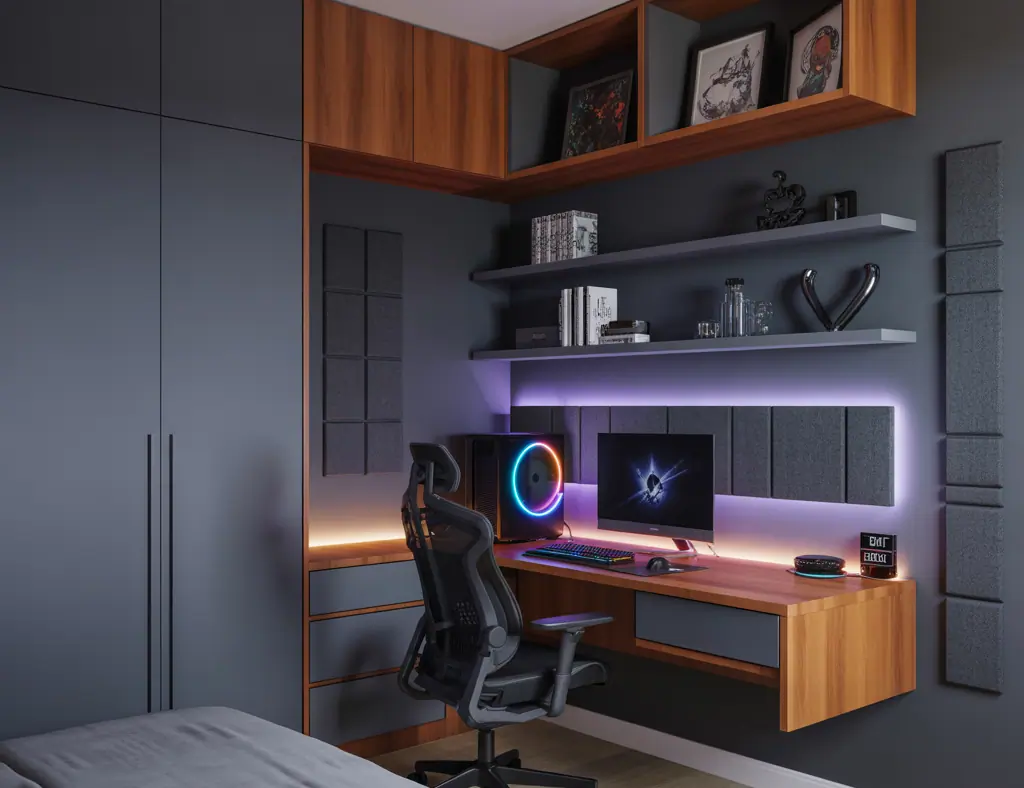
2. Corner gaming nook
Use an unused corner to tuck away a compact L-shaped desk. Corners maximize room flow and give you a semi-private corner that feels like a dedicated gaming space.
3. Bed + desk combinations
If you need a full bed in the room, consider a lofted bed or a bed with built-in desk underneath. This puts your gaming area beneath the bed and keeps the floor open.
DIY upgrades — step-by-step improvement ideas
DIY project: Build a simple fold-down desk (materials & steps)
Time: 2–4 hours • Cost: $40–$120
- Materials: 1 solid wood board (24″x36″), two heavy-duty folding brackets, sandpaper, paint or stain, screws, wall anchors or stud screws.
- Step 1: Find studs and mark the desk height (standard desk height is 28–30″).
- Step 2: Attach brackets to wall, ensuring they’re level and anchored into studs or heavy-duty anchors.
- Step 3: Mount the board on top of brackets and secure it. Sand and finish with paint or stain.
- Step 4: Add a strip of adhesive cable channel under the desk and velcro strips for a power strip.
Result: A compact workstation that folds away when not in use—perfect for small bedrooms where every inch matters.
DIY project: Floating shelving with LED backlight
Install narrow floating shelves above your setup to store controllers, games, and décor. Add LED strip lights behind the shelf for ambient backlighting. This is a low-cost upgrade that adds style and functionality.
Design tips: light, color, and acoustics for a small gaming room
Design choices can make a small room feel larger or more cramped. Use these design strategies:
- Light colors and a single accent wall to avoid visual clutter.
- Mirrors or glossy surfaces to reflect light and make the space feel bigger.
- LED ambient lighting (bias lighting behind monitors) to reduce eye strain and add atmosphere.
- Acoustic foam panels arranged as a pattern—functional and decorative—to tame echo without making the room feel closed in.
Furniture & gear: choose compact, multi-functional pieces
Buy smart: a slim gaming chair or a supportive desk chair that tucks fully under the desk, a vertical PC case or wall-mounted console shelf, and dual-purpose furniture (storage ottomans that double as seating). Consider wireless peripherals where possible to reduce cable clutter.
Must-have accessories
- Monitor arm to free up desk space.
- Vertical shelving or a narrow media console for consoles and routers.
- Cable management channels and surge-protected power strips.
Real-world tips for performance and comfort
- Ventilation: consoles and PCs need airflow—don’t box them into closed cabinets.
- Power plan: map outlets and add a surge protector; consider a short extension cable behind the desk for controllers and chargers.
- Ergonomics: monitor top at eye level, knees at 90°, and monitor distance roughly arm’s length away.
- Noise control: rugs, curtains, and foam panels reduce noise and improve acoustics for late-night gaming.
Budget-friendly ideas for small space gaming
You don’t have to break the bank. Repurpose an old dresser as a console stand, use thrifted wall art to personalize the space, or paint one accent wall to change the room’s vibe. For more hands-on projects, check out our DIY projects and other home design ideas for inspiration and step-by-step plans.
Frequently Asked Questions
Q1: What’s the best desk size for a small bedroom gaming setup?
A compact desk between 36″–48″ wide and 20″–24″ deep works well for single monitor setups. If you have multiple monitors, opt for a 48″–60″ width but choose a slim depth or a corner desk to save space.
Q2: How do I manage cables in a tiny room?
Use cable channels that mount under the desk, adhesive clips for vertical runs, and a mounted power strip to keep cords off the floor. Velcro cable ties make routing and future changes easy.
Q3: Can I soundproof a small gaming room affordably?
Yes. Soft furnishings like rugs, curtains, and bookshelves absorb sound. Add a few strategically placed acoustic panels behind your desk and on the opposite wall. For budget options, use thick blankets or foam mattress toppers temporarily during late-night sessions.
Conclusion — Bring your gaming room ideas small bedroom vision to life
Transforming a small bedroom into a dedicated gaming room is entirely doable with smart planning, space-saving furniture, and a few DIY upgrades. Choose a layout that fits your routine, invest in vertical storage, and use multi-purpose pieces to keep the space tidy and comfortable. Ready to start? Pick one DIY project from this guide—like the fold-down desk or floating shelves—and take measurements today. Share your before-and-after photos or ask for personalized suggestions to keep improving your space.
Happy building—and game on! If you want more project ideas or room makeover tips, check out our DIY projects and home design ideas pages for step-by-step guides and inspiration.