Ever stood on your porch with a cup of coffee thinking, “My front yard looks fine, but it could be amazing” — and then felt overwhelmed by time, budget, or skill? You’re not alone. Transforming that bland strip of grass into an eye-catching flower bed is one of the most satisfying weekend DIY wins. In this post you’ll find practical, beginner-friendly front yard flower bed simple ideas that fit busy schedules, small budgets, and a range of styles.
Front yard flower bed simple ideas: Why choose simple designs?
Simple flower beds are about making the biggest visual impact with the least fuss. Whether you’re aiming for low-maintenance perennial borders, a neat raised bed by the walkway, or a cottage-style splash of color, simple landscaping maximizes curb appeal without requiring a professional landscaper. These straightforward approaches work especially well for first-time gardeners and homeowners who want quick, measurable results.
Benefits of keeping it simple
- Lower cost — fewer plants, basic materials, and simple edging reduce expenses.
- Less maintenance — choose low-maintenance perennials and native plants for seasonal interest with minimal work.
- Faster installation — many simple designs can be completed in a weekend.
- Flexible — easy to expand, change, or refresh seasonally.
7 DIY front yard flower bed simple ideas (step-by-step)
1. Straight perennial strip along the sidewalk
Quick, tidy, and classic — a perennial strip defines the path and adds continuous color.
- Measure and mark a 2–3 ft-wide bed along the sidewalk using string and stakes.
- Remove sod with a shovel or sod cutter and loosen soil to 8–12 inches.
- Mix in compost and plant a repeating pattern of 2–3 perennials (e.g., salvia, daylilies, catmint).
- Edge with simple metal or stone edging and add 2–3 inches of mulch.
2. Curved cottage-style border
Soft curves feel welcoming and provide a cottage-garden vibe with layers of annuals and perennials.
- Draw a gentle curve with a hose to visualize the shape.
- Install a mix of taller back-row plants (e.g., foxglove) and lower front-row blooms (e.g., alyssum).
- Interplant with filler plants and a few shrubs for year-round structure.
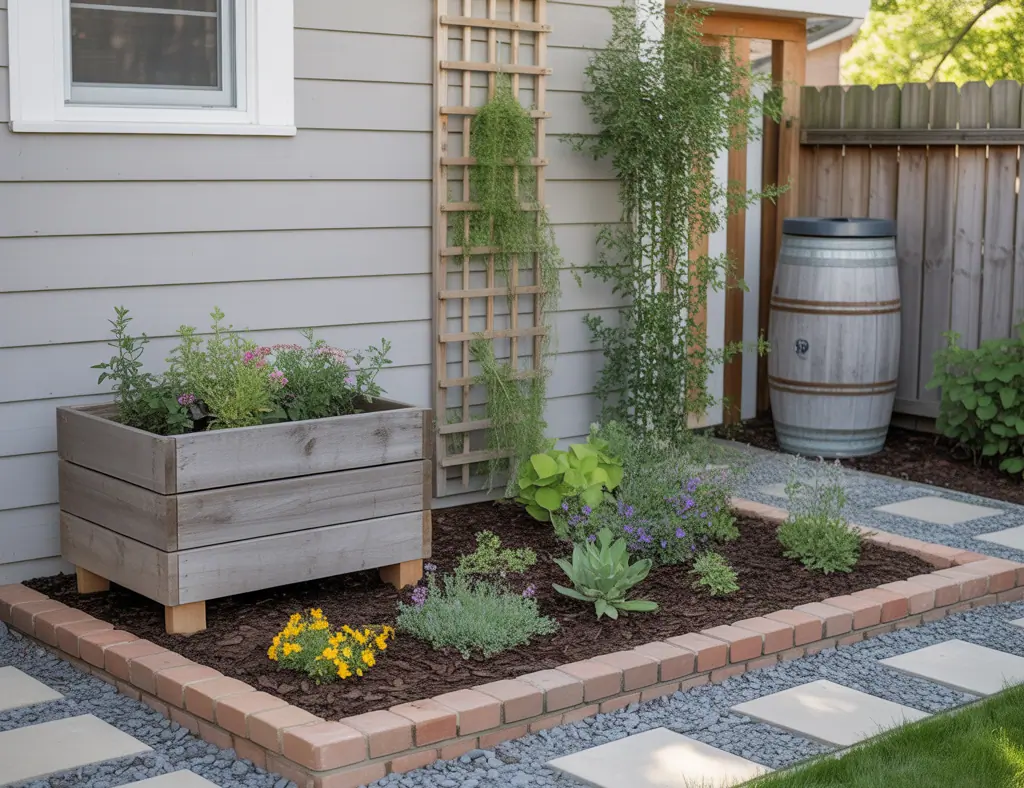
3. Raised bed by the porch
Raised beds create instant structure and are perfect when soil quality is poor.
- Build a 4×4 or 4×8 raised bed from cedar or composite boards.
- Fill with quality topsoil and compost mix.
- Plant a mix of ornamental grasses, perennials, and seasonal color pots on the edge.
4. Native plant border for low-maintenance landscaping
Choose regional native plants to reduce watering and attract pollinators.
- Select 5–7 native species suited to your zone.
- Group plants by water needs and sun exposure.
- Mulch well and let native plants naturalize over a few seasons.
5. Rock and succulent vignette
For dry, sunny sites, a rock bed with succulents and ornamental grasses is drought-tolerant and modern.
- Create a shallow basin and line with landscape fabric if weeds are a concern.
- Arrange rocks in natural clusters and plant succulents in pockets of cactus soil.
- Top with pea gravel or decomposed granite for a finished look.
6. Modular seasonal color boxes
Use movable wooden planters or window boxes for flexible, seasonal blooms.
- Build or buy 2–3 matching boxes and place them near the entry.
- Plant spring bulbs, summer annuals, or fall mums for a rotating display.
- Swap out pots each season for instant refreshment.
7. Edible flower bed
Combine herbs, edible flowers (like nasturtiums and calendula), and salad greens for beauty and function.
- Plan for 6–8 inches of usable soil depth for most herbs.
- Plant herbs at the back and lower-growing lettuces and edible flowers up front.
- Use organic mulch and avoid chemical treatments if you plan to harvest.
Materials, tools, and plant suggestions
Essential tools: shovel, hand trowel, wheelbarrow, garden gloves, pruning shears, and a hose or watering can. Basic materials include quality topsoil, compost, mulch, edging, and durable plant labels. For plants, favor hardy perennials (salvia, coreopsis, coneflower), compact shrubs (boxwood, dwarf hydrangea), and groundcovers (sedum, creeping thyme). For long-term success, choose plants rated for your USDA zone and group by sun and water needs.
Practical DIY tips and real-world advice
- Start small: one bed at a time to avoid project fatigue and budget overload.
- Test your soil pH and add amendments as needed — healthy soil equals healthy plants.
- Water deeply and less frequently to encourage deep roots; early morning watering reduces disease.
- Use temporary stakes or a hose to preview bed shapes before digging.
- Label plants while young to remember varieties and maintenance requirements.
Common mistakes to avoid
- Overcrowding: allow mature spacing to prevent thinning and disease.
- Ignoring drainage: raise the bed or amend soil if water pools after storms.
- Wrong plant, wrong place: match plant sun requirements to the bed’s actual light conditions.
Frequently Asked Questions
1. How much space do I need for a front yard flower bed?
Even a 2–3 foot-wide strip can make a big difference. For raised beds or more elaborate designs, 4–6 feet allows layered planting. Plan based on the width of your yard and any setbacks required by local codes.
2. What are the easiest plants for beginners?
Beginner-friendly plants include daylilies, coneflowers, sedum, catmint, and ornamental grasses. These are drought-tolerant, deer-resistant in many areas, and require minimal pruning.
3. How often should I mulch and fertilize a new flower bed?
Apply 2–3 inches of mulch after planting and refresh annually in spring. Fertilize once in spring with a slow-release balanced fertilizer or use compost at planting time for a gentler option.
Conclusion: Ready to try these front yard flower bed simple ideas?
If you’re craving better curb appeal without a huge project, pick one of these front yard flower bed simple ideas and plan a weekend install. Start small, use local plants, and enjoy the immediate lift a well-designed bed brings. For more hands-on inspiration and step-by-step builds, explore our DIY projects and broader home design ideas. Want help choosing plants for your zone? Leave a comment or share a photo of your yard — let’s make your front yard the neighbor’s favorite view.