Have you ever stared at your patchy front yard and wondered how to transform it without a big budget or fancy equipment? Maybe your lawn is a watering nightmare, weeds keep coming back, or you’d like to add curb appeal before selling. Using river rock for front house landscaping can be a game-changer — durable, drought-tolerant, and surprisingly stylish. In this article I’ll walk you through practical DIY tips, step-by-step installation, design inspiration, and real-world advice so you can create a polished front-yard look that lasts.
Why Choose River Rock for Your Front Yard?
River rock (also called river stone or decorative rock) is rounded, smooth, and comes in a range of sizes and colors. It’s ideal for front house landscaping because it:
- Reduces maintenance compared to grass or mulch
- Improves drainage and prevents erosion
- Pairs well with drought-tolerant plants for xeriscaping
- Provides a polished, natural aesthetic that boosts curb appeal
Design Ideas: Ways to Use River Rock in the Front Yard
1. Dry Creek Bed for Drainage and Visual Interest
Create a dry riverbed that guides runoff away from your foundation. Use various stone sizes — larger boulders for focal points and smaller river rock to simulate flowing water. Add native grasses and succulents along the edges for a natural look.
2. Rock Beds with Plant Islands
Replace wide swaths of lawn with river rock and carve out planting islands for ornamental grasses, boxwoods, or low-maintenance perennials. This reduces mowing and watering while keeping greenery for texture and height.
3. Walkways and Stepping Paths
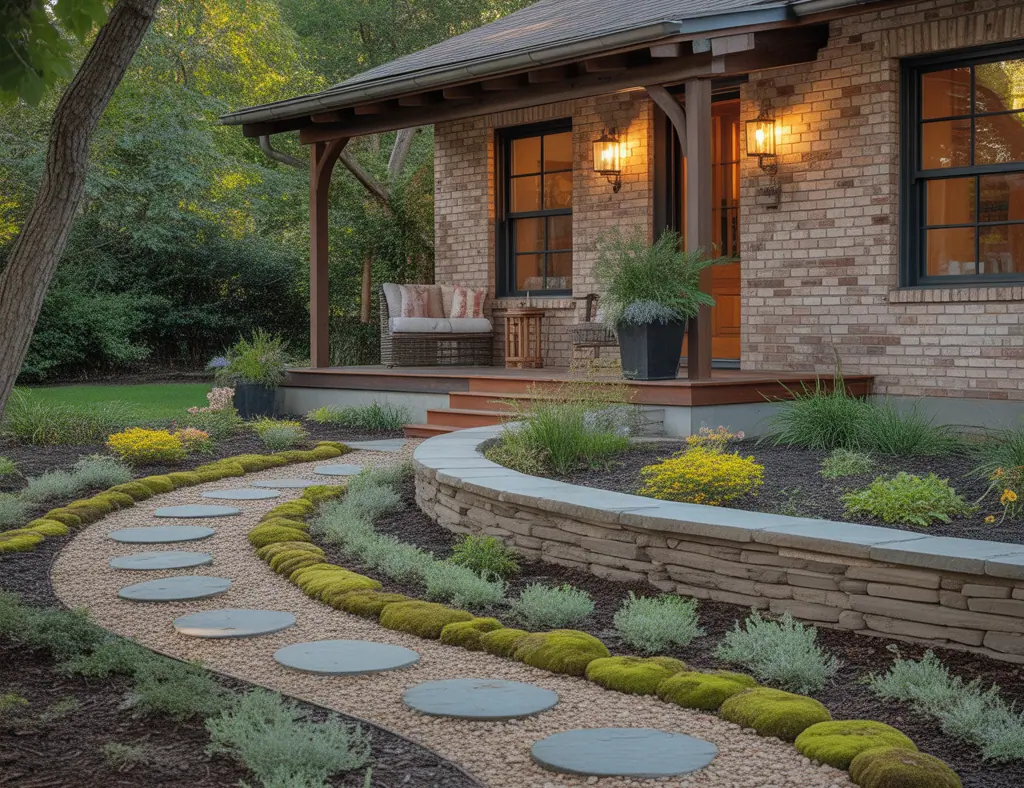
Line a path with river rock for a clean border, or create a full rock walkway using flat river stones or flagstone stepping pads set into pea gravel. Add edging to keep stones in place and prevent spillover onto the lawn or driveway.
Step-by-Step DIY: How to Install River Rock in Your Front Yard
Follow these practical steps to install a low-maintenance, attractive river rock landscape yourself.
- Plan and measure: Sketch the area you want to cover. Measure square footage to calculate how much rock you’ll need (typically ordered by cubic yard).
- Choose your rock: Decide on size (pea gravel, 1–2” river rock, or larger cobbles) and color palette. Lighter colors brighten small yards; darker tones add contrast near light-colored homes.
- Prep the area: Remove grass, weeds, and debris. Use a sod cutter or shovel for larger areas. Grade the soil for proper runoff away from the home.
- Install edging: Use metal, plastic, or stone edging to define the boundary and keep rocks contained.
- Lay landscape fabric: Put down breathable weed-control fabric to reduce weeds while allowing water to penetrate. Overlap seams by 6–12 inches and secure with landscape staples.
- Place rocks: Spread river rock evenly to a depth of 2–3 inches for pea gravel, or 3–4 inches for larger river stones. For dry creek beds, layer larger stones and boulders first for structure.
- Add plants and finishing touches: Dig holes through the fabric at planting sites and add drought-tolerant plants. Top with a few decorative rocks around plant bases for visual cohesion.
Practical Tips & Real-World Advice
- Budgeting: Expect to pay per cubic yard; delivery prices vary. Buy a bit extra for settling and compaction.
- Tools you’ll need: Wheelbarrow, shovel, rake, landscape fabric, staples, edging, tamper, and gloves.
- Weed control: No fabric is perfect. Use landscape fabric plus a 2–3 inch rock depth and periodically pull visible weeds.
- Drainage considerations: If you have heavy runoff, incorporate a French drain or grade the area to direct water. River rock is great for erosion control but won’t solve underlying drainage problems alone.
- Combining materials: Mix river rock with mulch, decomposed granite, or flagstone to create layered textures and reduce monotony.
- Plant selection: Choose low-water plants like lavender, sedum, ornamental grasses, rosemary, and native shrubs to maintain a cohesive, drought-tolerant landscape.
Styling Tips: Color, Texture, and Scale
Select rock colors and sizes that complement your home’s exterior. For a modern look, choose uniform gray river rock and geometric plantings. For a cottage or Mediterranean feel, warm tan and rust tones with irregular boulders work beautifully. Always consider scale: large boulders anchor big yards; smaller stones suit compact spaces.
Maintenance Guide
River rock is low-maintenance but not no-maintenance. Sweep or rake debris seasonally, pull weeds, and replenish stones that get displaced after heavy rain or foot traffic. Clean up leaves so organic matter doesn’t accumulate and create soil pockets that attract weeds.
Front House Landscaping River Rock: Design Examples
Looking for inspiration? Try one of these simple layouts:
- Minimal modern: Single-color river rock, rectangular beds, boxwood hedges, and black metal edging.
- Naturalistic: Mixed-size river rock, a winding dry creek, native grasses, and scattered boulders.
- Mediterranean: Warm stone tones, drought-tolerant herbs (rosemary, lavender), terracotta pots, and a pebble pathway.
Frequently Asked Questions
1. How much river rock do I need for my front yard?
Measure the area in square feet and decide on the depth (2–4 inches typical). Use a cubic yard calculator or ask your supplier; as a rule of thumb, 1 cubic yard covers about 100 square feet at a 3-inch depth.
2. Will river rock get hot in the summer and affect my plants?
Rocks absorb heat but typically won’t harm established drought-tolerant plants. To protect seedlings, give them time to establish and use mulch around moisture-sensitive plants instead of rock.
3. Can I install river rock myself, or should I hire a pro?
Small to medium installations are DIY-friendly if you’re comfortable with basic tools and physical labor. For large-scale grading, drainage work, or complex hardscaping, hiring a pro ensures longevity and correct water management.
Bring Your Front Yard to Life — Start Your Project Today
Front house landscaping river rock is an affordable, durable way to boost curb appeal, cut maintenance, and solve drainage headaches. Whether you install a simple rock bed or a dramatic dry creek, the process is approachable for confident DIYers. Ready to take the next step? Sketch your layout, measure your space, and gather supplies this weekend.
If you’re looking for more project inspiration, check out our pages on DIY projects and home design ideas. And if you’re in the middle of a broader renovation, you might enjoy our guide to kitchen upgrades for interior inspiration.
Call to action: Want a customized plan for your front yard? Take photos of your space, note dimensions, and try one small test area with river rock this weekend — then share your results and questions. Happy landscaping!