Ever walked up to your house and felt the entryway was… a little flat? You’re not alone. Maybe you just painted the door, but the porch still lacks personality. A pair of well-chosen front door planters can transform an ordinary threshold into a welcoming, styled entry in an afternoon. In this guide you’ll find practical DIY tips, planting ideas, and step-by-step projects to create beautiful front door planters that fit any home.
Why Front Door Planters Matter
Front door planters do more than hold flowers. They frame your entrance, add color and texture, and instantly improve curb appeal. For DIYers looking for high-impact, low-cost home improvements, entryway container gardens or paired porch planters deliver quick returns — visually and emotionally. They’re also a great way to experiment with seasonal décor without committing to permanent landscaping changes.
Choosing the Right Planter: Size, Material, and Style
Picking the correct planter box or pot is crucial for both looks and plant health. Consider scale, material, and shape before buying or building.
Scale and Placement
- Measure your doorway and porch depth. Tall planters (36–48 inches) work well for grand entrances; low, wide boxes suit smaller stoops.
- For narrow porches, choose slim, tall containers or vertical planters to save floor space.
- Decide symmetry vs. asymmetry: matching planters on either side create formality; a single dramatic urn can read modern and intentional.
Material Choices
Materials affect weight, durability, and style. Popular options include:
- Wood (cedar or redwood): warm, DIY-friendly, and great for planter boxes.
- Fiberglass/resin: lightweight and weather-resistant for large pots.
- Ceramic and concrete: heavy and stylish, best for protected porches or to anchor tall plants.
- Metal (galvanized steel or corten): industrial modern look; use liners to prevent rust staining.
Best Plants for Front Door Planters
Choose plants based on light, season, and maintenance level. For easy success, mix evergreens, flowering annuals, and trailing plants.
- Evergreen anchors: boxwood, dwarf conifers, hollies — great for year-round structure.
- Seasonal color: petunias, geraniums, calibrachoa for summer; chrysanthemums and pansies for fall.
- Filler and spiller plants: sweet potato vine, ivy, trailing lobelia add softness and flow.
- Accent grasses: carex, blue fescue, or pennisetum add height and movement.
DIY Front Door Planter Ideas (Step-by-Step)
Below are two practical projects: a simple cedar planter box you can build in an afternoon, and a quick container arrangement method using the “thriller, filler, spiller” technique.
Project A — Simple Cedar Planter Box
- Materials: 1×6 cedar boards, 2×2 cleats, exterior screws, landscape fabric, potting mix, sealant (optional).
- Measure: Decide box length — typical is 24–36″ for a porch. Height 12–18″ is comfortable.
- Cut and assemble: Build a rectangular frame with 1×6 boards and secure with exterior screws into 2×2 cleats at corners.
- Line and drill drainage: Staple landscape fabric inside and drill 4–6 drainage holes in the bottom.
- Finish: Apply a clear outdoor sealant for longer life, then fill with potting mix and plants.
Project B — Container Arrangement: Thriller, Filler, Spiller
- Pick a large pot with drainage. Place a tall plant (e.g., fountain grass or small conifer) in the center or back (thriller).
- Add medium-height plants around it (petunias, salvias) for color and texture (filler).
- Edge with trailing plants (sweet potato vine, ivy) to cascade over the rim (spiller).
- Water well and top-dress with mulch or moss for a finished look.
Practical Tips: Soil, Drainage, and Longevity
- Always use high-quality potting mix — it drains well and retains nutrients better than garden soil.
- Ensure adequate drainage. If the container lacks holes, use a liner or add a layer of gravel and drill holes.
- Use saucers or risers to protect porch surfaces and prevent standing water from causing rot.
- Fertilize container plants regularly; nutrients leach out faster in pots than in the ground.
Design Inspiration & Styling Tips
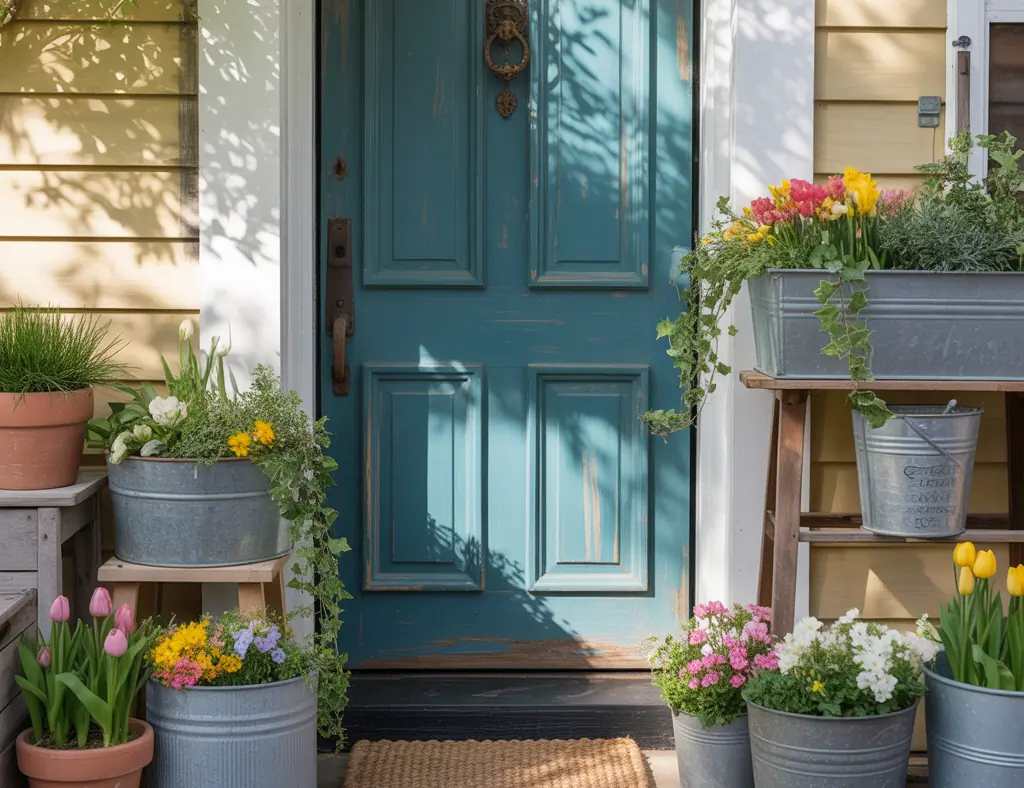
Match planter style to your home’s architecture and paint color. For a cottage look, weathered wood boxes with pastel blooms work beautifully. For modern homes, try matte black fiberglass pots with sculptural grasses. Add accessories like lanterns, seasonal wreaths, or solar path lights to complement your planters.
Maintenance & Winterizing Your Front Door Planters
To keep planters looking great year-round, follow a simple maintenance routine:
- Deadhead flowers and trim spent foliage to encourage new growth.
- In late fall, swap tender annuals for winter-hardy options (evergreens, ornamental cabbages, or birch branches) or move containers to a protected area.
- Insulate large pots by wrapping with burlap or moving them closer to the house to prevent freeze-thaw damage.
Frequently Asked Questions
How large should front door planters be?
Choose planters proportional to your doorway. For a standard door, 24–36 inches tall for tall planters or 18–24 inches high for boxes works well. Width should balance the door — matching pairs usually range 12–18 inches wide.
What are the best low-maintenance plants for entryway planters?
Evergreens like boxwood, dwarf conifers, sedums, and ornamental grasses are low-maintenance. Combine them with hardy perennials or annuals suited to your light conditions for seasonal color.
Can I use indoor plants in outdoor front door planters?
Generally no — most indoor houseplants won’t tolerate outdoor light, temperature swings, or wind. Choose plants rated for outdoor use in your USDA hardiness zone or use outdoor-friendly container varieties.
Conclusion
Front door planters are one of the simplest, most effective DIY upgrades you can make to enhance curb appeal and welcome guests. Whether you build a cedar planter box, style a pair of urns, or create seasonal container arrangements, the right planters will make your entryway feel intentional and inviting. Ready to try a project this weekend? Check out our DIY projects page for step-by-step guides, browse home design ideas for styling inspiration, or pair your refreshed entry with other improvements like kitchen upgrades to boost overall home value. Grab your tools, pick your plants, and transform your doorway today.