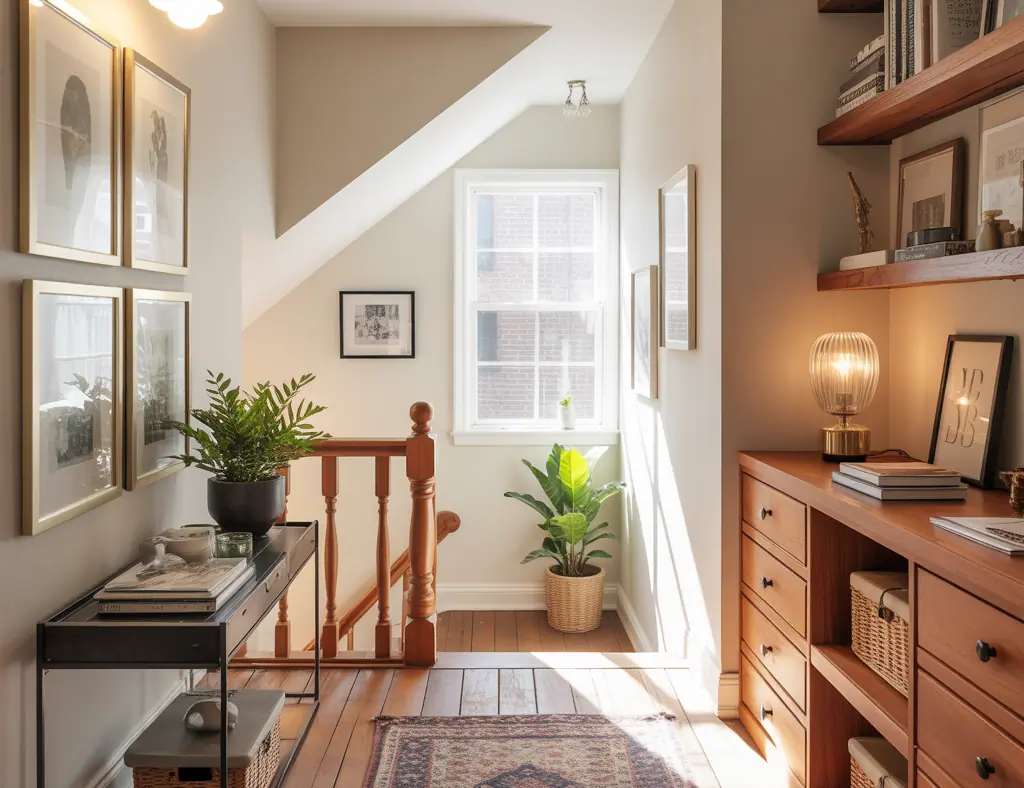
Ever find yourself tripping over school bags or staring at an empty stretch of floor at the top of the stairs and wondering, “What on earth do I do with this awkward space?” The upstairs landing is one of the most underused spots in a home — often too small for a full room but full of potential for storage, style, and function. Whether you have a compact landing or a generous mezzanine, these ideas for upstairs landing will help you turn that transitional area into a practical, beautiful part of your home.
Why the upstairs landing matters
Think of the landing as prime real estate: it’s visible from multiple rooms, it gets foot traffic, and it can tie together the upstairs aesthetic. A purposeful landing improves circulation, adds storage, and can become a cozy nook for reading, working, or organizing family life. Before you dive into decorating, take a minute to assess size, light, and how the space is used.
Quick assessment: measure, map, and plan
- Measure width and length to determine what furniture or built-ins will fit.
- Note door swings and traffic flow so your additions don’t cause bottlenecks.
- Check for natural light and existing wiring for lighting or outlets.
- Decide whether the landing will be decorative, functional, or a blend of both.
Creative ideas for upstairs landing
Below are practical, stylish, and achievable concepts — each includes DIY tips and real-world advice so you can pick the right fit for your home.
1. Cozy reading nook with built-in bench
Turn a narrow landing into a snug reading corner. Install a custom bench with storage beneath and a slim cushion on top.
DIY steps:
- Measure the wall and cut a plywood base and sides to size.
- Attach to studs with screws and wood glue, then add a hinged top for storage access.
- Paint or stain to match the banister; finish with a custom cushion and throw pillows.
Tip: Use shallow drawers for seasonal linens or children’s toys if the landing is part of a family circulation zone.
2. Compact home office or homework station
With remote work and homeschooling, a slim desk can change everything. A wall-mounted fold-down desk saves space and looks neat when closed.
DIY steps:
- Choose a sturdy wall bracket and a plywood desktop cut to fit the landing width.
- Install shelving above for books and supplies, and add a cable management clip for chargers.
- Use a slim task chair or a built-in stool that tucks under the desk.
3. Smart storage and closet conversion
Install shallow cupboards or open shelving to tame clutter. For small landings, a custom wardrobe niche is a game changer for robes, linens, or seasonal shoes.
Tip: Use sliding or bi-fold doors if space is tight — they avoid interfering with passing traffic.
4. Gallery wall and display shelving
Turn the balustrade wall into a focal point with family photos, art, or floating shelves for decorative objects. A cohesive frame color and layout grid makes a small area look curated.
5. Mini mudroom or drop zone
If the landing is near a secondary entrance or a kid’s bedroom, add wall hooks, a small bench, and labeled baskets to keep daily clutter organized.
6. Indoor plant corner or vertical garden
Bring life upstairs with low-light plants or hanging planters. A slim plant stand and moisture-resistant flooring or a tray protect the surface beneath.
7. Statement lighting and safety upgrades
Good lighting makes a landing feel intentional. Consider layered lighting: a pendant or chandelier for drama, wall sconces for ambience, and LED stair lights for safety. Wiring can often be added by running power from the nearest room — consult an electrician for permanent fixtures.
Practical DIY tips for small and awkward landings
- Go vertical — tall narrow shelving consumes less floor space while maximizing storage.
- Use light paint and mirrors to visually widen a narrow hallway landing.
- Choose multipurpose items: benches with storage, fold-down desks, and stackable baskets.
- Keep traffic clear — aim for a minimum of 800–900mm (31–35 inches) of clear passage where possible.
- Prioritize safety: secure bookcases and benches to studs to avoid tipping hazards.
Budget-friendly vs. high-end landing makeovers
On a budget, refresh with paint, new lighting, and thrifted decor. For a high-end look, commission built-in cabinetry, replace the balustrade with a modern design, or install hardwood flooring. A mid-range option is to DIY painted built-ins and add professional lighting.
Materials & tools checklist
- Plywood, screws, wood glue
- Paint or stain, brushes or rollers
- Wall brackets, shelving hardware
- Measuring tape, stud finder, drill, level
- Soft furnishings — cushions, rugs, baskets
Frequently Asked Questions
Q1: What are the best small upstairs landing ideas for narrow spaces?
A1: For narrow landings, think vertical: slim bookcases, floating shelves, wall-mounted fold-down desks, or a built-in bench with shallow drawers. Keep items streamlined so the passageway remains clear.
Q2: How do I make a landing safer and more child-friendly?
A2: Anchor furniture to walls, fit stair gates if needed, add slip-resistant runners on stairs, and choose rounded furniture edges. Use soft-close hinges on storage to prevent pinched fingers.
Q3: Can I add lighting to an upstairs landing without rewiring?
A3: Yes — use rechargeable LED lamps, plug-in wall sconces with discreetly routed cords, or battery-operated puck lights. For permanent fixtures, hire an electrician to extend wiring safely.
Final thoughts: make your landing work for you
The upstairs landing doesn’t have to be an afterthought. With thoughtful planning, clever storage, and a few DIY projects, you can transform that transitional area into a functional and stylish part of your home. Ready to get started? Browse our DIY projects for step-by-step guides, or explore more home design ideas to match your style.
Want help picking the best idea for your layout? Leave a comment with your landing dimensions and photos, and I’ll give tailored suggestions to get you building, painting, or styling this weekend.