Have you ever stared out at a sun-scorched lawn, fighting fungus, salt spray, and summer storms, and wondered how to get a beautiful yard without endless work or water bills? If you live in the Sunshine State, transforming your outdoor space into a low-maintenance, tropical oasis is possible — even as a DIYer. This guide to Florida landscaping ideas gives you realistic design inspiration, step-by-step projects, and practical tips that fit our unique climate.
Why Florida landscaping is different (and why that’s a good thing)
Florida yards face intense sun, high humidity, seasonal heavy rains, occasional salt exposure near the coast, and pests that thrive in warm weather. The secret to a stunning landscape here is choosing the right plants and techniques: native and drought-tolerant species, smart irrigation, storm-resistant design, and hardscaping that reduces maintenance. Embrace Florida-friendly landscaping principles and you’ll cut costs, save water, and enjoy outdoor living year-round.
Florida landscaping ideas for sun, salt and storms
Below are tested design approaches and practical DIY projects you can tackle over a weekend or a season.
1. Build a low-maintenance, tropical front yard
- Plant selection: Use Florida native palms, coontie, firebush, saw palmetto, muhly grass, and seaside goldenrod for coastal sites. These handle salt, heat, and local pests better than many exotics.
- Layered planting: Create depth—tall palms in back, mid-size shrubs in the middle, groundcover or ornamental grasses in front.
- Mulch & soil: Use hardwood or pine bark mulch 2–3 inches deep to retain moisture and suppress weeds. Amend sandy soils with compost to improve water retention.
2. Install a drought-tolerant garden using xeriscaping principles
- Design layout: Group plants with similar water needs together to make irrigation efficient.
- Choose plants: Agave, ornamental grasses, and native salvias perform well. Consider Florida-native pollinator plants to support bees and butterflies.
- Mulch & rock: Use native gravel or decomposed granite pathways to cut mowing and watering needs.
3. Create a coastal-friendly yard
If you’re near the beach, prioritize salt-tolerant plants, windbreaks, and elevated beds. Heavy-duty garden fabric under mulch reduces sand blow, while native groundcovers help hold soil in place. Consider hardy species like sea grape and yaupon holly for wind and salt resistance.
Hardscaping and smart design — practical ideas that last
Hardscape reduces maintenance and adds curb appeal. Here are DIY-friendly options to anchor your Florida landscape:
Pavers and pathways
Install concrete pavers or permeable pavers to handle heavy rains. For a DIY path:
- Mark the path and dig 4–6 inches deep.
- Compact a base of crushed stone and add a bedding sand layer.
- Lay pavers with a slight slope for drainage, then sweep polymeric sand between joints.
Simple retaining walls and raised beds
Use concrete block or treated timber to build short retaining walls that control erosion during storms. Raised beds made from rot-resistant wood or composite materials make vegetable gardening easier and improve soil management in sandy yards.
DIY irrigation & water-saving tips
Water smart to cut bills and keep plants healthy:
- Install a drip irrigation system for beds and shrubs — saves water and reduces fungal disease risk compared to overhead sprinklers.
- Use a smart irrigation controller that adjusts watering based on weather.
- Water early morning to reduce evaporation and fungal issues.
Step-by-step: Installing a basic drip line
- Plan layout and measure distances from the water source.
- Attach a filter and pressure regulator to your garden spigot.
- Run main tubing along beds, punch holes and insert emitters near plant roots.
- Test the system and bury tubing 1–2 inches under mulch for neatness.
Seasonal care and hurricane preparedness
In Florida, seasonal maintenance matters. During the rainy season, inspect drainage and remove debris from gutters. Before hurricane season:
- Prune weak branches and secure loose items.
- Avoid planting tall trees too close to structures.
- Install straps on newly planted trees to help them establish strong roots.
Design inspiration: styles that work in Florida
Match your taste with climate-smart styles:
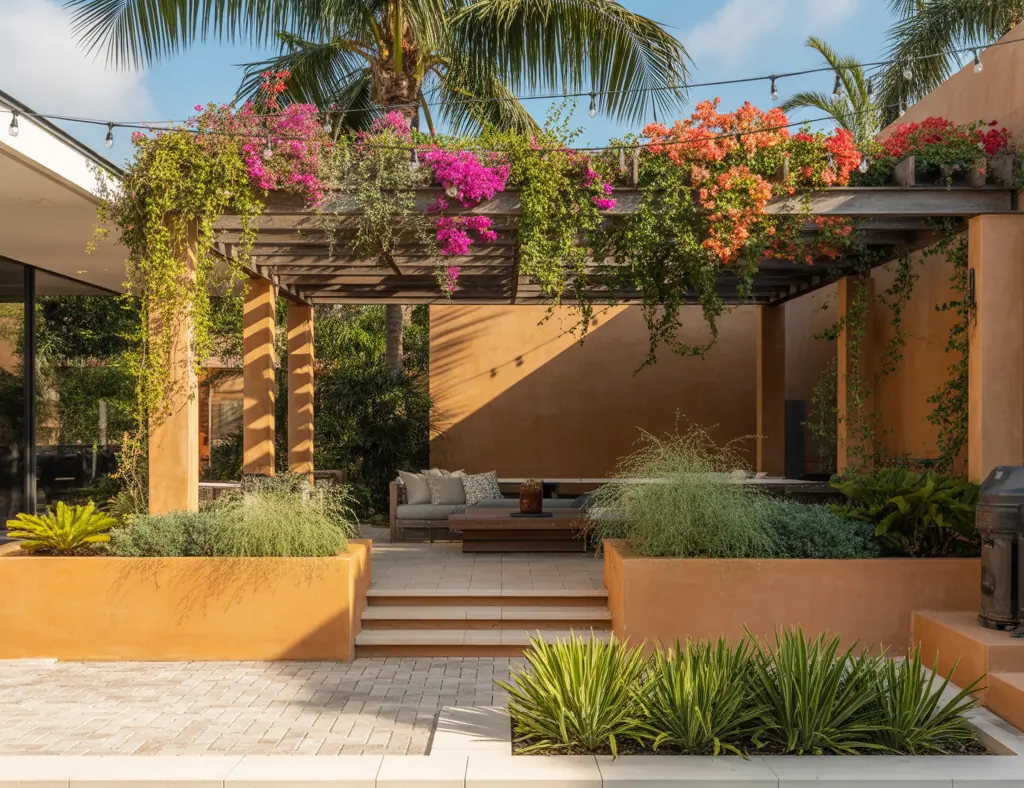
- Tropical modern: Clean lines, palms, bold foliage, and simple paver patios.
- Coastal cottage: Sea-grasses, driftwood accents, and weathered wood decking.
- Native meadow: A casual, pollinator-friendly mix of native wildflowers and grasses that requires little mowing.
Practical budget-friendly projects for beginners
Try these small projects that make a big difference:
- Refresh planting beds with new mulch and 3–5 drought-tolerant perennials.
- Build a simple raised herb garden near the kitchen for fresh flavors all year.
- Create a gravel seating area with an inexpensive fire pit for entertaining.
Want more project ideas? Check out our DIY projects and explore complementary inspirations on home design ideas.
Frequently Asked Questions
1. What are the best low-maintenance plants for Florida landscapes?
Choose Florida natives and drought-tolerant plants: coontie, firebush, muhly grass, southern magnolia (for larger yards), saw palmetto, and native salvias. These species tolerate heat, humidity, and local pests better than many non-natives.
2. How can I reduce water use in my Florida landscaping?
Group plants by water needs, install drip irrigation with a smart controller, use mulch to retain moisture, and select drought-tolerant or native plants. Consider replacing high-water turf with groundcover or mulched beds.
3. Should I use sod or live grass plugs in Florida?
Sod gives instant results but can be costly and water-intensive to establish. Plugs or seeded warm-season grasses (like St. Augustine or Zoysia varieties suited to your region) take longer but use less water once established. Choose based on budget, timeline, and microclimate.
Conclusion — start your Florida landscaping today
Transforming your yard into a beautiful, resilient outdoor living space is entirely doable with the right plan. These Florida landscaping ideas balance design, durability, and do-it-yourself practicality so you can create a low-maintenance, storm-ready landscape that looks great year-round. Ready to try a weekend project? Pick one idea, gather basic tools, and take the first step — or explore more inspiration in our DIY projects and home design ideas sections. Share your progress, ask questions, or subscribe for seasonal tips and step-by-step guides.