Have you ever stood at the edge of your yard, staring at a slope that washes away after every big rain or an aging fence that creaks with every wind gust and wondered, “How can I fix this without breaking the bank?” Whether you’re tackling erosion, craving privacy, or dreaming of a picture-perfect garden, the right fence and retaining wall ideas can transform your outdoor space — and many of the projects are perfectly doable for a dedicated DIYer.
Why combine fences and retaining walls?
Fences and retaining walls work as a team: retaining walls solve elevation and drainage problems while fences provide privacy, security, and style. When designed together, they create cohesive curb appeal, improved landscape function, and increased property value.
Benefits at a glance
- Improved erosion control and soil stability
- Added privacy and noise reduction
- Defined garden beds and terraced planting areas
- Opportunity to use complementary materials for a unified look
Top fence and retaining wall ideas for every budget
Below are practical design ideas that range from budget-friendly to high-end. Each entry includes materials, a quick DIY feasibility rating, and a real-world tip to make it work.
1. Timber sleeper retaining walls with horizontal wood fences
Materials: pressure-treated timber sleepers, gravel backfill, horizontal cedar or redwood boards.
DIY level: Moderate (requires digging and leveling).
Real-world tip: Use geo-fabric behind the sleepers and a layer of drainage gravel to prevent water pressure build-up. Fasten horizontal fence boards to stainless steel rails for longevity.
2. Gabion walls paired with metal privacy panels
Materials: welded gabion baskets filled with local stone, corten steel or powder-coated metal panels for fence sections.
DIY level: Intermediate (easier if baskets are preassembled).
Real-world tip: Gabions are excellent for sloped yards and add an industrial-chic look. Anchor metal panels directly into the gabion top using brackets for a seamless finish.
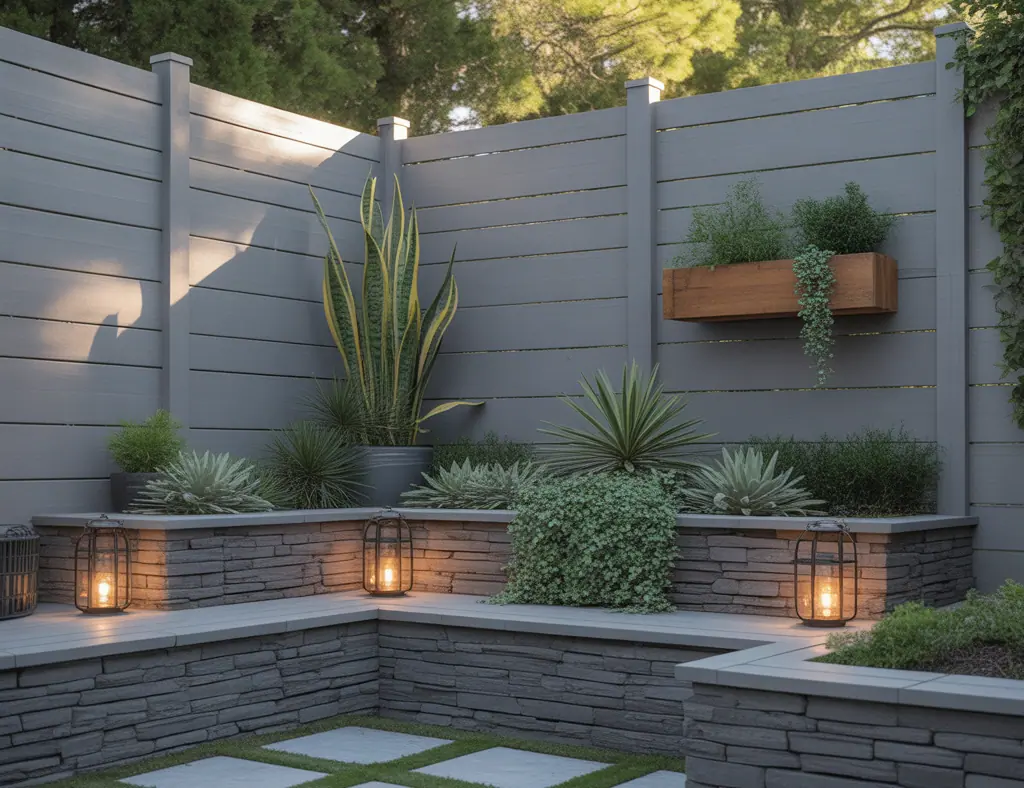
3. Stacked natural stone retaining walls and picket or lattice fences
Materials: dry-stacked stone or mortar-set stone, wooden lattice or classic picket fencing.
DIY level: Challenging (stone setting takes skill).
Real-world tip: Dry-stacked masonry allows water to pass through, reducing drainage needs. Pair with a low picket fence to highlight garden beds and walkways.
4. Concrete block retaining walls with composite privacy fences
Materials: concrete blocks with rebar and grout, composite fencing panels.
DIY level: Moderate to advanced (structural considerations required).
Real-world tip: Use poured concrete footings and weep holes for proper drainage. Composite fence panels offer low maintenance and can attach to block columns for a modern look.
Step-by-step DIY retaining wall + fence project
This quick step list outlines a small backyard project (short retaining wall with attached fence). Always check local codes before you begin.
- Plan and measure: Mark the wall and fence lines with stakes and string. Check for property lines.
- Call utility services to verify underground lines.
- Excavate the footing trench: dig below the frost line or at least 8–12 inches deep, depending on your region.
- Install a compacted gravel base and level it carefully.
- Lay the first course of your wall (stone, block, or timber), ensuring it’s level—this is critical.
- Backfill with drainage gravel and install a perforated drain pipe if needed.
- Build up the wall to final height, anchoring each course and adding geogrid for taller walls.
- Install fence posts into sleeves set into the wall or into separate concrete footings behind the wall, depending on load requirements.
- Attach fence panels or boards, finish with caps and sealants if using wood.
- Landscape: add topsoil, plants, and mulch to stabilize the area and soften hard lines.
Design inspiration and styling tips
Blend function with form by considering scale, texture, and color:
- Use terracing on steep slopes to create multiple planting levels and reduce the visual bulk of a wall.
- Mix materials — stone base with a wooden fence softens the look and avoids monotony.
- Add built-in seating: short retaining walls can double as benches for patios and play areas.
- Incorporate lighting and planter boxes on fence posts for nighttime ambiance and greenery.
Practical considerations and maintenance
Before starting any project, think practically:
- Permits and codes: Many municipalities require permits for retaining walls over a certain height or fences exceeding a height limit. Verify local rules.
- Drainage: Always include drainage behind retaining walls to avoid hydrostatic pressure and premature failure.
- Material longevity: Cedar, composite, and metal offer low maintenance; pressure-treated wood and poured concrete also last if properly detailed.
- Seasonal care: Clear debris from weep holes, reseal wood every few years, and inspect for settling after heavy rains.
Budget-friendly hacks for DIYers
Stretch your dollars with these money-saving strategies:
- Use recycled materials — reclaimed wood or salvaged stone can add character at a fraction of the cost.
- Tackle the project in phases: build the retaining wall first, then add the fence the next season.
- Buy materials locally to save on delivery, especially heavy stone or concrete.
- Rent tools like post-hole diggers and plate compactors instead of purchasing them.
Fence and Retaining Wall Ideas FAQ
1. Do I need a permit to build a retaining wall or fence?
Permits depend on wall height, fence height, and local zoning laws. Many places require permits for retaining walls taller than 3–4 feet, for fences that block sightlines, or when a wall affects drainage. Contact your local building department before starting.
2. How do I handle drainage behind a retaining wall?
Good drainage is essential. Use a perforated drain pipe at the base wrapped in landscape fabric, backfill with coarse gravel, and include weep holes or a drainage course. For taller walls, consider geogrid reinforcement and engineered backfill.
3. Which materials are best for low-maintenance fences near retaining walls?
Composite panels, vinyl, and powder-coated metal are low-maintenance options. If you prefer wood, choose rot-resistant species (cedar or redwood) and treat or seal the wood to extend life, especially where it contacts soil or masonry.
Final thoughts and next steps
Whether you’re creating a terraced garden, shoring up a slope, or installing a new privacy fence, these fence and retaining wall ideas can be adapted to fit your style, budget, and skill level. Start by sketching your yard, checking local rules, and considering drainage and materials. If you’re eager for more hands-on inspiration, check out our DIY projects and browse related content in home design ideas or even some small outdoor kitchen concepts in our kitchen upgrades section to tie your landscapes and outdoor living spaces together.
Ready to get started? Grab a tape measure, sketch your plan, and take a weekend to test a small section — your yard will thank you. If you want personalized guidance, drop a comment or ask for a project checklist and I’ll help you map it out step by step.