Have you ever stood in your living room staring at tired, dated curtains the night before guests arrive and wished you could give the whole room a quick, cozy makeover? You’re not alone. Upgrading window treatments is one of the fastest, most impactful DIY projects for a home — and farmhouse curtains ideas give you that warm, lived-in look without breaking the bank.
Why Choose Farmhouse Curtains?
Farmhouse style blends comfort and simplicity: think natural fabrics, soft neutrals, subtle patterns, and practical hardware. Farmhouse curtains are versatile — from linen panels in a bedroom to café curtains over a kitchen sink — and they work with rustic, modern farmhouse, cottagecore, and shabby chic interiors.
Farmhouse Curtains Ideas to Transform Every Room
Below are practical window treatment ideas organized by room and style so you can pick something that fits your space and skill level.
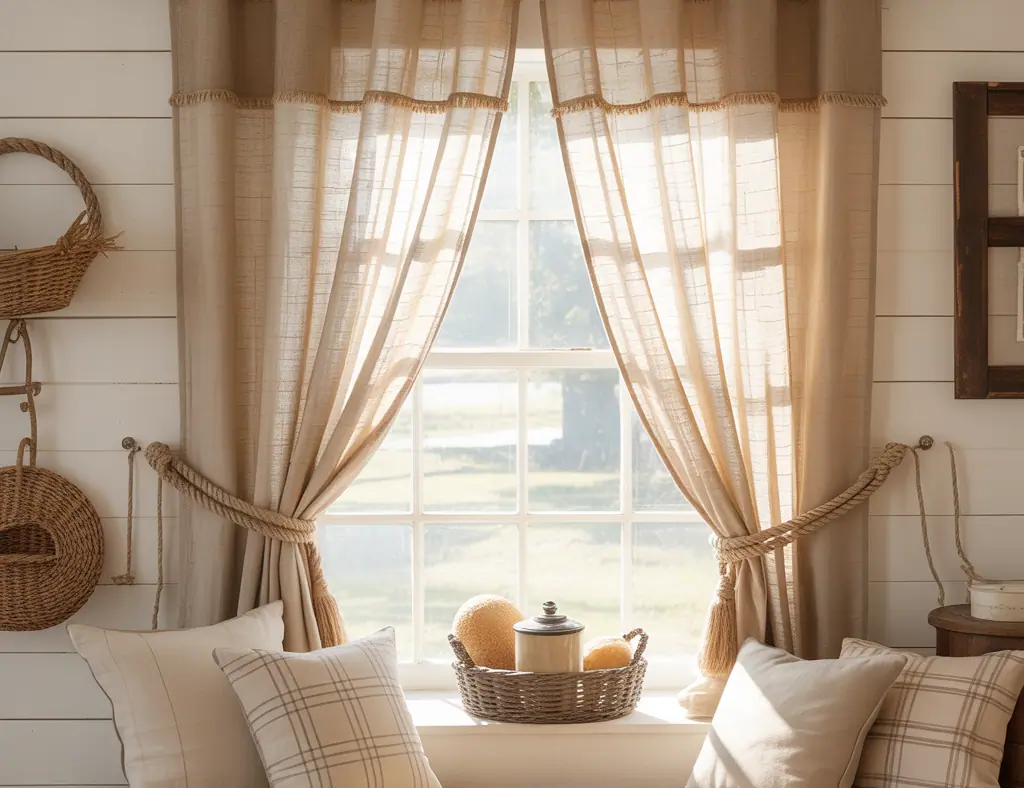
Living Room: Layered Linen Panels
- Use light-filtering linen panels for a breezy, elegant look.
- Layer a sheer panel beneath a heavier linen curtain for privacy and depth.
- Hang rods higher than the window frame to create the illusion of taller ceilings.
Kitchen: Café Curtains and Tiered Panels
- Café curtains that cover only the lower half of a window keep light in while giving privacy at the sink.
- Use washable cotton or drop cloth fabric for easy cleaning.
- Consider buffalo check or gingham for a classic farmhouse vibe.
Bedroom: Blackout Farmhouse Curtains for Better Sleep
- Opt for lined panels or add blackout lining to reduce light and improve insulation.
- Floor-length curtains puddle slightly for a romantic farmhouse look — 1–3 inches is typical.
- Add curtain tiebacks made from leather or braided rope for texture.
Small Windows & Bath: No-Drill Options
- Tension rods and stick-up brackets are ideal for renters or small windows.
- Café or valance styles maximize privacy without overwhelming space.
Getting Started: Measure, Choose Fabric, and Pick Hardware
Before you buy fabric or a rod, get the measurements and materials right. This reduces waste and prevents returns.
- Measure your window: Width across the window frame, plus desired fullness. For a gathered look, multiply the window width by 1.5–3x depending on how full you want the curtains.
- Decide curtain length: Sill length, floor length, or puddling. Floor length is typically measured from the rod to ½”–1″ above the floor.
- Pick fabric: Linen, cotton, muslin, drop cloth, or blended fabrics are farmhouse favorites. Consider pre-washed fabric to avoid shrinkage.
- Choose hardware: Rustic metal rods, wood poles, or barn-rod styles. Curtain rings with clips are great for quick hangs and less sewing.
DIY Step-by-Step: Make Your Own Farmhouse Curtains
Want a simple DIY farmhouse curtains tutorial? Here’s a no-fuss method for sewn or no-sew panels.
Materials
- Fabric (pre-washed)
- Matching thread or hem tape (for no-sew)
- Scissors, tape measure, pins, iron
- Rod, rings, or tension rod
Steps
- Measure twice: calculate fabric width and length, adding 1–2 inches per seam and 4 inches for a rod pocket or header.
- Cut fabric to size. If making two panels, cut two matching pieces.
- Hem the sides: fold ¼” twice and stitch, or use iron-on hem tape for a no-sew finish.
- Create a rod pocket or add grommets: fold the top down 3–4 inches and sew to make a pocket, or use a grommet kit for a modern look.
- Iron and hang: press seams flat, slide onto the rod, and adjust fullness evenly.
Tip: For a distressed farmhouse look, fray the hem slightly and wash again for natural texture.
Design Inspiration: Fabrics, Patterns, and Hardware
Here are curated style ideas that work with farmhouse design sensibilities.
- Neutral linens: Soft whites, creams, and greiges keep the room calm and natural.
- Striped or checked patterns: Subtle ticking stripes or buffalo checks add classic farmhouse charm.
- Burlap and drop cloth: Budget-friendly with a distinctly rustic texture; line for a softer hand.
- Ruffled valances: Great for cottage farmhouse aesthetics in bedrooms or breakfast nooks.
- Hardware choices: Black iron rods, aged brass, or weathered wood poles complement the farmhouse look.
Real-World Tips for Installation & Maintenance
- Pre-wash fabrics: Prevent later shrinkage and soften natural fibers.
- Use curtain weights: Small weights inside the hem will keep panels hanging straight and prevent billowing on breezy days.
- Light control: Combine a sheer layer with a lined panel or a blackout lining for flexible light and privacy management.
- Child and pet safety: Keep cords out of reach or use cordless options for Roman shades and tiebacks.
- Budget sourcing: Repurpose drop cloths, thrifted sheets, or tablecloths for large, inexpensive panels.
Quick Styling Hacks
- Hang rods 4–6 inches above the window or closer to the ceiling for a taller-room illusion.
- Use a double rod if you want both sheers and heavier panels for layered depth.
- Add vintage linens or embroidery for bespoke character and texture.
Frequently Asked Questions
1. What fabric is best for farmhouse curtains?
Linen and cotton are top choices for farmhouse curtains because they drape nicely and have a natural texture. Muslin and drop cloths are budget-friendly and can be softened with washing. If you need light blocking, add a blackout lining.
2. How do I measure curtains for my windows?
Measure the width of the window and decide on fullness (1.5–3x the width). For length, measure from the mounting point to where you want the curtain to fall (sill, floor, or puddle). Add seam allowances and header pocket depth to your fabric measurements.
3. Can I create farmhouse curtains without sewing?
Yes. Use iron-on hem tape, fabric glue, or pre-made panels altered with curtain rings and clips. Tension rods and café styles are excellent no-sew options, especially in kitchens or rentals.
Conclusion: Bring These Farmhouse Curtains Ideas Home
Farmhouse curtains ideas combine comfort, function, and style — and many projects are easy enough for a weekend DIY. Whether you choose linen panels, café curtains, or a layered look with sheers and blackout linings, a well-chosen window treatment can transform your room. Ready to try a project? Start by measuring your windows, pick a fabric you love, and follow the step-by-step tutorial above. Share your results or browse more inspiration in our DIY projects, explore styles for your cooking space at kitchen upgrades, or get broad tips on layout and color in our home design ideas section. Happy sewing — and enjoy the cozy upgrade!