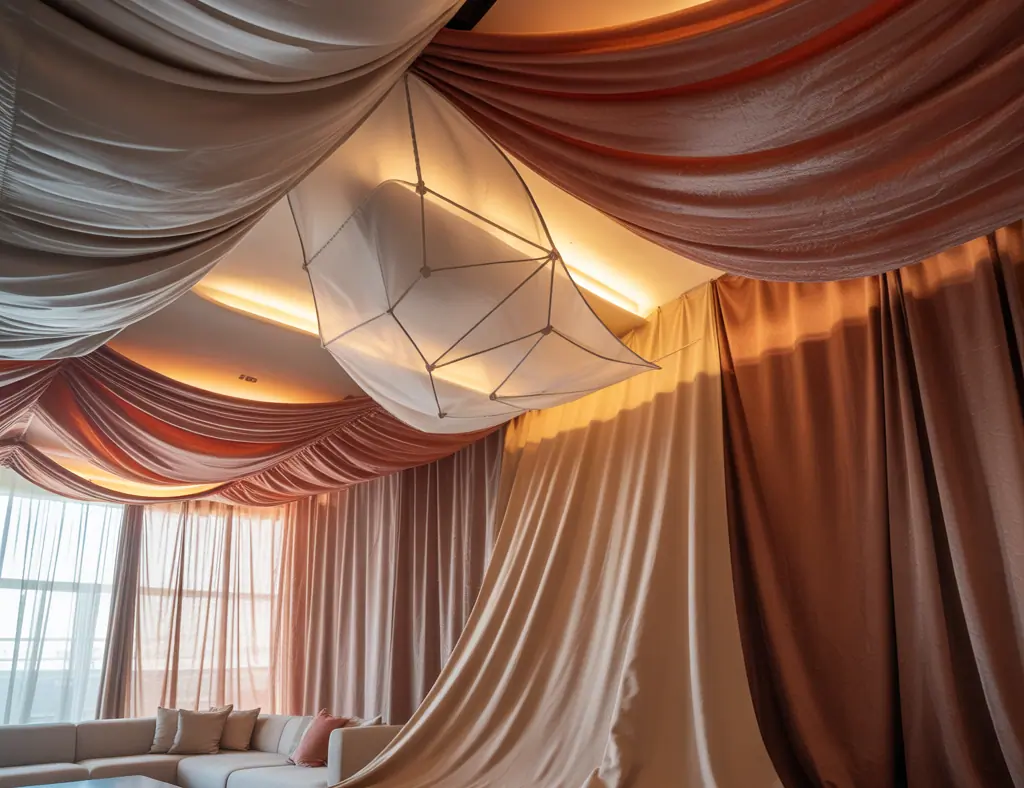
Staring up at a boring, cracked, or popcorn ceiling and wondering if there’s a quick way to warm up the room without a major renovation? If you’ve ever imagined a softer, more inviting overhead or wanted to improve a room’s acoustics and style on a budget, a fabric ceiling idea could be your best, low-mess solution. Whether you’re crafting a cozy bedroom canopy or covering a tired ceiling in a living room, fabric can instantly change the feel of a space.
Why choose a fabric ceiling?
Fabric ceilings are versatile, affordable, and relatively easy to install compared with drywall repairs or full re-plastering. They work great for:
- Adding warmth and texture to bedrooms and living rooms
- Improving sound absorption with acoustic fabrics
- Creating a dramatic focal point for events or dining areas
- Hiding imperfections like cracks, stains, or obsolete popcorn texture
A simple fabric ceiling idea: Draped canopy (step-by-step)
One of the easiest and most forgiving fabric ceiling projects is a draped canopy. It’s perfect for bedrooms, nurseries, or above a small seating area.
Materials and tools
- Lightweight fabric (voile, linen blend, muslin, or sheer cotton)
- Ceiling hooks or curtain-track hardware
- Measuring tape, pencil, ladder
- Staple gun or upholstery tacks (optional)
- Drill and anchors (for heavier fabrics or tracks)
Step-by-step installation
- Measure the space. Decide whether you want a central canopy, a tented look, or full-room draping.
- Choose fabric with enough drape. Lightweight fabrics create soft folds; medium-weight fabrics hold shape better for scalloped designs.
- Install a central hook or track. For a central canopy, locate a ceiling joist and screw in a hook; for full-room coverage, mount curtain-track sections along perimeter walls.
- Drape and secure. Feed fabric to the center hook and arrange folds evenly. For perimeter draping, clip or staple fabric to the track. Use small tucks and pleats to create intentional shapes.
- Light it right. Add soft LEDs or rope lights near the fabric (not touching) to create a warm glow and highlight folds.
Fabric ceiling idea for better acoustics: Stretch and panel systems
If noise control is your priority, consider a stretch fabric ceiling or fabric-covered acoustic panels. These systems use tensioned fabric over a frame or acoustic insulation to cut reverberation and reduce echo.
DIY stretch fabric tips
- Use acoustically transparent fabric with a tight weave for a smooth finish.
- Create or buy perimeter battens (PVC or wood) to tuck fabric into—this gives a clean, stretched look.
- Install acoustic board (rockwool or fiberglass) above the fabric for real sound performance.
- Keep the fabric tensioned evenly to avoid sagging. Heat-set fabrics can help maintain tension in humid climates.
Materials, safety, and maintenance
Choosing the right fabric and installation method keeps the project safe and long-lasting.
Best fabrics
- Lightweight cotton, linen blends, voile for drapes
- Polyester blends and treated fabrics for durability and stain resistance
- Fire-retardant fabrics for bedrooms and public spaces (check local codes)
Safety tips
- Avoid hanging fabric near open flames or fixtures that generate heat.
- Use proper anchors for ceiling hooks—plaster and drywall require toggle bolts if there’s no joist.
- For permanent installations, consider consulting a pro about fire codes and load-bearing concerns.
Maintenance
- Vacuum with a soft brush attachment or gently steam-clean fabric panels.
- Spot-clean with mild detergent; avoid saturating backing or acoustic insulation.
- Check and re-tension periodically if you live in a humid area where fabrics relax.
Design inspiration: Where a fabric ceiling shines
Here are creative uses that go beyond the bedroom:
- Dining room focal point: create a scalloped fabric ceiling above the table for elegance
- Living room warmth: use textured fabrics in neutral tones to soften modern interiors
- Home studio or media room: acoustical fabric ceilings reduce echo and improve sound clarity
- Kids’ rooms and play tents: colorful drapes make whimsical, cozy nooks
Budget and time estimates
Costs vary with fabric quality, hardware, and room size:
- Simple draped canopy: $30–$150 in materials; 1–3 hours
- Perimeter drape or track system: $150–$600; 3–6 hours
- Stretch fabric or acoustic panel system: $400–$2,000+ depending on professional installation
Most DIY fabric ceiling projects can be completed in a weekend and usually cost far less than drywall repair or full ceiling replacement. If you’re looking for project ideas and step-by-step guides, check out our DIY projects and home design ideas pages for additional inspiration.
Frequently Asked Questions
1. How long does a fabric ceiling last?
With proper installation and maintenance, a fabric ceiling can last many years. Lightweight drapes may need periodic re-hanging; stretch systems and acoustic panels last longer but depend on fabric quality and environmental conditions.
2. Can I install a fabric ceiling myself?
Yes—many fabric ceiling ideas are DIY-friendly. Draped canopies and perimeter track systems are straightforward. Stretch fabric ceilings and acoustic installations are more advanced; if you’re unsure, get a consultation or professional install for permanent solutions.
3. Will fabric attract dust or mold?
Fabric can collect dust over time; regular vacuuming and occasional steaming reduce buildup. To prevent mold, use breathable fabrics and avoid trapping moisture between ceiling and fabric. Choose mildew-resistant or treated fabrics for humid areas.
Conclusion
If your ceiling needs a refresh, this fabric ceiling idea offers a flexible, affordable, and stylish route to transform a room with minimal mess. From a romantic bedroom canopy to acoustic fabric panels for a home theater, fabric provides countless design options you can try as a weekend DIY. Ready to start? Gather your fabric, measure your space, and try one of the projects above — and if you want room-specific upgrades, explore our kitchen upgrades and DIY projects pages for more ideas. Share your before-and-after photos and let’s make your home more comfortable and beautiful.