Picture this: you open the front door with a load of groceries and a toddler on one hip, and the first thing you see is a stained, slipping rug that does nothing to protect your floors or welcome guests. Sound familiar? Choosing the right entryway rug can feel overwhelming — especially when you’re balancing high traffic, pets, seasonal weather, and a desire for great style. In this guide you’ll find practical entryway rug suggestions, design inspiration, and simple DIY improvements to make your foyer functional and beautiful.
Why the Right Entry Rug Matters
An entry rug is the unsung hero of home design. It protects flooring from dirt and moisture, defines the entry zone, reduces slips, and sets the tone for the rest of your house. Whether you’re searching for the best rugs for entryway use or a runner rug for a narrow foyer, the right material, size, and placement make all the difference.
How to Choose: Entryway Rug Suggestions for Every Home
Before you buy, consider these three real-world factors:
- Traffic: High-traffic entries need durable, low-pile, stain-resistant rugs like polypropylene or indoor/outdoor materials.
- Weather: For muddy seasons or coastal homes, choose moisture-wicking, quick-dry fibers and a rug pad that breathes.
- Style & Size: Measure your entryway. You want at least several inches of bare floor around the rug in a small foyer; for a hallway, choose a runner slightly narrower than the corridor to expose baseboards.
Best Materials and Why
- Polypropylene / Olefin: Budget-friendly, stain-resistant, easy to clean — excellent for mudrooms and exterior-facing entries.
- Wool: Durable and naturally dirt-resistant, great for covered or interior-only entryways where a softer look is desired.
- Indoor/Outdoor (synthetic blends): Ideal for open-sheltered porches or transitional spaces — tough and colorfast.
- Coir: Natural, rough texture that scrapes dirt off shoes — best used outdoors on covered porches to avoid moisture damage.
Design Inspiration: Styles and Layouts
Don’t let durability trump design. Here are entryway rug suggestions that balance both style and function.
Small Entryway Rug Ideas
- Use a round or small rectangular rug to create a focal point — layer over a neutral mat for a durable base.
- Opt for geometric patterns to hide stains and keep the space feeling modern.
Runner Rug for Narrow Hallways
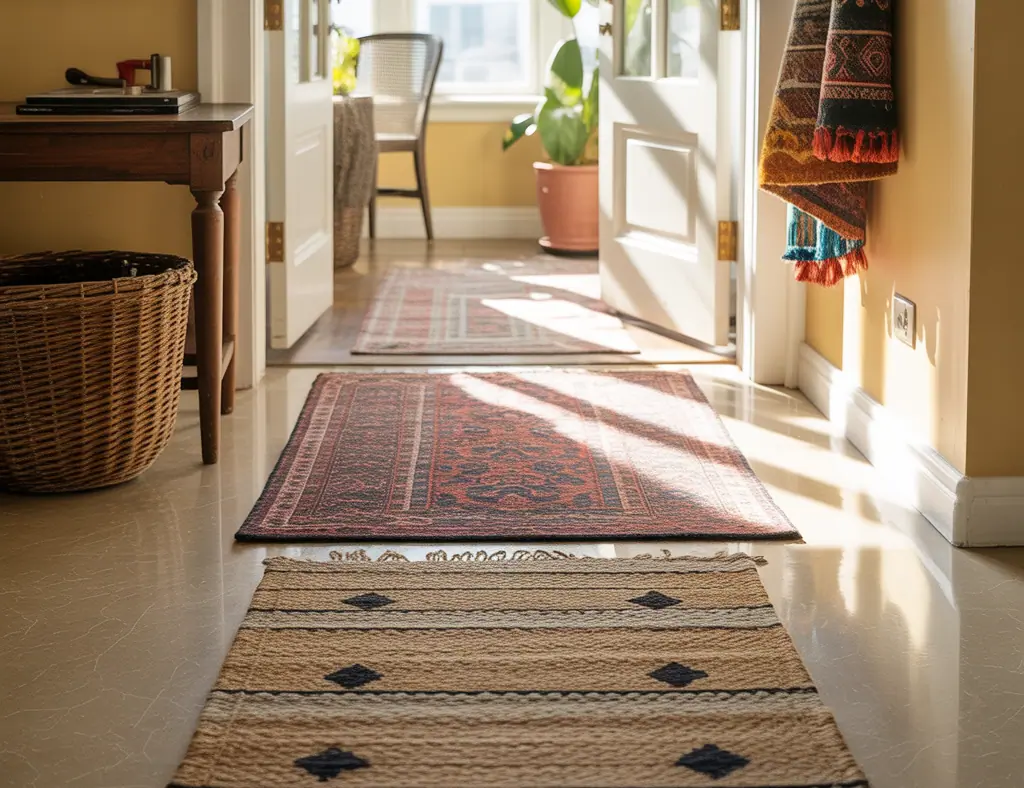
- Pick a runner with a repeating pattern to create motion and visually lengthen the space.
- Leave 2–3 inches of floor at each side to show baseboards and maintain proportion.
Bold Looks for Larger Foyers
- Choose a large rug that anchors furniture (bench, console table) and sets the color palette for adjacent rooms.
- Consider layered textures — flatweave under a braided accent mat — for depth and function.
DIY Tips & Step-by-Step Improvement Ideas
Want to make your entryway look custom without hiring a pro? Try these hands-on upgrades.
Step 1: Measure and Plan
- Measure width and depth of your entryway, noting door swing and furniture placement.
- Sketch a simple floor plan to visualize rug placement (entry mats, runner, or full-area rug).
Step 2: Prep the Floor
- Clean and dry the surface. For hardwood, ensure it’s free of grit that will scratch the finish under the rug.
- Install a non-slip rug pad cut to size — it prevents movement and protects flooring.
Step 3: Add Personal Touches
- Stain or paint a simple entry bench to match the rug’s accent colors.
- Create a DIY boot tray from a shallow, painted shelf and rubber liner placed beside the rug.
- Bind or serge the edges of store-bought rugs if you want a finished, custom look.
Maintenance & Long-Term Care
Routine care keeps an entry rug looking new longer:
- Vacuum high-traffic rugs at least twice a week.
- Spot-clean spills immediately with a mild detergent and cold water. Avoid harsh chemicals on wool.
- Rotate runners every 6 months to distribute wear, and shake or hose outdoor-friendly mats as needed.
Practical Real-World Advice
From renters to homeowners renovating a fixer-upper, here are common-sense tips that save time and money:
- If you rent, choose color and pattern over expensive materials — a good pattern hides stains and wear.
- For families with pets, prioritize low-pile synthetic rugs and a washable welcome mat at the door.
- On a tight budget, buy a larger indoor/outdoor rug and trim it to size using fabric shears; seal the cut edge with a fabric glue designed for rugs.
Frequently Asked Questions
1. What size rug should I get for my entryway?
Measure the entry and leave some floor border — for small foyers leave 6–12 inches of bare floor around the rug; for runners, leave 2–3 inches on either side of the runner to reveal the hallway width.
2. Are there washable entryway rug options?
Yes. Many cotton, polyester, and blended indoor/outdoor rugs are machine washable or easy to hose down. For wool rugs, spot cleaning and professional cleaning are recommended.
3. How do I prevent my rug from slipping?
Use a non-slip rug pad sized to the rug; for additional grip, choose pads with rubberized backing. For very slippery floors, double up with a thin adhesive rug tape at the corners for extra hold.
Conclusion: Make Your Entryway Work and Wow
Entryway rug suggestions boil down to three priorities: the right material for your climate and traffic, the right size for your layout, and a style that reflects your home. With a thoughtful choice — plus a non-slip pad and regular maintenance — your entry rug can protect floors, reduce dirt, and welcome guests in style. Ready to update your foyer? Try one small DIY project this weekend: measure, choose a durable rug, and install a pad — then add a personalized bench or boot tray. For more hands-on inspiration, check out our DIY projects and browse creative ideas on our home design ideas page.
Call to action: Want personalized recommendations for your space? Describe your entryway (dimensions, traffic, pets) in the comments or start a project today and transform your entry into a polished, practical welcome zone.