Ever stare at a blank wall and imagine a secret room behind it—maybe a cozy reading nook, a hidden home office, or a pantry tucked away from guests? If you’ve ever wanted to add mystery, storage, or a clever space-saving trick to your home, hidden doors are one of the most satisfying DIY upgrades. In this article you’ll find practical door ideas hidden in plain sight, step-by-step tips, and design inspiration to help you build a concealed door that looks intentional and works reliably.
Why choose hidden doors? Benefits of concealed and secret doors
Hidden doors do more than look cool. They:
- Create seamless design: Camouflaged doors keep sightlines clean and emphasize architectural finishes.
- Save space: Pocket or flush doors free up floor space and avoid swinging clearances.
- Add security and privacy: A hidden pantry or office can be a discreet storage or work area.
- Increase home value and wow factor: A well-executed secret door can be a memorable design detail.
Creative door ideas hidden in plain sight
Here are versatile hidden door concepts—from simple disguises to full-blown secret passages. Use these ideas as-is or mix elements to fit your home.
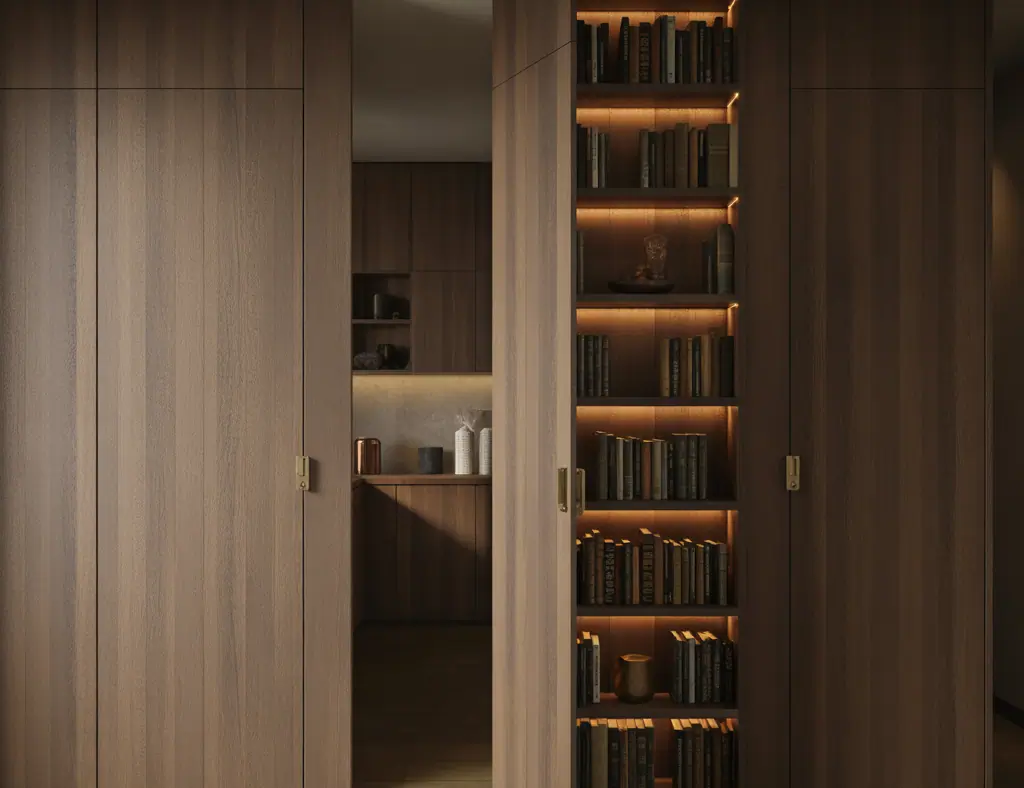
1. Secret bookshelf door (bookcase door)
A classic. Build a bookcase on a pivot or sprung hinge so it swings open to reveal a room or closet. It’s a top choice for libraries, dens, and living rooms.
2. Camouflaged paneling door (flush with wall)
Use continuous wood paneling, paint, or shiplap so the door blends with the wall. Hidden recessed pulls or magnetic latches maintain the illusion.
3. Hidden pantry door
Turn a cabinet-front or sliding barn panel into a concealed pantry entrance—perfect for clever kitchen storage solutions and modern farmhouse kitchens.
4. Mirror or artwork door
Mount a large framed mirror or gallery panel on a hinging frame that conceals a closet or safe behind it.
5. Pocket door disguised as a bookshelf or panel
Combine a space-saving pocket door with a faux bookshelf face so the door disappears when closed.
6. Floor trap or hatch door
For basements, wine cellars, or hidden storage, a well-built hatch with proper insulation and safety provisions can be functional and hidden.
DIY step-by-step: Build a simple secret bookcase door
This is a practical starter project that balances wow factor with doable carpentry.
Tools & materials
- Sheet goods (plywood or MDF for shelves and bookcase face)
- Pivot hinge kit (top-and-bottom pivot or commercial bookcase hinge)
- Framing lumber for support and jamb
- Screws, wood glue, shims, level
- Magnetic catch or concealed latch
- Paint or veneer to match room finishes
- Basic tools: drill, circular saw/table saw, level, tape measure, stud finder
Build steps
- Plan and measure: Confirm wall thickness and clearances. Account for swing radius if not using a pivot.
- Frame the opening: Build a solid door jamb and header sized to the bookcase width and height. Reinforce floor and ceiling points for pivot hardware.
- Assemble bookcase face: Construct the bookshelf box slightly taller than the opening so top/bottom pivots have solid meat to anchor into.
- Install pivot hardware: Follow manufacturer instructions; top and bottom pivots carry weight and keep alignment tight.
- Hang & shim: Place the bookcase into the opening, shim the pivots until the face is flush with surrounding walls. Check operation repeatedly.
- Finalize cosmetics: Add trim or reveal as desired. Paint or stain to match wall finishes. Install a magnetic catch or hidden latch.
- Test and adjust: Make sure the door swings easily, latches securely, and no binding occurs when shelves are loaded.
Design tips, finishes, and hardware choices
Small details make hidden doors feel intentional and durable.
- Hardware: Pivot hinges and continuous piano hinges are durable options. Concealed magnetic catches avoid visible hardware.
- Finish: Match the surrounding wall paint or choose a contrasting finish for a subtle reveal. Veneers and shiplap create character.
- Edge details: Use minimal trim or a thin reveal to enhance the illusion. Crown molding can be continued across the door for full concealment.
- Weight management: If you plan to load shelves, calculate weight and choose strong pivots and solid framing.
Real-world advice: mistakes to avoid and safety considerations
Before you cut, read this list so your hidden door lasts and stays safe:
- Don’t underestimate load—bookcases full of books are heavy. Proper hardware and solid anchoring are essential.
- Check local codes for egress and ventilation if the hidden space is a habitable room.
- Child safety—avoid traps or tight nooks without airflow; consider keyed locks or childproof latches if needed.
- Test the mechanism with finished loads and make adjustments for humidity and seasonal movement.
Cost and timeline
Costs vary by scale: a simple camouflaged panel or pocket door can start around a few hundred dollars in materials; a full custom pivoting bookshelf or hidden room can cost several thousand when you include hardware and finishing. Timeline ranges from a weekend for a flush-panel DIY to several weeks for complex concealed doors that require framing and finishes.
Design inspiration: where to use concealed doors
Hidden doors work in many rooms—use them as:
- A hidden pantry off the kitchen for tidy storage and to support modern kitchen upgrades.
- An office entrance in a living area where you want privacy without bulk.
- A kid’s playroom or secret closet to maximize small-space storage solutions.
- A utility closet camouflaged in a hallway for cleaner sightlines and minimal visual clutter.
For more ideas and project inspiration, check out our pages on DIY projects, kitchen upgrades, and home design ideas.
Door ideas hidden: final thoughts and next steps
Hidden doors blend creativity with real functionality—whether you’re installing a secret bookshelf, camouflaging a pantry, or adding a pocket door that doubles as decor. Start small with a single concealed panel or go big with a pivoting bookcase. Measure carefully, choose proper hardware, and focus on finishes so your hidden door looks like it always belonged there. Ready to try a secret door in your home? Pick a small project, gather the right tools, and start transforming a blank wall into a delightful surprise.
Call to action: If you enjoyed these door ideas hidden in plain sight, try one of the step-by-step projects above this weekend—and share your progress. Need help planning? Leave a comment or explore our DIY projects page for more tutorials.
Frequently Asked Questions
1. How hard is it to build a hidden door myself?
Difficulty varies. Simple camouflaged panels or faux bookcase doors can be a beginner-to-intermediate weekend project if you have basic carpentry skills. Pivoting bookcases and secret rooms require more planning, stronger hardware, and sometimes professional help for framing and alignment.
2. What is the best hinge for a secret door?
Pivot hinges (top-and-bottom pivots) are popular because they carry weight well and create a clean reveal. Concealed continuous hinges or specialty bookcase hinges work too—choose hardware rated for the door’s weight and frequency of use.
3. Can a hidden door affect home safety or code compliance?
Yes. Hidden doors that create habitable spaces must still meet local building codes for egress, ventilation, and fire safety. For pantries and closets, consider ventilation and lighting; for rooms, confirm code requirements or consult a professional before construction.
For more door ideas hidden in plain sight, check out Door Ideas Hidden.
For more door ideas hidden in plain sight, check out Door Ideas Hidden.
For more door ideas hidden in plain sight, check out Door Ideas Hidden.
For more door ideas hidden in plain sight, check out Door Ideas Hidden.