You’ve stared at that plain dining room wall for years and finally decided it’s time for a refresh — but don’t want to commit to a full repaint. What if a simple chair rail paint update could transform the entire room in an afternoon? Choosing the right dining room chair rail paint colors can make your space feel curated, balanced, and far more inviting without a full renovation.
Why a chair rail matters — and how color changes everything
A chair rail is more than decorative trim; it defines proportion, hides scuffs, and creates an instant two-tone look. Pairing the correct chair rail paint color with wall paint can highlight architectural details, create contrast for your furniture, and even influence how large or small the room feels. Whether you want classic elegance, modern contrast, or cozy warmth, the right color combo makes all the difference.
Best dining room chair rail paint colors for every style
Below are tried-and-true color pairings and creative options to fit different decorating styles. These combinations are practical, on-trend, and work with a range of materials, whether your chair rail is wood, MDF, or pre-painted trim.
Classic & Timeless
- Bright white trim with warm greys or soft beige walls — clean and versatile.
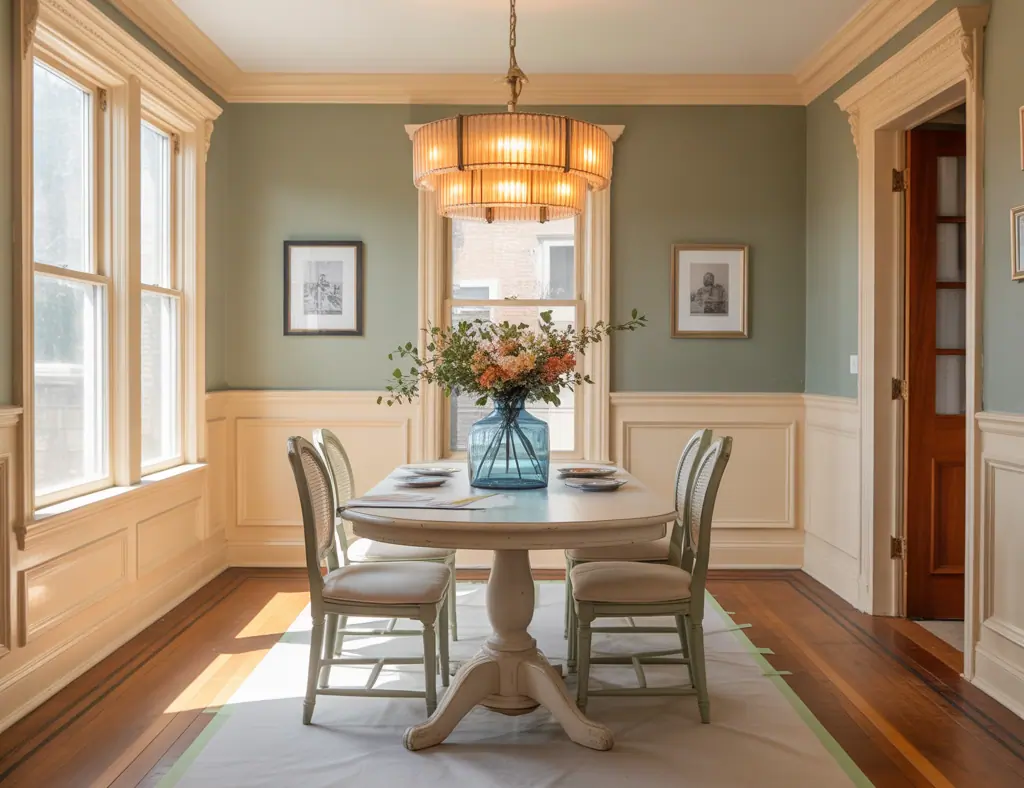
- Ivory chair rail with a muted blue-grey wall — subtle traditional charm.
Bold & Modern
- Deep navy chair rail with crisp white walls — sharp, nautical, and contemporary.
- Charcoal or black trim paired with light greige walls — dramatic and sophisticated.
Warm & Inviting
- Warm taupe or espresso trim with cream walls — cozy and elegant.
- Sage green chair rail with warm white or pale terracotta walls — organic and calming.
Playful & Unexpected
- Blush or muted coral rail with soft grey walls — fresh and feminine.
- Mustard or ochre rail with slate blue walls — retro and energetic.
How to choose the right finish and paint type
Trim and chair rails usually benefit from a slightly higher sheen because it resists scuffs and cleans easily. Consider these finishes:
- Semi-gloss: Best for durability and easy cleaning—ideal for high-traffic dining rooms.
- Satin: Slightly less shiny but still durable—good for a softer, modern look.
- Eggshell or matte: Use only if the chair rail is decorative and not prone to wear.
Choose a high-quality acrylic latex for most indoor woodwork. If your chair rail has imperfections or previously stained wood, prime and consider an oil-based primer for stain blocking before topcoating.
Practical DIY steps: Paint a chair rail like a pro
Here’s a clear, do-it-yourself workflow that even beginners can follow:
- Measure and prep: Clean the rail and surrounding wall. Remove dust, grease, and cobwebs.
- Sand lightly: Use 120–150 grit to dull glossy surfaces and rough up old paint for adhesion.
- Caulk and fill: Use paintable caulk for gaps between rail and wall; wood filler for dents.
- Prime: Apply primer where needed—especially on bare wood, repairs, or bold color changes.
- Tape: Use painter’s tape for crisp lines. Press tape down firmly to avoid bleed.
- Paint: Use a high-quality angled brush for trim. Apply 1–2 thin coats, allow proper drying time.
- Remove tape: Pull tape at a 45-degree angle while paint is slightly tacky for the cleanest edge.
- Touch up: Use a small brush for any final touch-ups and caulk seams if necessary.
Time and cost estimates
This is typically a weekend project. Expect to spend $40–$100 on paint and supplies for most dining rooms, depending on the quality of paint and whether you already own brushes and tape.
Design inspiration and layout ideas
Here are practical design approaches you can try:
- Two-tone formal dining: Darker color below the chair rail, lighter shade above to open up the room.
- Monochromatic flow: Use the same hue in different sheens—semi-gloss on the rail, eggshell on the walls.
- Accent rail only: Paint the rail a pop of color (navy, black, or mustard) against neutral walls for a modern art-gallery vibe.
- Wainscoting effect: Paint chair rail and lower wall paneling the same color for classic depth.
Real-world advice: lighting, layout, and furniture considerations
Before committing, test paint samples on large poster boards and place them in different light throughout the day. Consider wood tones of dining furniture: warm wood pairs better with warm trims, while cooler metals or black furniture complement cool-toned rails. If your dining room is small, lighter shades above the rail will visually raise the ceiling.
Frequently Asked Questions
- What height should a dining room chair rail be?
- Standard chair rail height is about 32-36 inches from the floor, but use the rule of thirds for your wall height: aim for the rail to sit roughly one-third of the way up for balanced proportions.
- Should the chair rail be darker or lighter than the wall?
- Either can work. Darker rails create grounding and sophistication, while lighter rails brighten and define. Consider the room size, furniture, and desired mood when choosing contrast.
- Can I stain instead of paint my chair rail?
- Yes—staining reveals wood grain and adds warmth. Stain is best if your rail is solid wood in good condition. If you prefer a painted look, choose a durable semi-gloss for easier maintenance.
Final tips to make your paint job last
- Use quality brushes and paints—cheap tools often lead to brush marks and visible flaws.
- Allow adequate drying between coats—rushing leads to pooling and uneven sheen.
- Keep touch-up paint stored tightly labeled for future scuffs and maintenance.
Conclusion — Refresh your dining room with the perfect dining room chair rail paint colors
Choosing the right dining room chair rail paint colors is a low-cost, high-impact way to elevate your space. Whether you opt for classic white trim, a bold navy accent, or a warm earthy hue, a well-executed chair rail update creates instant polish. Ready to try it yourself? Gather your supplies, test your samples, and start a weekend project that will give your dining room fresh style with minimal fuss. For more step-by-step ideas, check out our DIY projects, or find inspiration in home design ideas and kitchen upgrades to keep your whole home cohesive.