Have you ever stood in a room wondering why it feels flat even though the furniture is new and the layout is perfect? A simple change in color can be the missing ingredient. Whether you’re tackling a weekend accent wall, refreshing kitchen cabinets, or experimenting with bold accent hues, choosing the right color can completely reshape your space — and you don’t need to call a pro to get dramatic results.
Why Color Matters in Home Improvement
Color affects mood, perception of space, and how lighting behaves in a room. For DIYers, color is one of the most accessible and cost-effective tools to make a big impact. Understanding color theory and practical painting techniques will help you create cohesive rooms, highlight architectural features, and add personality without overwhelming your home.
Color Choices That Change Everything
Picking a paint palette is about more than picking a favorite shade. Long-tail searches like how to choose paint colors for small rooms or best paint colors for open floor plans reflect real homeowner concerns. Here are approachable steps and ideas to help you pick colors that work:
Step-by-step Color Selection
- Start with a mood: Do you want calm, energetic, or cozy? Keywords like “neutral color schemes” or “bold color accents” represent different moods.
- Consider light: Natural and artificial light change color perception. Test swatches on different walls and check them at multiple times of day.
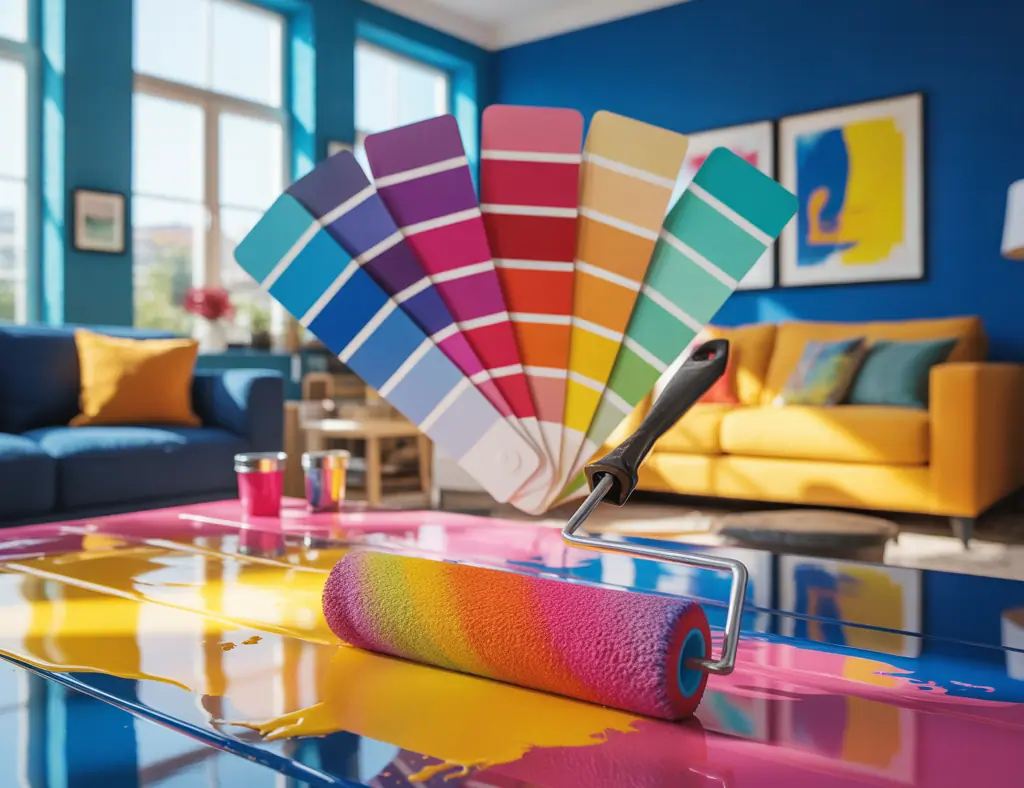
- Use the color wheel: Complementary colors add contrast; analogous colors create harmony. Basic color theory helps you avoid clashing combinations.
- Test samples: Paint 12×12-inch swatches on the wall and live with them for 48 hours before deciding.
- Pick finishes wisely: Flat hides imperfections; satin/eggshell is forgiving and easy to clean; semi-gloss is best for trim and high-use surfaces.
DIY Projects to Try: Easy, High-Impact Color Upgrades
Here are practical DIY projects that use color to upgrade your home without a full renovation.
1. Accent Wall Makeover
Choose a focal wall — behind the bed, a TV wall, or a fireplace — and paint it a statement color. For small rooms, try deep jewel tones or a rich charcoal to create depth. For instructions:
- Prep: Clean wall, fill holes, sand lightly.
- Prime if changing from dark to light or if wall has stains.
- Cut in edges with a brush, then roll in an “M” pattern for even coverage.
- Apply two coats, letting the first dry fully.
2. Paint Kitchen Cabinets for a Fresh Look
Repainting cabinets is a budget-friendly alternative to new cabinetry. Choose durable, washable paints and a semi-gloss finish for longevity. Follow these basic steps:
- Remove doors and hardware; label pieces.
- Degrease surfaces, sand lightly, and apply a bonding primer.
- Use a foam roller for smooth coverage; finish with a brush for edges.
This is a great project for anyone interested in kitchen upgrades.
3. Color-blocked Staircase or Hallway
Pick two complementary hues and paint risers one color and treads another, or alternate colors down a stair runner. It’s a modern, playful look that’s surprisingly low-cost.
4. Revive Furniture with Accent Colors
Old dressers, side tables, and accent chairs are perfect canvases for color. Chalk paint or milk paint offers easy coverage and a vintage finish. Seal with wax or polyurethane depending on the desired sheen and durability.
Practical Tips for Painting Like a Pro
Small technique tweaks lead to professional-looking results. Keep these real-world tips in mind:
- Invest in quality brushes and rollers — they save time and reduce brush strokes.
- Always tape adjacent surfaces (trim, windows) and remove tape before paint fully dries to avoid peeling.
- Use a light hand with primer; too much can cause texture differences.
- Work in good ventilation and temperature — most paints require 50–85°F for optimal curing.
- Label leftover paint with room and date for future touch-ups.
Design Inspiration: Color Palettes to Try
Looking for palettes? Try these tested combinations that readers often search for:
- Soft neutrals: warm beige, greige, ivory — ideal for open floor plans.
- Coastal calm: seafoam green, sandy tan, crisp white — perfect for bedrooms and bathrooms.
- Bold modern: navy, mustard, terracotta — use on accent walls or furniture.
- Monochrome layers: varying shades of the same color to add depth without contrast overload.
Color and Flow: How to Coordinate Rooms
Maintain a cohesive flow by choosing a primary palette for the whole house and adding accent colors per room. Transition colors in hallways or via trim to guide the eye. If you’re working on multiple rooms, consider a palette map to track undertones and finishes.
When to Call a Professional
If you’re dealing with lead paint, major moisture problems, or structural work that affects paint adhesion, bring in a pro. For most cosmetic projects — accent walls, cabinets, furniture — DIY is both practical and satisfying.
Frequently Asked Questions
1. How do I choose the right paint color for a small room?
For small rooms, lighter neutrals or soft pastels reflect light and make the space feel larger. Use a monochrome scheme with slightly darker trim to add dimension. Test swatches in multiple lighting conditions before committing.
2. What finish should I use for high-traffic areas?
Use satin or semi-gloss in high-traffic rooms like kitchens and hallways — they’re easier to clean and more durable. Matte finishes hide imperfections but are harder to wipe clean.
3. How can I make bold colors feel cohesive in an open-plan space?
Anchor bold hues with neutral neighboring areas and repeat the accent color in small touches (pillows, artwork, a rug) to create continuity. Limiting a bold color to a single wall or large furniture piece helps maintain balance.
Final Thoughts and Next Steps
Color is one of the most powerful, affordable tools you have to refresh your home. Whether you’re experimenting with an accent wall, updating cabinetry, or repainting furniture, the right color can transform mood, highlight features, and increase enjoyment of your space. Ready to try a project? Browse our ideas and step-by-step guides for more inspiration — check out our DIY projects and home design ideas pages for curated plans and shopping lists.
Grab a few sample pots, tape off a test area, and let color lead your next home improvement — then share your before-and-after to inspire others.