Ever moved into a new place and realized there’s nowhere to hang your laundry—no balcony, no dryer, and high energy bills? You’re not alone. Whether you live in a compact apartment or have a sprawling backyard, creative clothesline ideas can save money, reduce wear on clothes, and add charm to your home. In this post I’ll share practical, stylish, and space-saving laundry line solutions you can build or buy, with step-by-step tips and real-world advice to help you air-dry smarter.
Why air-drying is worth the effort
Air-drying on a clothesline is one of the simplest sustainable laundry habits. It reduces energy use, extends the life of fabrics, and gives clothes a fresh scent without chemicals. For many homeowners and renters, a well-designed laundry line is also an opportunity for a small DIY upgrade that increases daily convenience and improves curb appeal.
Creative clothesline ideas for small spaces
If space is tight, don’t give up on drying clothes outdoors or indoors. Here are compact clothesline ideas perfect for apartments, condos, and tiny homes.
1. Retractable indoor clothesline
- Install between two studs or walls in a laundry closet or bathroom; it tucks away when not in use.
- Look for models that lock at multiple lengths to fit different loads.
- Tip: mount at a height you can reach easily and keep a small step stool nearby for bulky items.
2. Wall-mounted folding rack
- Folds flat when not needed—ideal for narrow hallways or utility rooms.
- Choose lightweight hardwood or powder-coated metal for durability.
- DIY idea: repurpose piano hinge and wooden slats for a custom width.
3. Ceiling pulley clothesline (indoor drying loft)
- Perfect for laundry rooms with high ceilings; uses a pulley system to raise wet items up and out of the way.
- Install using a strong cleat and marine-grade rope for smooth operation.
- Long-tail search term: best clothesline for apartments with high ceilings.
Step-by-step DIY backyard clothesline installation
For homeowners with outdoor space, a classic backyard clothesline is cost-effective, durable, and charming. Here’s a simple installation guide for a standard two-post clothesline.
Materials and tools
- Two pressure-treated wooden posts (4×4 or 6×6), 8 feet long
- Concrete mix (quick-set)
- Heavy-duty outdoor nylon or stainless steel clothesline wire
- Turnbuckles, eye bolts, and fence post anchors (optional)
- Level, post-hole digger, tape measure, wrench
Installation steps
- Plan location: pick a sunny, breezy spot with at least 12-20 feet between posts. Avoid low branches and overhead wires.
- Mark and dig two holes about 2–3 feet deep (deeper in freeze zones).
- Set posts in concrete, ensuring they’re plumb and the tops are level. Allow concrete to cure per instructions.
- Attach eye bolts or turnbuckles to the top of each post. Thread the wire and tension using turnbuckles for a tight, slack-free line.
- Trim ends and protect connection points with weatherproof tape or covers.
Pro tip: use a clothesline cover or wrap the nearest foot of post in metal flashing to prevent rot at the ground line.
Design inspiration: styles for every yard
Clotheslines don’t have to be purely utilitarian—choose a style that complements your garden or patio.
- Rotary umbrella dryer: A compact, foldable option that’s great for backyard gardens—offers multiple lines and collapses for storage.
- Pergola wire system: Run stainless-steel tension wires across a pergola for a decorative overhead drying solution—add string lights for evening ambiance.
- Between-the-trees line: Use tree trunks as posts for a rustic look—wrap protective guards to avoid tree damage.
- Vintage wooden-post clothesline: Recreate a farmhouse aesthetic with turned wooden posts or reclaimed wood.
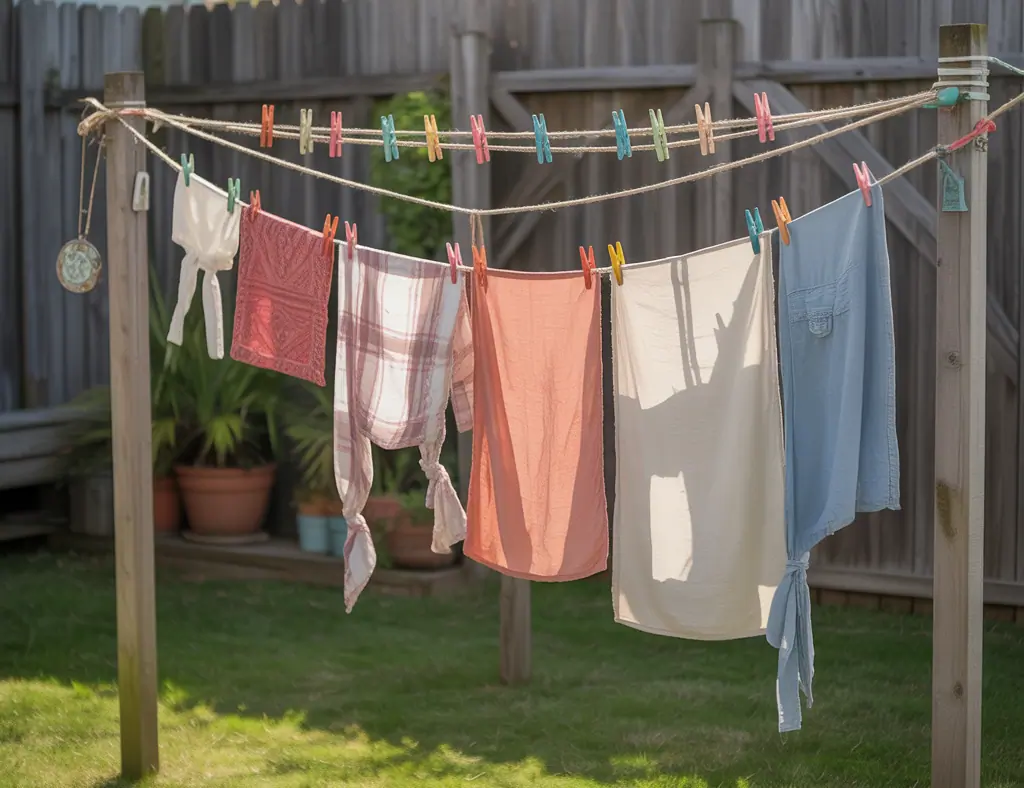
- Decorative backyard drying station: Combine a line with a small bench, potted plants, and a folding table to create a charming laundry nook.
Practical tips for getting the most from your clothesline
- Sort by weight: hang heavier items like towels and jeans on lower lines or separate heavier lines from delicates to speed drying.
- Use wooden clothespins to avoid rust stains on clothes and pick the natural spring for gentler grip.
- Turn garments inside out to prevent sun fading on colored fabrics.
- Maximize airflow: space items at least a few inches apart and rotate when halfway dry.
- Seasonal storage: take down or cover lines during winter storms or high pollen season to keep clothes clean.
Maintenance and safety tips
Regular checks keep your clothesline safe and long-lasting. Inspect wires and hardware each season for corrosion, tighten turnbuckles if lines sag, and replace damaged clothespins. If installing near trees, trim branches to reduce sap and leaves falling on your laundry. For renters, choose non-invasive solutions (tension rods, retractables, or portable racks) to avoid wall damage.
Frequently Asked Questions
Q: Can I install a clothesline if I rent?
A: Yes—look for non-permanent solutions like retractable lines that mount with removable anchors, free-standing drying racks, or outdoor rotary dryers that don’t require digging. Always check your lease and ask your landlord if you’re unsure.
Q: What’s the best clothesline for small balconies?
A: A collapsible, wall-mounted folding rack or a retractable balcony clothesline is ideal. Choose corrosion-resistant materials and measure your balcony depth to ensure clothes won’t obstruct neighbors or walkways.
Q: How do I prevent mildew on air-dried clothes?
A: Avoid drying clothes indoors in poorly ventilated areas. For outdoor drying, hang clothes in direct sun and wind when possible. If you must dry indoors, use a dehumidifier or open windows to increase airflow, and don’t leave damp items bunched together.
Conclusion: Start your clothesline project today
Clothesline ideas range from simple retractable systems for apartments to charming backyard installations that double as garden decor. Whether you want a DIY outdoor clothesline, a space-saving indoor drying rack, or a stylish pergola wire system, there’s a clothesline solution to match your home and lifestyle. Try one of these projects this weekend—measure, plan, and build a drying solution that saves energy and looks great. Ready to tackle more practical home upgrades? Check out our DIY projects and home design ideas for inspiration, or explore tips for making laundry day easier alongside kitchen upgrades.